


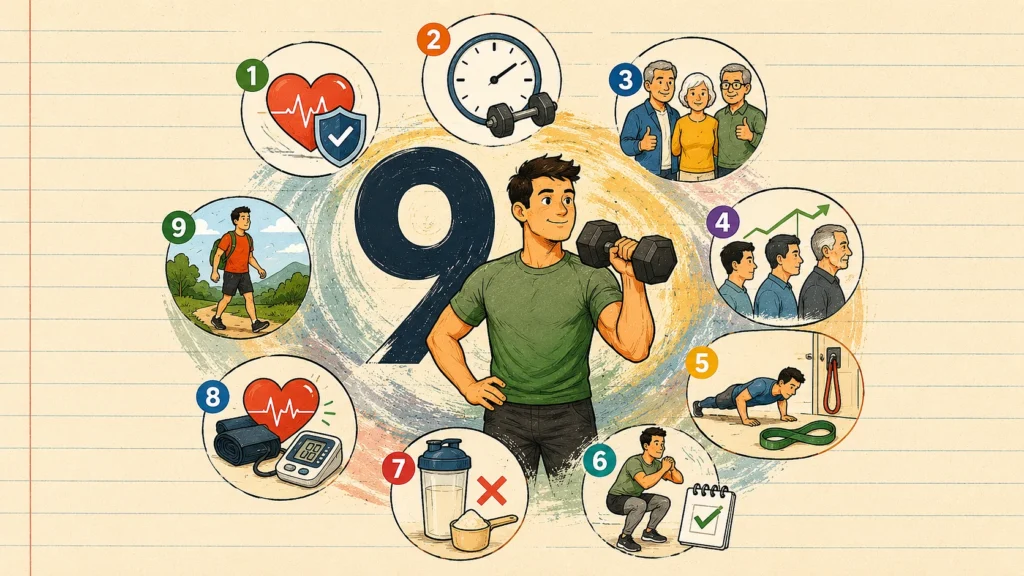
1. Two Strength Sessions a Week Cuts All Cause Mortality Risk
The World Health Organization says adults should do muscle-strengthening work on two or more days a week, hitting the major muscle groups.
Researchers pooled eleven separate studies to test that number. People who met the the small daily habits strength recommendation had a hazard ratio of 0.80 for death from any cause compared to people who did not. That is roughly a fifth lower risk. People who met both the strength and the cardio recommendations came in at 0.71.
2. You Only Need 30 to 60 Minutes of Strength Work Per Week

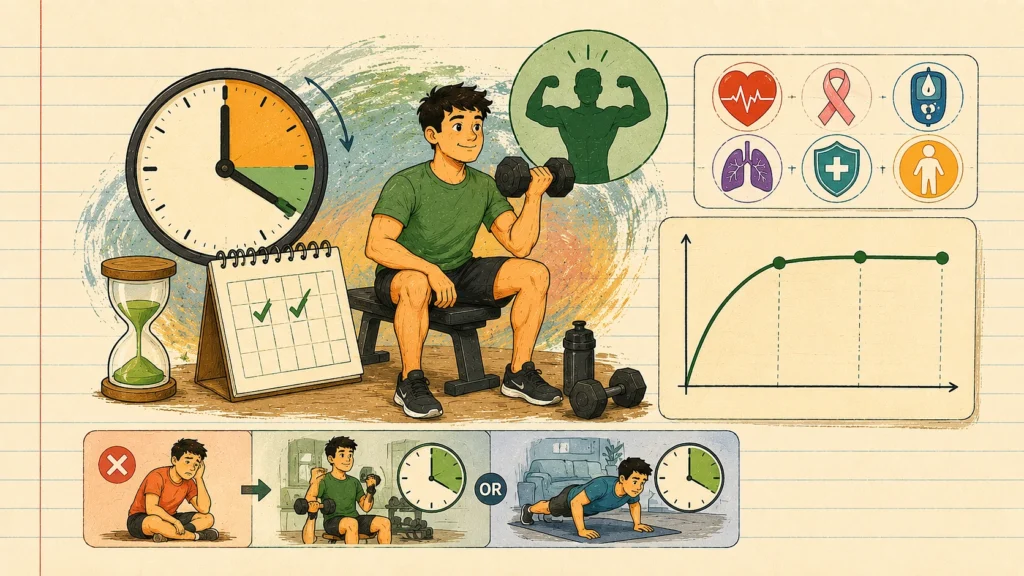
A review of many prospective studies found the best risk reduction landed at 30 to 60 minutes a week. That covered heart disease, cancer, diabetes, lung cancer and death from any cause.
Past an hour, the extra benefit flattens out.
Half an hour a week. That is one gym session, or two short sessions at home. The big jump is from zero to thirty minutes, and almost nothing after that matters as much.
3. Only 13% Of Older Adults Actually Do It
Fewer than 20% of older adults meet the full physical activity guidelines. Just 13% do strength work twice a week.
Researchers have started calling it “the forgotten guideline”. The 150-minutes-of-walking message reached the public. The strength half never did.
If you do any resistance work at all, you are already in a small group.
4. Strength Peaks Between 30 And 40, Then Starts Dropping
Muscle strength usually tops out around age 30 to 40. After that it declines slowly, then faster in later life.
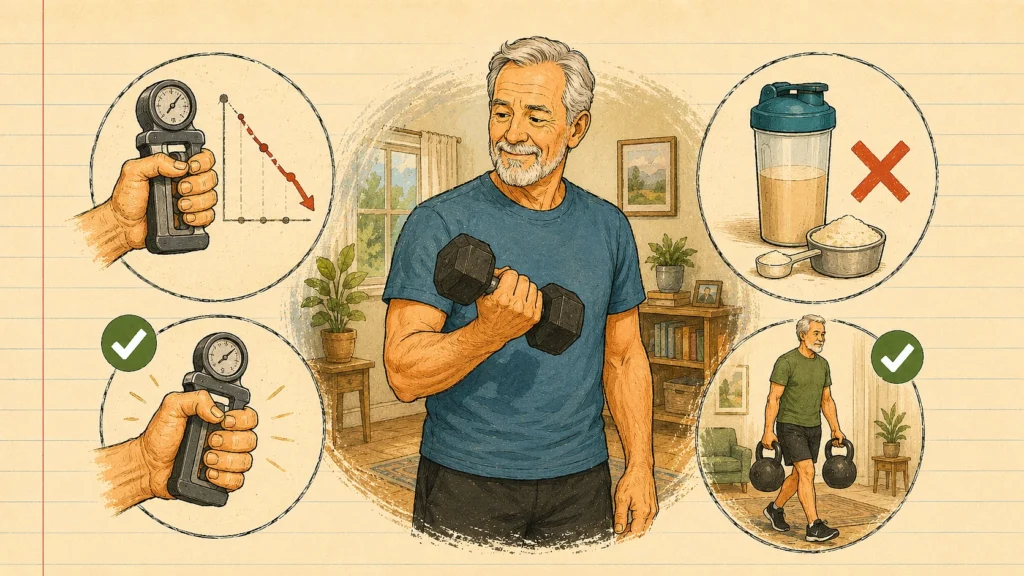
Grip strength is one of the better predictors of how well someone ages and whether they stay independent.
Before 40, training builds your ceiling. After 40, it defends it. The drop happens either way. How fast it happens is the part you control.
5. Push-Ups And Resistance Bands Count, No Gym Needed
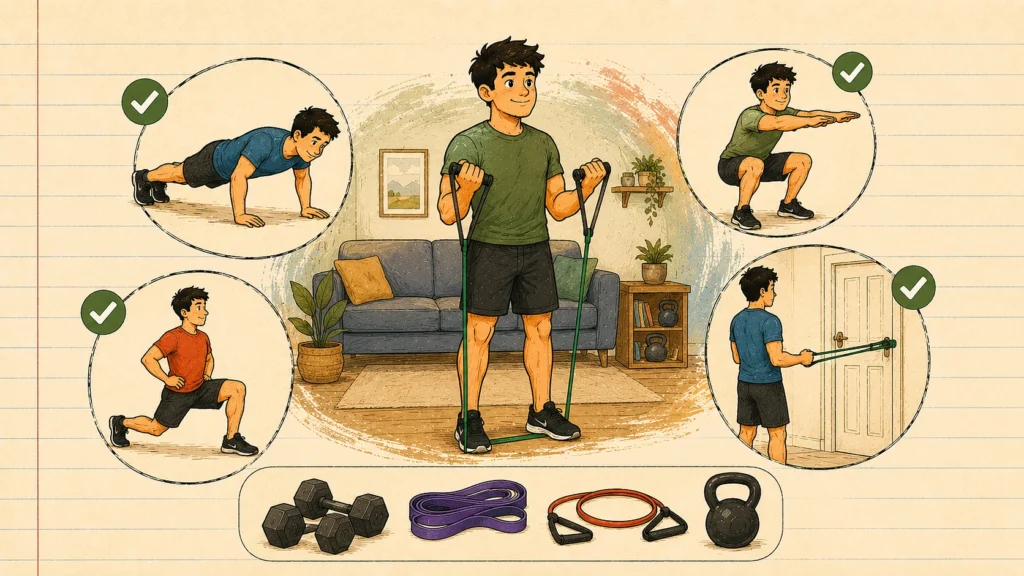
UK guidance defines qualifying activity as movements that work upper and lower body muscle groups, repeated to fatigue or failure. The examples it gives are bodyweight exercise, free weights, resistance machines and elastic bands.
There is no gym membership in that definition anywhere.
Push-ups, squats, lunges, a resistance band looped round a door handle. All of it counts, exactly as written in the guidance.
6. One Hard Set Per Muscle Group Per Week Still Builds Real Strength
Two or more sessions per muscle group per week is best for maximum strength gain. That is the optimal case.
The minimum is far lower than people think. One set per muscle group per week, taken to failure, produces substantial strength change.
So somebody doing one hard set of squats and one hard set of push-ups a week is not wasting their time. They are getting a measurable result from about four minutes of work.
7. Extra Protein Alone Does Not Stop Grip Strength Declining
This one goes against what most fitness content says.
The recommended intake is 0.8 grams per kilogram of body weight per day. Plenty of sources push far higher amounts as protection against age-related muscle loss.
Researchers pooled four long-term ageing studies to check. They found no evidence that higher protein intake slowed grip strength decline, on its own or combined with more physical activity.
Protein still matters for repair and for feeling full. It does not replace lifting something heavy.
8. Meeting The Strength Guideline Improves Blood Pressure Control
A study of 114 adults measured cardiovagal baroreflex sensitivity, which is how well your body adjusts blood pressure beat to beat.
People doing more strength work scored better. People meeting the guideline specifically scored better again.
Strength training is doing something to your nervous system, not just your muscles.
9. Some is Better Than None, And That is The Official Position
The WHO’s own wording: “Some physical activity is better than doing none.”
At 150 minutes a week of moderate activity, injury rates are uncommon and the benefits outweigh the risks for every adult age group.
For anyone who cannot manage the full amount because of a health condition, the guidance says to be as active as their situation allows. There is no failing grade here.
What the nine add up to
Two sessions a week. Thirty to sixty minutes total. Major muscle groups. Work close to failure. Use whatever is in the room.
The reason this needs nine points instead of one is that people quit for specific wrong reasons:
- They think they need a gym. Point 5 says no.
- They think an hour minimum is required. Point 2 says thirty minutes.
- They think protein powder does the work. Point 7 says it does not.
- They think starting after 40 is pointless. Point 4 says the opposite.
If you have a heart condition, joint problems, or you have been inactive a long time, speak to your doctor before starting, especially about training to failure. That part is not right for everybody.