


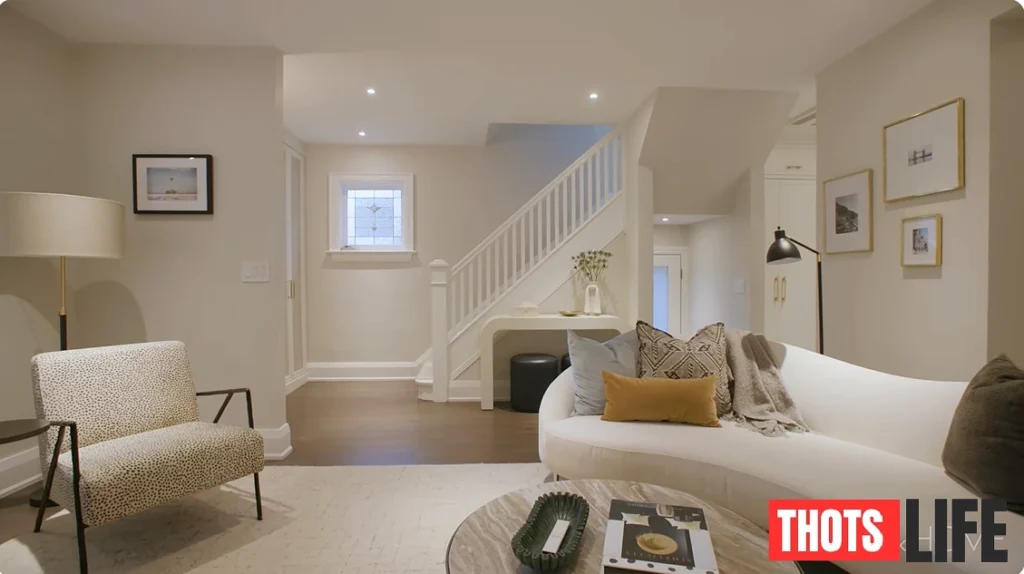
The open-plan room dominated home design for two decades, then real life caught up with it: nowhere quiet, no privacy, every activity bleeding into the next. The 2026 answer isn’t rebuilding walls, it’s zoning, pulling a defined focus corner out of one undivided room without losing the light. This is the principle behind why it works and the practical moves that carve a zone the eye and body actually read as separate.
For twenty years the brief was knock the walls down. Now half my consultations open with a version of the same question, how do I get some of them back without losing the light.
That’s the whole shift in one sentence. Open-plan won, dominated home design for two solid decades, and then real life caught up with it. The room that was supposed to be the dream, kitchen flowing into dining flowing into living, turned out to be a place where you can hear the dishwasher during a work call, where there’s nowhere to read that isn’t also where someone’s cooking, where every activity bleeds into every other one.
So the work now isn’t tearing down or rebuilding. It’s carving. Taking one undivided room and pulling a focus zone out of it, a corner that reads as its own place, without putting up a single wall.

The Backlash Is Real, And The Data Backs It
This isn’t a few designers talking. The signal is everywhere you’d look.
Major design publications spent 2026 running the same story under different headlines: open-plan is being rethought, broken-plan is the answer, clients are asking how to divide space rather than open it further. The trade press calls it broken-plan or zoned living. Homeowners just call it wanting somewhere quiet.
And there’s a hard number under the mood. Zillow tracked a surge in “reading nooks” appearing in 2025 home listings, alongside wellness features like meditation zones. When a feature starts showing up in listings, that’s not a magazine trend anymore, that’s what’s actually selling houses.
The reasons are not mysterious. Three of them do most of the work: noise with nowhere to go, no privacy when the home is also an office and a classroom, and the plain fact that one room trying to be four rooms ends up being none of them particularly well.
The Mistake Almost Everyone Makes First

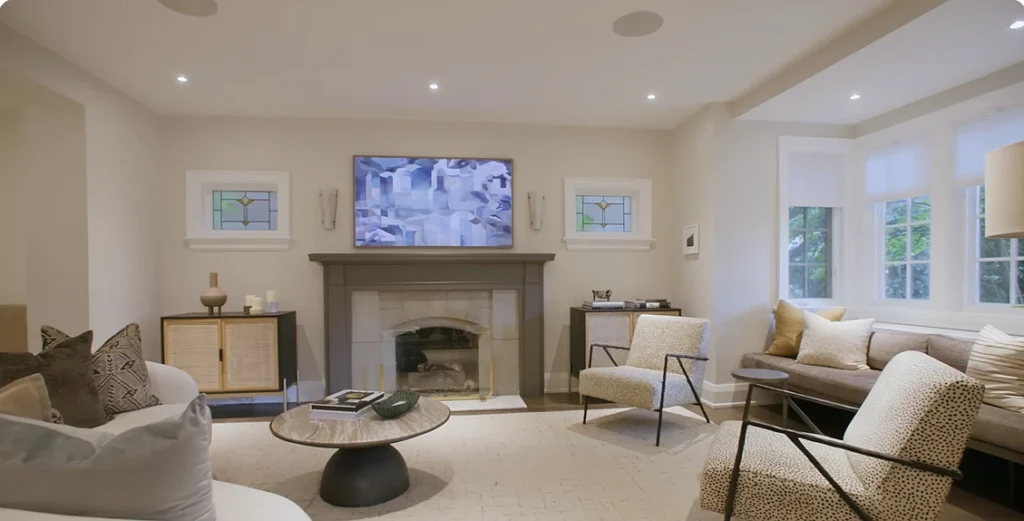
Before the how, the thing to not do.
People’s instinct, when they decide they want a defined corner, is to reach for the most obvious tool: a tall freestanding bookshelf, a folding screen, something they can plant in the middle of the room to block the space off. And it almost always backfires. You end up with a clumsy object marooned in the floor plan, killing the light and the flow that were the only good things open-plan gave you in the first place.
The principle worth holding onto is that you’re not trying to build a wall that happens to be furniture. You’re trying to make the eye and the body read a corner as separate, while the room stays physically open. Those are two completely different jobs. Separation you can feel, not separation you have to walk around.
That’s the part that takes a little skill, and it’s exactly the part the cheap solutions skip.
How To Actually Carve The Zone

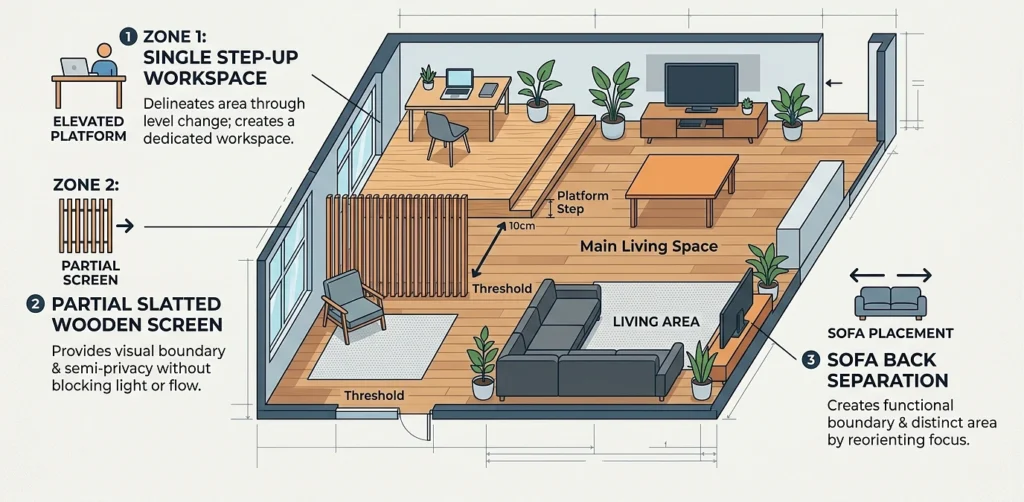
There’s no single trick. A focus zone reads as its own place when a few quiet signals stack up and agree with each other. Here are the ones that do the heavy lifting.
- Anchor it with a rug. A rug under a defined seating or work area is the single cheapest, most effective boundary there is. The edge of the rug becomes the edge of the room-within-the-room, and your eye accepts it instantly. Float the furniture wholly on or wholly off it, never half and half, or the line blurs and the whole effect goes soft.
- Change what’s overhead. This is the move amateurs never think of and designers reach for first. A drop in the ceiling, a different light, a pendant hung low over the spot, all of it tells the brain “different room” without a single vertical barrier. Lighting is doing more than you’d guess here. A pool of warm, separate light over a reading chair carves it out of an open room more convincingly than most physical dividers.
- Shift the level, if you can. A single step up onto a small platform is one of the strongest zone signals in the whole toolkit, because you feel the transition in your feet. It’s more work than a rug, obviously, but in a space where you can manage it, a raised corner reads as a genuinely separate room even with nothing around it.
- Use a partial divider, not a full one. If you do want something physical, the trick is partial. A low bookcase you can see over, an open slatted screen, a half-height bit of joinery. Enough to suggest a threshold, not enough to wall off the light. The goal is a hint of a boundary, a “you’re entering somewhere now,” not a barrier.
- Turn the furniture’s back. The simplest one. Float a sofa or a chair with its back to the rest of the room and you’ve drawn a soft line. The backrest says “this side is the zone,” and people read it without noticing they’re reading it.
The thing that makes it work is that no one of these is the answer. You layer two or three, a rug plus a low pendant plus the furniture facing inward, and they reinforce each other until the corner simply reads as its own place. One signal is decoration. Three agreeing signals is a room.
Why This Is The Right Way To Do It
There’s a reason the field landed on zoning rather than rebuilding, and it’s not just cost.
The whole appeal of an open home, the light, the air, the connection between people in different parts of it, is real and worth keeping. Walls give you privacy back but take all of that away. Zoning is the attempt to have both: the openness when you want company, a corner that holds its own when you need to disappear into a book or a piece of work.
Get it right and the room finally does what an open-plan space always promised and rarely delivered. It adapts. Sociable when you want it, quiet when you don’t, all in the same square footage, no walls required.