


Sleep eludes millions of people every night. They lie in bed watching shadows move across walls while exhaustion builds in their bodies. Traditional sleep aids lose effectiveness over time. Behavioral alternative therapies help some but fail others completely.
Medical professionals are increasingly exploring TMS for insomnia as a potential breakthrough for stubborn sleep disorders that resist conventional treatment approaches.
What is TMS?
TMS is an innovative therapy that uses magnetic fields to stimulate specific areas of the brain. The treatment was first FDA-approved for treating major depressive disorder, and it has since shown promise in relieving a range of other neurological and mental health conditions, including anxiety disorders, post-traumatic stress disorder (PTSD), and even insomnia.
- During a TMS session, a stimulator (or electric pulse generator) is connected to a magnetic coil placed on the individual’s scalp.
- This coil creates a magnetic field which induces an electric current that reaches specific regions of the brain and stimulates nerve cells.
What Is Insomnia?
Insomnia is a common sleep disorder where people struggle to fall asleep, stay asleep, or get enough restful sleep. While it’s normal to have the occasional sleepless night, insomnia is different it’s persistent and starts interfering with your daily life. It can be short-term (often due to stress or life changes) or long-term, lasting months or even years.
Chronic insomnia can seriously affect your energy, mood, and focus. Over time, it can increase the risk of mental health issues like anxiety and depression, and even physical problems like heart disease.
Types of Insomnia

There are two main types of insomnia:
- Primary Insomnia: This type isn’t caused by any other health condition. It stands alone as its own diagnosis.
- Secondary Insomnia: This occurs alongside other medical issues such as chronic pain, medication use, depression, or substance use.
While many cases are tied to other health issues like anxiety or depression, primary chronic insomnia is a standalone diagnosis according to the DSM-IV. It’s not related to other mental health disorders, medications, or sleep issues like narcolepsy or sleepwalking.
Common Symptoms of Insomnia
Insomnia symptoms can vary, but typically include:
- Trouble falling asleep: Lying awake for long periods at night.
- Waking up often: Having a hard time staying asleep through the night.
- Waking up too early: Getting up hours before your alarm and not falling back asleep.
- Bedtime resistance: Struggling to go to sleep at a normal time.
According to the American Academy of Sleep Medicine, insomnia is considered chronic if symptoms occur at least three times a week for three months plus one or more daytime issues such as:
- Fatigue or low energy.
- Mood swings, anxiety, or irritability.
- Trouble concentrating or remembering things.
- Physical symptoms like tension headaches or restlessness.
- Poor performance at work, school, or home.
- Behavioral challenges like impulsiveness or hyperactivity.
Sleep Disorder Mechanisms
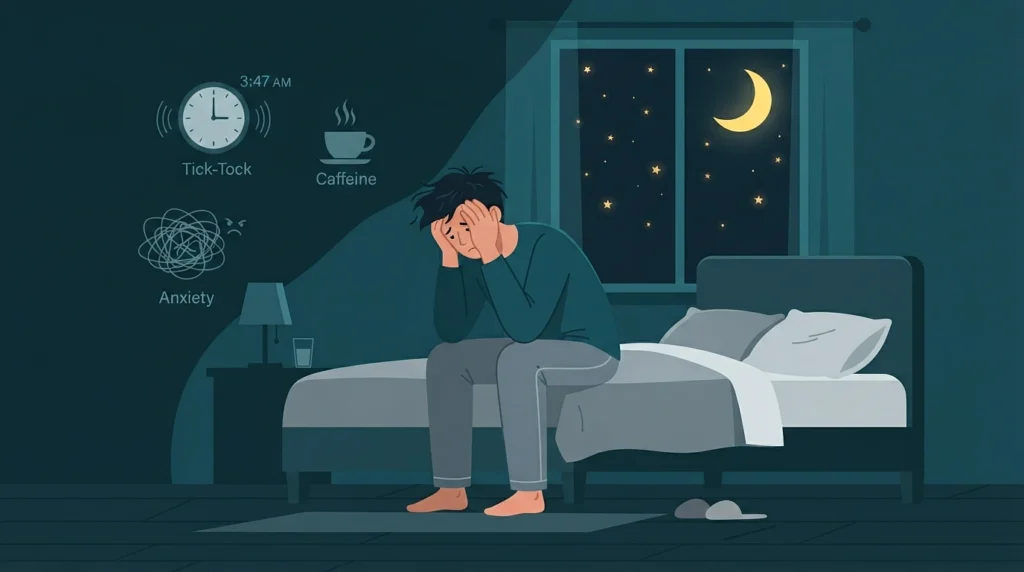
Insomnia often stems from overactive arousal systems that prevent normal sleep initiation. Stress hormones maintain elevated alertness levels even when physical fatigue is present. Anxiety circuits can remain activated for hours, making relaxation impossible.
Chronic pain creates complex sleep disruption through multiple pathways. Nociceptive signals maintain brain activation during rest periods. Pain anticipation can trigger anxiety responses that prevent sleep onset entirely. While researchers continue exploring TMS for anxiety disorders, the same overactive neural networks often contribute to sleep disturbances.
How Is Insomnia Treated?
Insomnia is typically treated with a mix of therapy and, when needed, medication. The most recommended approach is Cognitive Behavioral Therapy (CBT), which helps rewire unhelpful sleep habits and thoughts. In more stubborn cases, newer treatments like Transcranial Magnetic Stimulation (TMS) can be highly effective.
Cognitive Behavioral Therapy (CBT)

CBT is the gold standard for treating insomnia. It helps people shift their thoughts and behaviors around sleep. The therapy has two main parts:
- Cognitive techniques: Help you identify and change negative thoughts or worries about sleep.
- Behavioral techniques: Help you create better sleep habits and stop actions that disrupt rest.
Some common behavioral strategies in CBT include:
- Stimulus Control Therapy: Training your brain to associate your bed only with sleep and intimacy not watching TV or stressing out.
- Sleep Restriction Therapy: Limiting time in bed to boost sleep efficiency.
- Relaxation Training: Using breathing, muscle relaxation, or biofeedback to wind down.
- Paradoxical Intention: Relieving sleep anxiety by encouraging people to stay awake on purpose.
- Light Therapy: Adjusting your internal body clock with timed light exposure.
Medications for Insomnia
Prescription sleep aids are sometimes used, typically for short-term relief. These include:
- Benzodiazepines (BZDs): Fast-acting drugs, but not often recommended due to the risk of dependency.
- Non-benzodiazepine sedatives (e.g., zolpidem): Similar benefits with fewer side effects.
- Melatonin agonists (e.g., ramelteon): Mimic the natural sleep hormone.
- Orexin receptor antagonists (e.g., suvorexant): Help regulate sleep/wake cycles.
- Other options: Antidepressants, antipsychotics, and over-the-counter options like antihistamines or melatonin supplements.
Medication is typically a last resort after trying therapy and lifestyle changes.
TMS Therapy for Insomnia
Transcranial Magnetic Stimulation (TMS) is an exciting, non-medication option for chronic insomnia. It uses magnetic pulses to stimulate parts of the brain involved in sleep and mood regulation helping rebalance brain activity and promote deeper, more restful sleep.
TMS is:
- Non-invasive.
- Drug-free.
- Performed while you’re fully awake.
- Administered in daily sessions lasting 20–40 minutes.
It’s also known to reduce anxiety, a common factor in insomnia.
How TMS Works for Sleep
TMS targets areas of the brain such as the right dorsolateral prefrontal cortex that help initiate and maintain sleep. A low-frequency version called rTMS has shown positive results in improving sleep cycles, especially deep and REM sleep.
What the Research Says
Study: TMS Outperforms Medication and CBT
A 2013 study looked at 120 people with primary chronic insomnia. They were split into three groups:
- Group 1: Received low-frequency TMS.
- Group 2: Took benzodiazepines.
- Group 3: Underwent CBT.
The TMS group saw a 25% increase in sleep time, better REM sleep, and longer-lasting improvements compared to the other groups with no reported side effects.
2021 Systematic Review & Meta-Analysis
A major review of 36 trials (2,357 participants) published in Sleep Medicine confirmed that rTMS is both safe and effective, improving total sleep time and boosting restorative sleep stages like REM and deep sleep.
The Sleep-Mental Health Connection
Sleep and mental health are tightly connected. Poor sleep can lead to:
- Depression: Lower serotonin, more hopelessness.
- Anxiety: Heightened stress response.
- PTSD: Disrupted trauma processing.
The link goes both ways untreated mental health conditions often cause insomnia, and insomnia can worsen them. This is where TMS stands out: it can help treat both mental health and sleep issues at the same time.
Why TMS Might Be Right for You
TMS for insomnia offers several benefits:
- Better quality and duration of sleep
- Normalized sleep cycles
- Precision targeting of brain regions involved in sleep
- Relief from coexisting depression, anxiety, or PTSD
If you’ve tried CBT or medication without success, TMS may be the breakthrough treatment you’ve been waiting for.