



My oldest pair of work pants is a 12 year old duck canvas pair with paint from three houses on them and both knees still intact. The stretch pair I bought in 2023 felt wonderful in the fitting room, and inside a year they had bagged out at the knees, and the fabric over the right thigh, where a phone and a folding rule ride all day, had gone thin and shiny like someone took sandpaper to it. Same jobs. Same washer. The difference is what the fabric is made of.
This article explains that difference properly, because the trade is real on both sides. Elastane buys comfort and it charges you in lifespan, a gusseted cut buys most of the same movement without the charge, and for anyone working near arc flash or flash fire there is a line that is not about money at all. I will take the three in order, and I will define the terms as we go, since half the confusion in this subject comes from words the label uses and the shopper never gets explained.
Elastane Wears Out First, And A Jobsite Is Built To Wear It Out

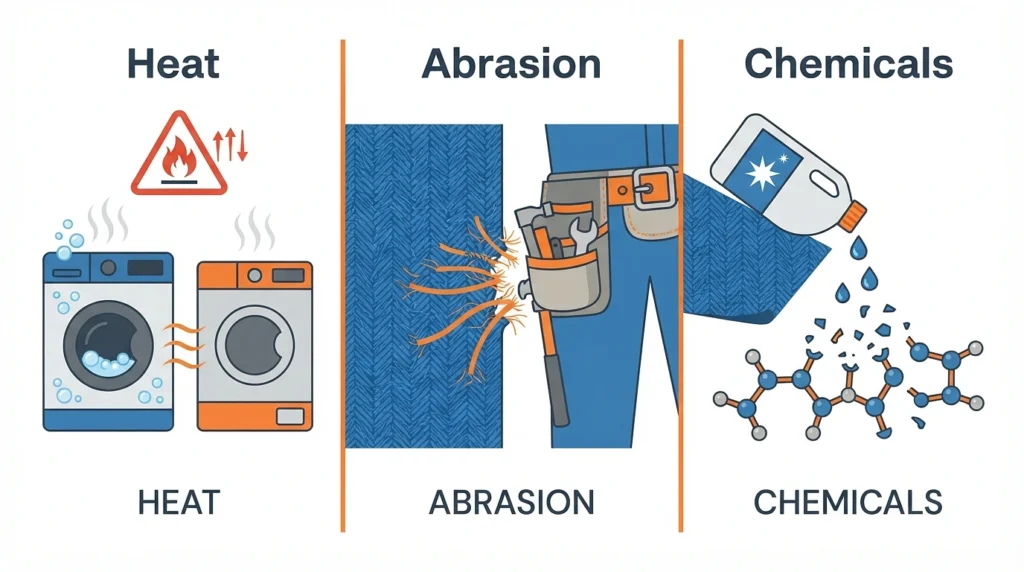
What Elastane Actually Is
Elastane is a synthetic fiber, chemically a segmented polyurethane, sold as spandex in the US and under the Lycra brand name. Its one gift is elastic recovery. It stretches to several times its length and pulls back to shape, and a small amount woven through cotton or polyester, usually two to five percent in work garments, gives the whole fabric noticeable give. That is the entire job it does in a pant. It contributes no strength, no abrasion resistance, and no structure. It is the softest thing in the blend, and every property that makes a pant last belongs to the other fibers around it.
The Three Things That Break It Down
Heat is the first. Textile guidance puts safe processing for conventional elastane at roughly 85 degrees Celsius and below, and repeated hot washes, high tumble drying, and industrial laundering all degrade the fiber. The cotton in the pant does not mind any of that. The elastane does, and the stretch dies while the fabric around it is still perfectly serviceable.
Abrasion is the second, and it is the one that matters most for this audience. Fabric engineering guides name workwear directly here, because constant friction from tool belts and packs causes the spandex filaments to rupture through the host fabric surface. That is the failure my shiny thigh patch shows. The stretch fiber does not wear down politely inside the weave. It breaks and pushes through.
Chemicals are the third. Chlorine and bleach attack the fiber’s molecular bonds, so a crew that bleaches its whites is quietly dissolving the stretch with every load.
How Much Is Too Much
The blend numbers give a usable answer, and it runs lower than the fitting room suggests.
| Elastane content | What you get | What it costs you |
|---|---|---|
| 0 percent | Full fabric durability, mechanical stretch only from cut | Stiffness until broken in |
| 2 to 5 percent | Noticeable give, near normal lifespan with cool washing | Modest, mostly care sensitivity |
| 5 to 10 percent | Athletic level stretch | Faster knee and seat bagging, structure loss in heavy fabric |
| Above 10 percent | Activewear territory | Wrong tool for workwear, heat and abrasion take it apart |
Laundering simulations support the low end. In cyclic stretch testing, a 90/10 polyester blend held its shape at the knees and elbows visibly better than 85/15 across 50 plus washes, and general apparel guidance flags that jeans above five percent elastane lose their structured feel. So the working rule is simple. If you want stretch in a daily work pant, keep the number in low single digits, pair it with a tough host fiber, and wash it cool. Most crews will not wash it cool. Which brings us to the older solution.
A Gusset Moves With You Through Geometry, Not Chemistry
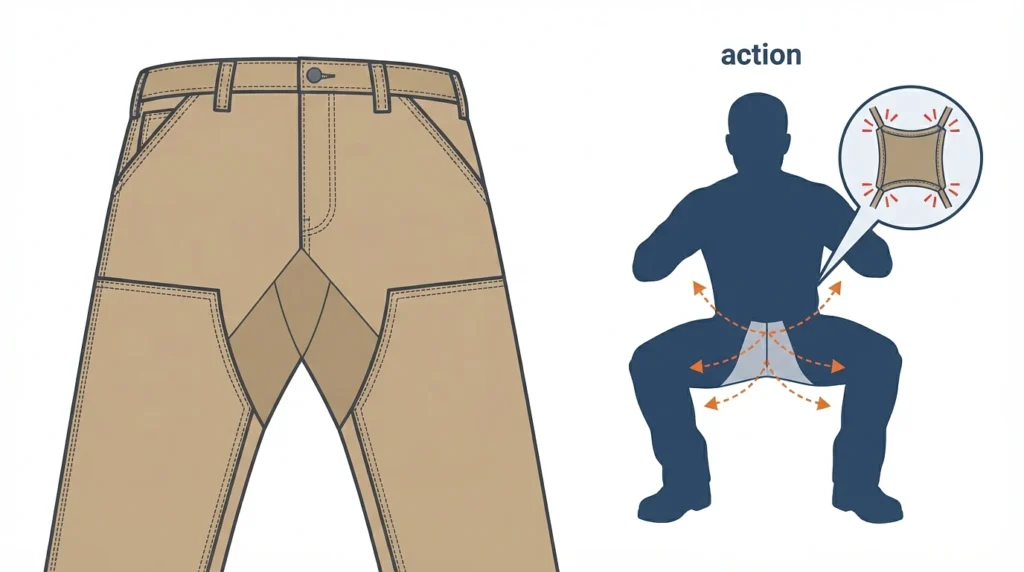
What A Gusset Is
A gusset is a diamond shaped panel of fabric sewn into the crotch of a pant, at the point where four seams would otherwise meet in one overworked junction. That junction is where the classic crotch blowout happens, the mid squat rip every tradesperson knows. The gusset replaces the stress point with a panel, and the panel adds slack across the seat and thighs. When you squat, lunge, or reach up a ladder, the pant follows you using that extra material instead of asking the fibers to stretch. Articulated knees, seams shaped to mirror a bent working leg, do the same work for the lower half of the pant.
Why The Gusset Wins Over Time
The gusset is cut from the same duck or ripstop as the rest of the garment, so it ages at the same rate as the garment. There is no separate fiber quietly dying inside the weave. It does not care about hot water or bleach. It cannot bag out, because nothing in it is elastic. The trades focused brands that build their fits this way do it for a plain commercial reason, their warranty math punishes fibers that quit early.
The honest limitation belongs here too. A gusseted canvas pant does not feel like a stretch pant in the first thirty seconds of trying it on, and the first thirty seconds is where most buying decisions get made. The gusset wins over months of wear. The elastane wins in the fitting room. Know which of those two contests your purchase is actually running, and buy for the one that matches how long you intend to keep the pants.
The FR Catch, Where Elastane Stops Being A Durability Question
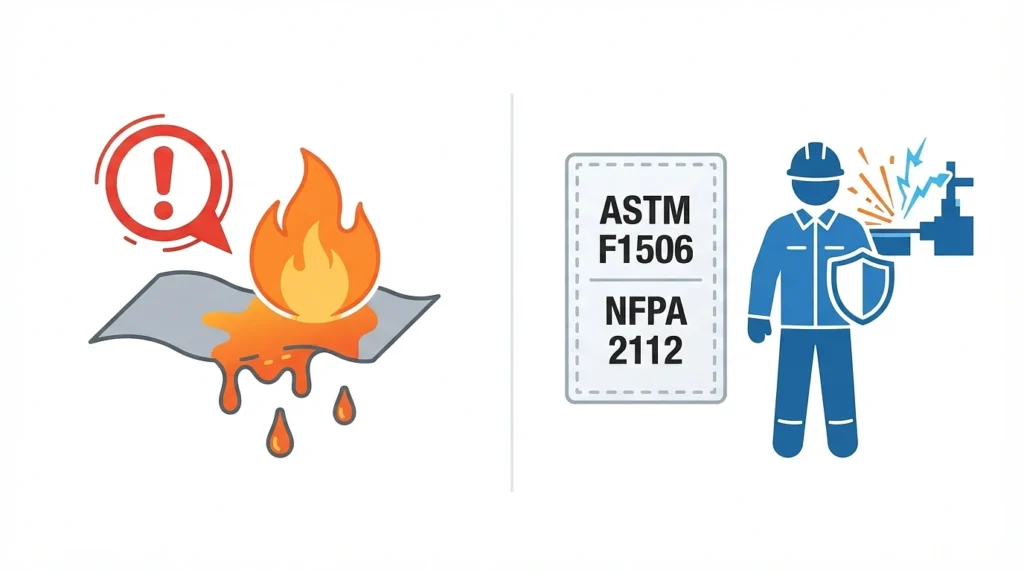
What FR And AR Mean On A Label
Flame resistant clothing, FR, is built to self extinguish when the flame source is removed, and its defining property is that it must not melt or drip. Arc rated clothing, AR, is FR clothing that has additionally been tested against electrical arc flash and carries a rating in calories per square centimeter. Two standards govern most of this in US work. ASTM F1506 is the specification behind arc rated garments used to satisfy NFPA 70E electrical safety management requirements. NFPA 2112 is the flash fire standard common in oil and gas.
Why Elastane Fails The Whole Category
Elastane is polyurethane, and polyurethane is genuinely flammable. In open flame it curls, melts, and burns with molten drips, and melted synthetic adheres to skin, causing severe secondary burns. Burning polyurethane also releases toxic gases, including isocyanates. The standards are written directly against that behavior. ASTM F1506 requires fabric to self extinguish within 2 seconds, show no melting or dripping, and keep those properties after 25 industrial wash cycles, and the rule reaches all the way down to the embroidery thread, which must be flame resistant fiber that does not melt at 500 degrees Fahrenheit. NFPA 2112 requires FR performance to survive at least 100 industrial launderings.
The Practical Rule For Anyone Near The Hazard
Stretch is a selling feature everywhere now, and an ordinary stretch pant looks identical to a safe one on the shelf and on the worker. So the rule has to live on the label, not the look. If your work involves arc flash exposure, flash fire risk, welding, or grinding sparks, wear garments labeled ASTM F1506 with an arc rating, or NFPA 2112 certified, and treat ordinary elastane workwear as off limits around those hazards regardless of how rugged it appears. FR rated stretch garments do exist, built on inherently flame resistant fibers with engineered stretch, and they cost real money because that engineering is difficult. A cotton elastane pant from the regular aisle is not that garment. Your site’s hazard assessment and your safety manager make the final call on what gets worn in those zones, and that is exactly as it should be.
The summary I would give an apprentice runs three sentences. For everyday carpentry and remodel work, stretch is a fair trade if the elastane stays in low single digits and you accept a shorter life, or skip the trade entirely and buy the gusset. For any job with a thermal or electrical hazard, the question answers itself. Read the label, not the marketing.