


Key Takeaways
- Therapy for ADHD is genuinely evidence-backed, and it is routinely oversold. Both things are true, and knowing which is which saves people years of frustration.
- What therapy cannot fix: the underlying neurobiology of attention. The largest network meta-analysis to date (113 trials, ~14,900 adults) found stimulant medication was the only intervention with short-term efficacy on core ADHD symptoms confirmed by both patients and clinicians.
- What therapy genuinely does: builds executive-function skills and systems, treats the depression and anxiety that ride along with ADHD, helps emotional regulation, and repairs the self-esteem damage from years of being called lazy. CBT’s effects here are real, measured, and sustained at least 12 months.
- The best-supported care is usually both: combined medication-plus-therapy outperforms medication alone and improves treatment adherence.
- Useful nuance from the newest research: group-based CBT works best for core symptoms and executive function; individual CBT works best for emotional regulation.
- None of this is self-serve. Diagnosis needs a proper evaluation, and medication decisions belong with a prescriber. Therapy and medication are teammates, not rivals.
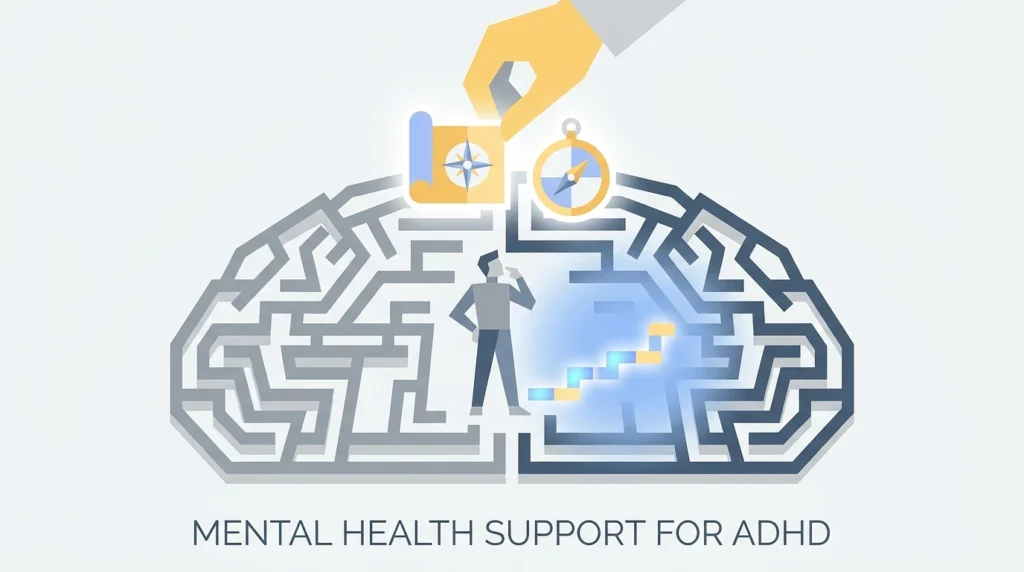
There’s a version of this article that oversells therapy, all “unlock your potential” and no numbers, and a version that dismisses it, “ADHD is neurological, just medicate.” Both versions fail the person actually trying to decide what to do, because the truth sits in a specific, well-documented middle: therapy for ADHD does real things the research can measure, and it does not do the thing people most often hope it will. Being honest about that line isn’t pessimism. It’s the only way to use therapy for what it’s actually good at, which turns out to be a lot.

First, The Honest Part: What Therapy Cannot Fix
ADHD is a neurodevelopmental condition, a difference in how the brain’s attention and self-regulation systems work, and no amount of talking rewires that substrate. The clearest evidence statement on this comes from the most comprehensive synthesis yet done, a component network meta-analysis in The Lancet Psychiatry covering 113 randomized trials and nearly 15,000 adults: in the short term, stimulant medication was the only intervention whose benefit on core ADHD symptoms, the inattention, the impulsivity, showed up in both self-reported and clinician-reported ratings. Non-drug approaches, including CBT, showed effects that were inconsistent across raters, patients often felt better while clinicians observed less change.
CBT does move core symptoms somewhat, and I want to be precise rather than dismissive. Meta-analyses of the trials find small-to-moderate effects, standardized differences in the range of 0.4 to 0.5 versus controls, which researchers themselves describe as modest but genuinely useful. Compare that with stimulants’ moderate-to-large effect size around 0.72 on core symptoms, among the more reliable effects in psychiatry, and the honest hierarchy is clear for the raw engine problems of attention and impulse, medication is the stronger tool, and therapy alone is asking a skills-based treatment to fix a hardware-level difference.
If you go into therapy expecting it to make the distractibility itself vanish, you’re setting up the exact disappointment that makes people quit and conclude “nothing works.” That expectation is the thing to fix first.
Now The Equally Honest Part: What Therapy Fixes That Medication Never Will

Here’s the flip side, and it’s why “just medicate” is as incomplete as “just do therapy.” There’s a saying in ADHD clinical circles that pills don’t teach skills, and the research backs the saying up in detail.
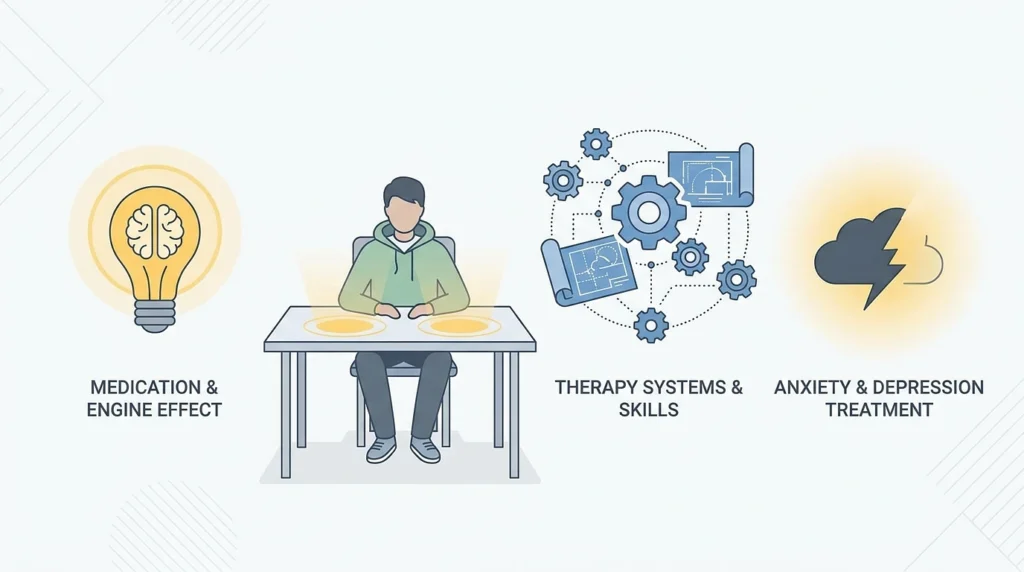
Medication improves the engine. It does not build the systems a life runs on, and it does not undo what years of untreated ADHD did to a person’s mental health and self-image. That’s therapy’s territory, and the evidence there is solid:
- Executive-function skills and structure. CBT adapted for ADHD teaches the external scaffolding, planning systems, task breakdown, time management, environmental design, that the ADHD brain doesn’t generate automatically. Meta-analyses show significant improvements in executive function (effect sizes around 0.43 to 0.56), and these are learned tools that keep working, with gains sustained at 12-month follow-up.
- The comorbidities, which are the rule, not the exception. Adults with ADHD very commonly carry depression and anxiety alongside it, often grown from years of struggle, and CBT measurably reduces both (significant effects on depressive mood and anxiety across the trials). Notably, medication doesn’t reliably treat these, and in the newest meta-analysis, quality of life improved most when CBT was combined with medication, the two treatments covering each other’s blind spots.
- Emotional regulation and the shame layer. Perhaps therapy’s most underrated job: dismantling the internalized story built from a lifetime of “lazy,” “careless,” “not living up to potential.” Individual CBT shows its strongest effects precisely on emotional outcomes, and no pill addresses a self-concept.
And one genuinely practical finding from the newest research, the kind of nuance that helps someone choose: the treatment format matters by goal. Group-based CBT and skills-training formats showed stronger effects on core symptoms and executive function, while individual CBT was more effective for emotional regulation and quality of life. If your biggest problem is systems and follow-through, a structured group program may serve you better than open-ended individual sessions, and vice versa if the heavier weight is the emotional aftermath.
The Fairness Clause: Medication Has Honest Limits Too
Since this piece is about honesty, it cuts both ways. Medication’s superiority on core symptoms comes with its own asterisks the research is clear about: side effects are real, dropout rates are high, and many people get only a partial response. Medication also hasn’t shown much effect on things like social functioning, and the long-term evidence base is thinner than anyone would like. Which is exactly why the best-supported answer in the literature isn’t either/or: combined psychosocial-plus-medication treatment outperforms medication alone and is associated with better adherence to treatment. The two aren’t competing philosophies. They’re covering different layers of the same condition, the engine and the driving.
What This Means If You’re Actually Deciding
Pulling the evidence into a usable shape:
- If core inattention and impulsivity are wrecking your life, the medication conversation belongs at the front, with a psychiatrist or other prescriber, because that’s where the strongest evidence for those specific symptoms sits. That’s not a moral statement, it’s what 113 trials say.
- If you’re medicated and still drowning in disorganization, missed deadlines, and emotional flooding, that’s not medication failing, that’s the part therapy exists for. Ask specifically for CBT adapted for adult ADHD, it’s a skills-based, structured approach, not generic talk therapy.
- Match the format to the problem: group/skills programs for systems and executive function, individual work for the emotional and self-worth layer.
- Expect the right things. Therapy will not switch off the ADHD. It will make the life around the ADHD run better, and the research says those gains last.
- And start with a real evaluation if you haven’t had one, because self-diagnosis can’t untangle ADHD from the anxiety, depression, and sleep problems that mimic and accompany it, and the whole treatment plan depends on getting that picture right.
The reframe I’d leave you with: asking “does therapy work for ADHD” is the wrong question, because it treats ADHD as one problem when it’s really two. There’s the neurological difference, where medication holds the strongest cards, and there’s the lived aftermath, the absent systems, the anxiety, the shame, where therapy holds cards medication doesn’t even play. Being honest about what therapy cannot fix isn’t a knock on therapy. It’s what lets you point each tool at the problem it actually solves, which, per the evidence, is exactly when people with ADHD do best.