


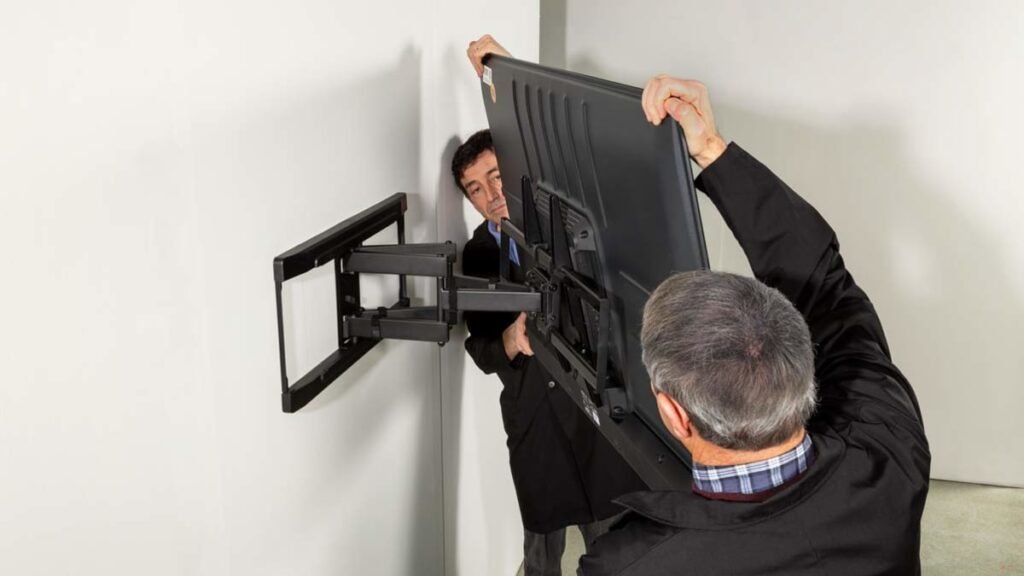
Mounting your TV is a great way to create a modern, streamlined look in your living area while optimizing your viewing comfort. Choosing the right TV mounts goes beyond aesthetics; it requires careful thought to ensure your television is both secure and well-positioned. Factors such as the mount type, wall material, and your room’s layout all play a role in the final decision. With so many TV mount options available, it is important to take a methodical approach to find the one that meets your needs.

From maximizing safety to enhancing your viewing angle, understanding how each mount type works will help you make the most informed choice for your setup. Making a thoughtful choice will not just protect your investment but also elevate your entertainment experience, allowing you to enjoy your favorite shows and movies from the best possible angle. The main types of TV mounts serve different purposes, and the following guide will help clarify which one suits your environment.
Types of TV Mounts

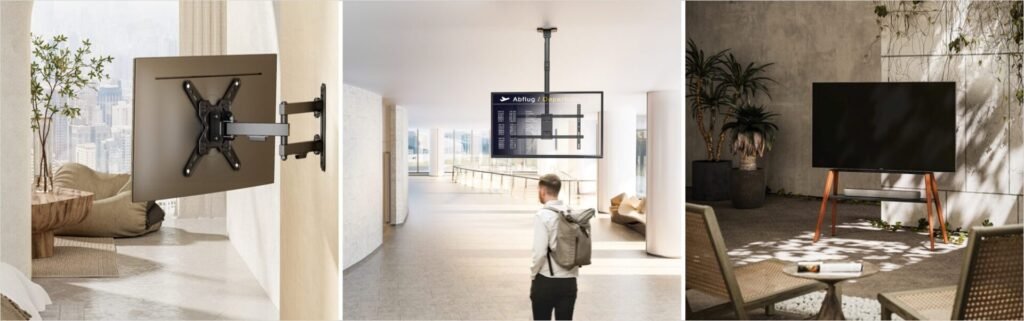
Before purchasing a mount, consider your viewing habits and how they align with the most common TV mount types.
Fixed Mounts
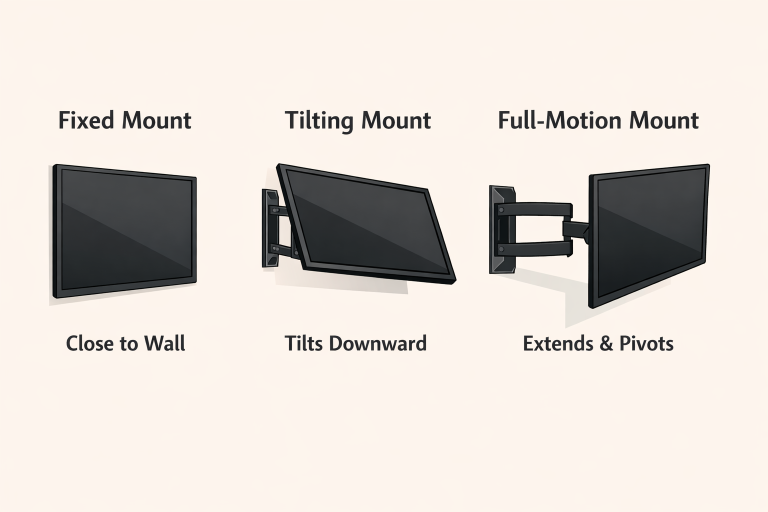
Fixed mounts are designed to keep the television close to the wall, making them ideal for those who want a neat, low-profile look and have a dedicated viewing position. These mounts do not allow tilting or swiveling, so they work best when the TV can be positioned exactly at eye level for everyday use.
Tilting Mounts
Tilting mounts offer simple vertical adjustment, which is helpful if your TV needs to be mounted higher than standard eye level, as is often the case over a fireplace or on a bedroom wall. The tilt function also helps to reduce glare from lights or windows, improving your viewing experience in brighter rooms.
Full-Motion (Articulating) Mounts
Full-motion mounts provide the most extensive range of movement, including tilting, swiveling, and extending the TV away from the wall. This flexibility makes them a top choice for households with open floor plans or multiple seating areas, as you can quickly adjust the screen to suit your viewing angle wherever you sit. Installation of these mounts can be more complex, as they require a sturdy anchor system to handle the extra leverage and weight.
Factors to Consider When Choosing a TV Mount

TV Size and Weight
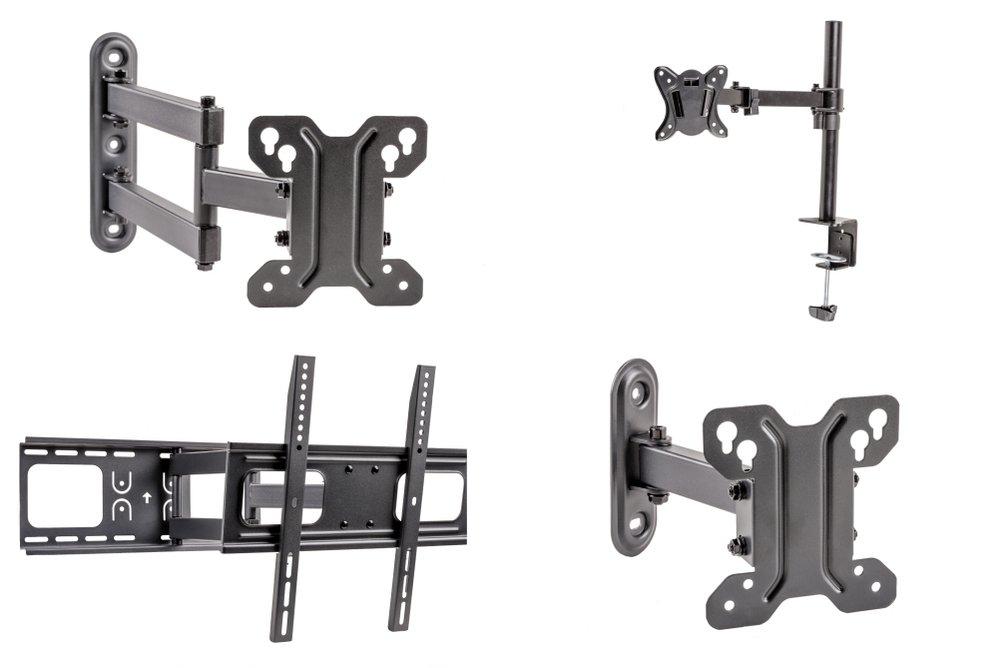
The first step in narrowing down your options is confirming the mount’s compatibility with your TV. Most TV mounts are categorized by screen size and weight limits. To avoid safety risks, always consult your TV’s manual and use the VESA pattern (the standardized hole pattern on the back of your TV) as a reference to ensure the mount’s specifications are met.
Wall Type
Your wall’s composition can significantly impact installation. Drywall installations, for example, require that you locate and anchor the mount directly into wall studs using appropriate lag bolts. If your wall is brick or concrete, masonry anchors or special hardware may be necessary for a secure setup.
Viewing Distance and Angle

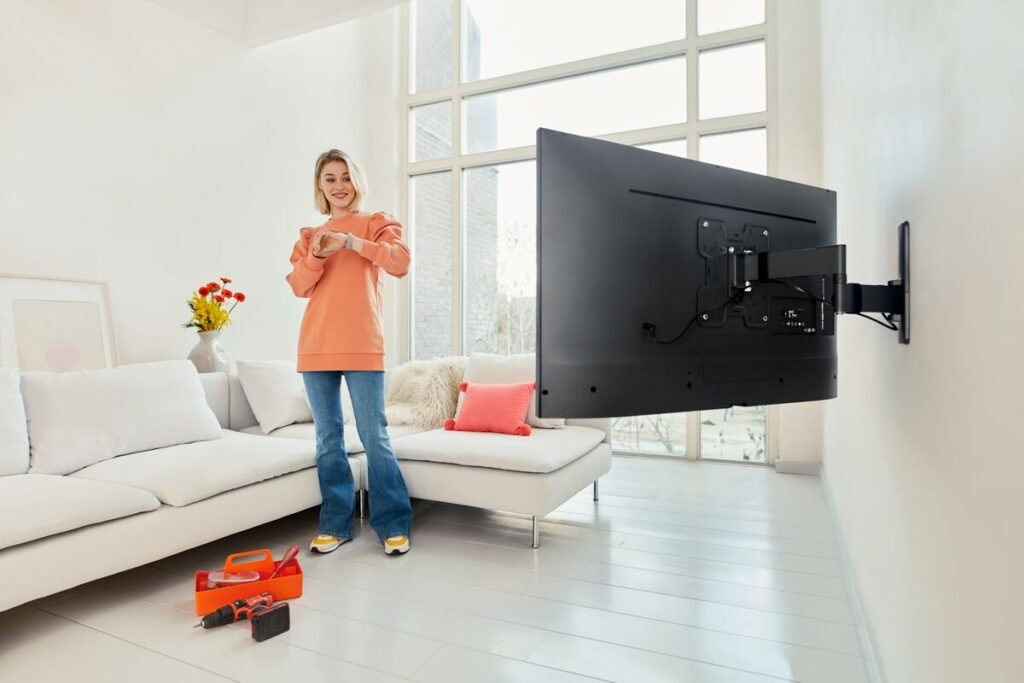
Achieving the ideal viewing distance and angle will reduce eye and neck strain and help you enjoy the sharpest picture. As a general rule, the center of the TV screen should be at eye level from your primary seating position. Rooms with multiple seating areas may benefit most from a full-motion mount, while single-position setups often work best with fixed or tilting mounts.
Cable Management
Tidy cable management is crucial for a finished look. Some mounts come equipped with integrated channels to route wires behind the TV, while other solutions include external cable raceways or in-wall concealment kits. Investing some effort here can make the entire installation look more professional.
Installation Tips
- Locate Wall Studs: Use a stud finder to detect wall studs behind drywall. If you do not have one, you can tap the wall and listen for a solid sound to estimate stud locations. A stud provides the necessary support for hanging heavy mounts and TVs.
- Use Appropriate Tools: Gather a level, power drill, screwdriver, and the hardware specified by your mount’s instructions. Each mount and wall type may require different fasteners, so double-check before drilling.
- Follow Manufacturer Instructions: Each mount comes with unique installation guidelines. Following them ensures the safety and longevity of your home setup.
- Consider Professional Help: When in doubt, hiring a licensed installer offers peace of mind and often protects your warranty.
For those unsure about handling power tools or heavy items, enlisting a professional installer can prevent costly mistakes.
Conclusion
The right TV mount can completely transform your space, both visually and functionally. By carefully considering your room layout, your television’s requirements, and the available mounting options, you will be able to select and set up the ideal mounting solution. The effort you invest in planning and installation will pay off in years of improved comfort, better aesthetics, and greater safety for your valuable electronics. Choose wisely, and enjoy the upgrade to your home entertainment space.