



Chemotherapy (commonly known as การทำคีโม in Thai) is usually the first option that comes to mind as the patient is wondering about the situation. The very first questions usually asked are: Is it really necessary? How effective is it? What will be the quality of life during the treatment?
These are concerns that can be considered, and knowing the position of chemotherapy in modern cancer treatment can lead the patients to a better decision together with their healthcare professionals.
What Is Chemotherapy?

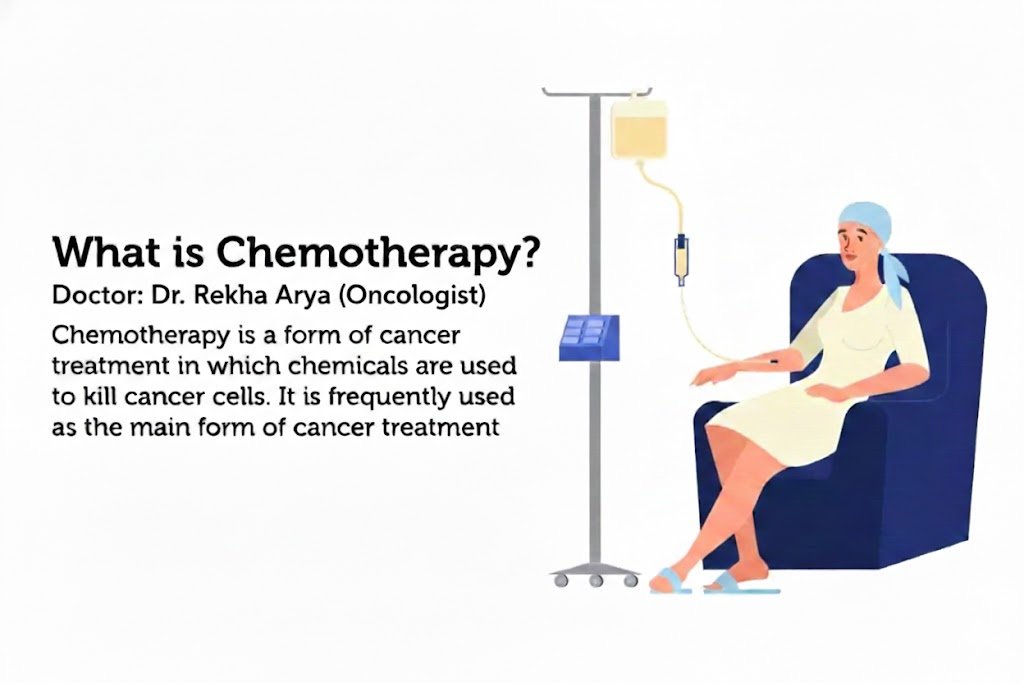
Chemotherapy is a widely used treatment for cancer. Often called “chemo,” it refers to a group of medications designed to destroy cancer cells or slow their growth. Chemotherapy is one of several forms of drug-based cancer therapy. Other important approaches include:
- Hormone therapy: Medications that block or reduce hormones that certain cancers need to grow.
- Immunotherapy: Drugs that strengthen or guide the immune system to recognize and attack cancer cells.
- Targeted therapy: Treatments that focus on specific genes, proteins or pathways that control how cancer cells grow and survive.
A medical oncologist supervises chemotherapy treatment. These specialists are trained in using cancer-fighting drugs and coordinating them with other therapies.
Chemotherapy is often combined with surgery, radiation therapy or both to improve the chances of controlling or eliminating cancer.
How Does Chemotherapy Work?
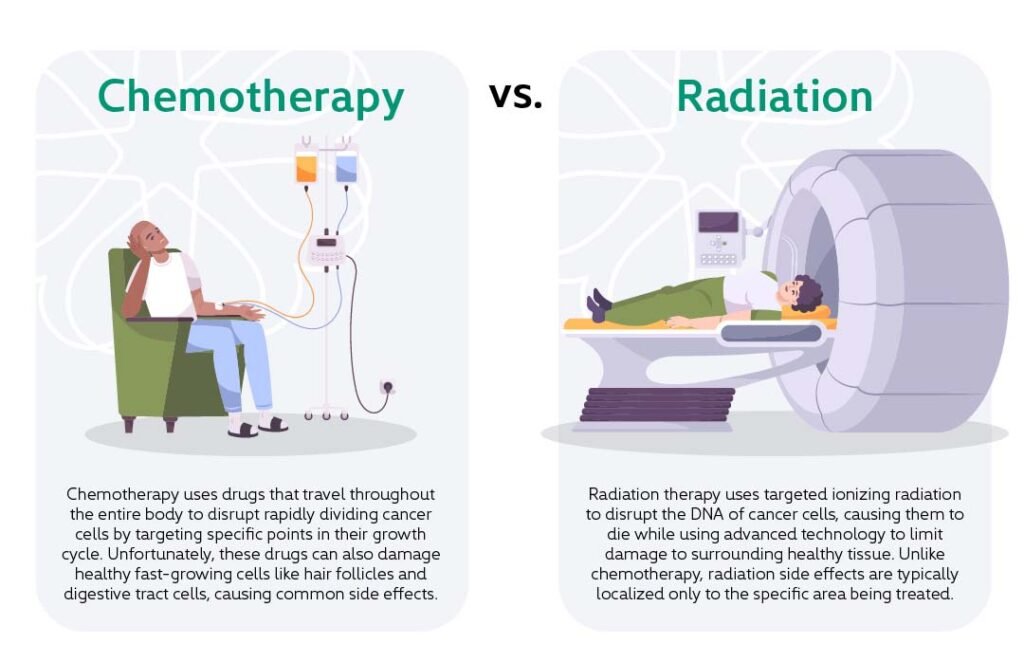
Cancer cells divide rapidly and without normal control. Chemotherapy works by damaging these fast-growing cells or stopping them from multiplying. While chemotherapy targets cancer, it can also affect some healthy fast-growing cells, which explains many side effects.
Your oncologist may use chemotherapy for different purposes:
- Adjuvant therapy: Destroys remaining cancer cells after surgery or radiation.
- Curative therapy: Aims to eliminate cancer completely so it does not return.
- Neoadjuvant therapy: Shrinks a tumor before surgery or radiation.
- Palliative therapy: Reduces tumor size and relieves symptoms when a cure is not possible.
What Types of Cancer Can Chemotherapy Treat?
Chemotherapy can treat many types of cancer, including:
- Primary cancer: Cancer that remains in its original location.
- Metastatic cancer: Cancer that has spread to other parts of the body.
The choice of chemotherapy depends on several factors:
- The location and type of cancer
- The stage, or how advanced it is
- Your overall health and other medical conditions
- How the cancer responds to specific drugs
Treatment Details
How Do I Prepare for Chemotherapy Treatment?
Preparing in advance can help you cope better physically and emotionally.
- Learn about your treatment. Ask your oncologist which drugs you will receive, how they work, possible benefits and side effects, and how long treatment may last. Use reliable resources, support groups and educational programs to stay informed.
- Plan for side effects. If hair loss is possible, consider wigs, hats or scarves ahead of time. Use gentle skin and mouth-care products if dryness, rashes or mouth sores are expected.
- Visit a dentist. Treat cavities, gum disease or infections before starting therapy to prevent complications.
- Manage finances. Review your insurance coverage and ask about financial assistance programs. Many organizations offer help with medication costs, transportation and lodging.
- Make work arrangements. You may need flexible hours, remote work or medical leave. Discuss expectations with your employer early.
- Create a routine. Know how long treatments last and what to bring. Many people bring snacks, water, books or music to stay comfortable.
What Happens During Treatment?
Most chemotherapy is systemic, meaning the drug travels throughout the body. It may be given:
- Through an IV infusion
- As an injection
- Orally, as pills or liquid
- Topically, as a cream applied to the skin
In some cases, chemotherapy is delivered to a specific area:
- Intra-arterial: Into an artery supplying the tumor
- Intracavitary: Into a body cavity such as the bladder or abdomen
- Intrathecal: Into the fluid around the brain and spinal cord
How IV Chemotherapy Is Given
IV chemotherapy may be delivered through:
- A needle placed in a vein
- A catheter placed in a larger vein
- A port implanted under the skin
- A pump that controls drug delivery
These devices reduce repeated needle sticks and allow safe delivery of multiple treatments and medications.
How Does Chemotherapy Work?
Chemotherapy works by using specialised drugs to attack cancer cells that divide rapidly. Because cancer cells multiply faster than most normal cells, chemotherapy can slow or stop tumour growth. It is commonly used on its own or combined with other treatments such as surgery, radiotherapy, or immunotherapy.
Chemotherapy may be recommended to:
- Shrink tumours before surgery
- Destroy remaining cancer cells after surgery
- Control cancer spread
- Relieve symptoms in advanced stages
Each treatment plan is tailored to the type of cancer, its stage, and the patient’s overall health.
Different Types of Chemotherapy Treatments
Not all chemotherapy is the same. The technique and the strength of the treatment depend on the patient’s medical needs. Typical ways are:
- Curative chemotherapy – intends to totally eradicate the cancer
- Adjuvant chemotherapy – helps to reduce the risk of cancer coming back
- Neoadjuvant chemotherapy – provided prior to the operation to shrink the tumour
- Palliative chemotherapy – the main target is to alleviate the symptoms and to improve the patient’s life
The doctor specialising in cancer will discuss with you the most appropriate treatment method according to your case and the goals you have for your treatment.
Managing the Emotional and Physical Impact
Chemotherapy affects more than just the body. Many patients experience emotional challenges such as anxiety, mood changes, or fear of uncertainty. Physical side effects can range from mild to more noticeable, depending on the drugs used.
The normal physiological responses are:
- Exhaustion and lower vitality
- Altered digestion, which may present as nausea and decreased desire to eat
- Decreased hair density or complete shedding
- Short-term alterations in the condition of the skin and nails
The availability of support services, such as counselling, nutrition advice, and patient support groups, can play a crucial role in making the treatment less difficult.
What to Expect After Chemotherapy

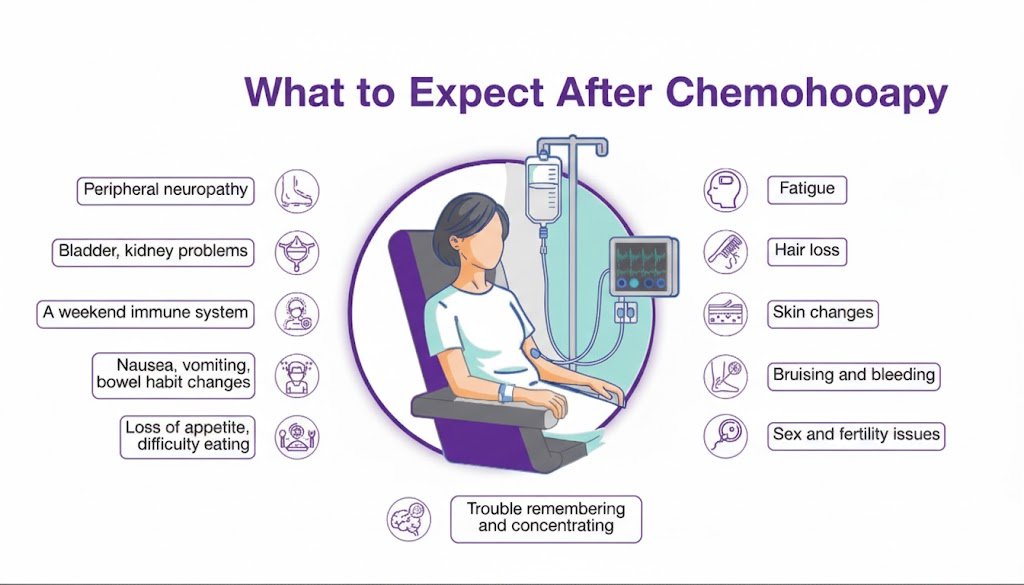
Chemotherapy is a major step in the patient’s journey. The duration of recovery varies from person to person; however, regular check-ups are very important to keep track of the patient’s condition and deal with any side effects that might still be there. It is common that many individuals slowly gain their power back and start living their usual lives again with medical support throughout the process.
Hope Through Modern Treatment
Chemotherapy still stands as a highly effective method among cancer treatments, and it grants hope, dominance, and better results to the global population of patients. Patients educated, supported, and informed can face the procedure with trust and understanding.
Whenever you feel ready, speaking with an oncologist can help make chemotherapy feel less uncertain.
How Long Is Chemotherapy Treatment?

Treatment sessions may last from minutes to hours. Some people receive continuous infusions over several days.
Chemotherapy is usually given in cycles: treatment days followed by rest periods. This allows healthy cells time to recover. Cycles may occur daily, weekly or monthly, depending on your treatment plan.
Where Will I Receive Chemotherapy?
Chemotherapy is often given as an outpatient treatment:
- In a clinic or infusion center
- In your oncologist’s office
- In a hospital
- At home for oral medications
Risks and Benefits
What Are the Side Effects of Chemotherapy?
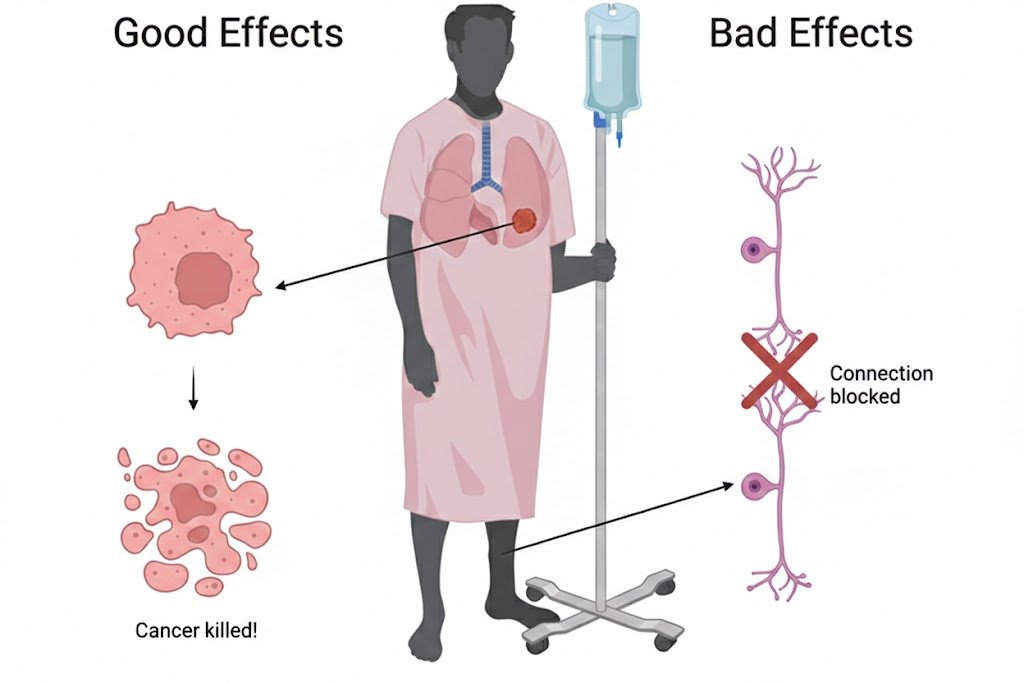
Because chemotherapy affects fast-growing cells, common side effects may include:
- Anemia and low blood counts
- Bleeding or bruising
- Constipation or diarrhea
- Fatigue
- Hair loss
- Increased risk of infection
- Loss of appetite
- Nausea and vomiting
Many side effects can be prevented or managed with medications, nutrition support and lifestyle adjustments.
What Are the Benefits of Chemotherapy?
Chemotherapy can:
- Eliminate cancer completely in some cases
- Shrink tumors and relieve symptoms
- Improve survival and quality of life
- Enhance the effectiveness of surgery and radiation
Recovery and Outlook
How Long Do Side Effects Last?
Most side effects improve after treatment ends. Some late effects may appear months or years later, such as:
- Memory and concentration problems (“chemo brain”)
- Early menopause
- Heart problems
- Nerve damage
- Infertility
Cancer rehabilitation and follow-up care help manage long-term effects.
Can Cancer Come Back After Chemotherapy?
Yes, cancer can return after any treatment. Regular follow-up visits allow early detection of recurrence. Additional chemotherapy or other treatments may be recommended if cancer returns.
Additional Chemotherapy Details
At What Stage Is Chemotherapy Used?
Chemotherapy may be used at any stage, depending on the cancer type, treatment goals and response to other therapies. It may be the first treatment or used after surgery or radiation.
Is Chemotherapy Painful?
Most people do not feel pain during treatment. Injections may cause brief discomfort. Some drugs may cause temporary burning or tingling that usually fades quickly.
Can Chemotherapy Cure Cancer?
Yes, some cancers can be cured with chemotherapy. While doctors are cautious with the word “cure,” many people remain cancer-free long after treatment.
Our Research Based References
- Evening use of light-emitting eReaders negatively affects sleep, circadian timing, and next-morning alertness (2015) – Proceedings of the National Academy of Sciences (PNAS) – doi: 10.1073/pnas.1418490112
- Exposure to room light before bedtime suppresses melatonin onset and shortens melatonin duration in humans (2011) – The Journal of Clinical Endocrinology & Metabolism – doi: 10.1210/jc.2010-2098
- Evening exposure to a light-emitting diodes (LED)-backlit computer screen affects circadian physiology and cognitive performance (2011) – Journal of Applied Physiology – doi: 10.1152/japplphysiol.00165.2011
- An action spectrum for melatonin suppression: evidence for a novel non-rod, non-cone photoreceptor system in humans (2001) – The Journal of Physiology – doi: 10.1111/j.1469-7793.2001.t01-1-00261.x
- Action spectrum for melatonin regulation in humans: evidence for a novel circadian photoreceptor (2001) – The Journal of Neuroscience – doi: 10.1523/JNEUROSCI.21-16-06405.2001
- High sensitivity of the human circadian melatonin rhythm to resetting by short wavelength light (2003) – The Journal of Clinical Endocrinology & Metabolism – doi: 10.1210/jc.2003-030570
- Blue blocker glasses as a countermeasure for alerting effects of evening light-emitting diode screen exposure in male teenagers (2015) – Journal of Adolescent Health – doi: 10.1016/j.jadohealth.2014.08.002
- Short-wavelength light sensitivity of circadian, pupillary, and visual awareness in humans lacking an outer retina (2007) – Current Biology – doi: 10.1016/j.cub.2007.11.034
- The effect of blue-light blocking spectacle lenses on visual performance, macular health and the sleep-wake cycle: a systematic review of the literature (2017) – Ophthalmic & Physiological Optics – doi: 10.1111/opo.12406
- Dietary Reference Intakes for Water, Potassium, Sodium, Chloride, and Sulfate (2005) – Institute of Medicine (National Academies Press) – doi: 10.17226/10925