


The gear is the easy part. Most artists who ask this question are picturing a case, a folding table and a power supply, and that is roughly a fifth of what makes a mobile setup actually workable.
The other four fifths is paperwork, and it is not optional. Tattooing outside a permitted facility is regulated separately in nearly every US jurisdiction, and in many places it is flatly illegal without a specific permit for the mobile unit or the event. So that has to come first, because a beautifully packed kit is worthless if the session itself is not lawful.
Sort The Permits Before You Buy Anything

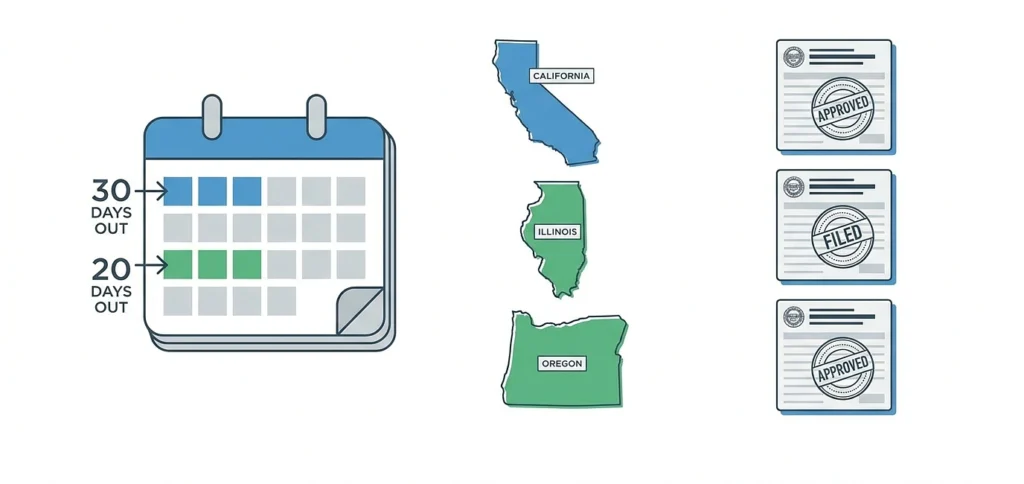
There is no national standard here. Regulation sits with state health departments, county environmental health, or a mix of both, and the rules that matter are the ones where you are physically working.
Some examples of how differently this plays out:
- California requires a Public Health Permit to own or work in a mobile body art facility, administered county by county under the Safe Body Art Act. Temporary events require permits for the event and for every practitioner.
- Illinois issues a temporary licence for a mobile unit at $500, or a temporary event permit at $250 valid for 14 consecutive days.
- Iowa permits permanent, temporary and mobile establishments separately, with temporary applications due at least 30 days before the event, plus a floor plan, promotional material, and a list of participating artists with permit numbers seven days out.
- Oregon requires a temporary tattoo licence application at least 20 days before services are provided, with proof of bloodborne pathogen training and attestation of six months of experience within the last two years.
Notice the lead times. Thirty days, twenty days, seven days for artist lists. Mobile work cannot be arranged the week before, which is the single most common reason artists end up working unpermitted at events.
What You Will Need in Nearly Every Jurisdiction
- Current bloodborne pathogen certification, OSHA 29 CFR 1910.1030 compliant. Red Cross or equivalent. Employer-sponsored training is rejected in some states.
- First aid certification in a number of jurisdictions. Iowa specifies that CPR or AED training alone does not substitute.
- An individual artist permit, a facility or unit permit, or both, depending on the state.
- Inspection, since temporary and mobile establishments are frequently inspected before operating.
Call the county environmental health department where the session will happen. Not your home county. The one where the needle touches skin.
The Equipment, Once the Paperwork is Real
A mobile kit differs from a shop station in one governing way: you have no plumbing, no autoclave and no permanent surfaces, so everything either arrives sterile and single-use or is replaced by a portable equivalent.
| Function | Shop version | Mobile equivalent |
|---|---|---|
| Sterilisation | Autoclave on site | Pre-sterilised single-use cartridges and tubes only. No reprocessing in the field |
| Handwashing | Plumbed sink | Portable handwash station with potable water, soap, single-use towels |
| Work surface | Fixed, cleanable station | Non-porous folding table, fully barrier-filmed |
| Power | Wall outlet | Machine power supply plus battery pack or verified site power |
| Client surface | Fixed chair or bed | Portable massage table or folding chair, barrier-covered |
| Waste | Shop sharps and biohazard | Portable sharps container plus biohazard bags, transported and disposed of properly |
Beyond that, the consumables list is essentially your shop list with nothing borrowed and nothing improvised: gloves in multiple sizes, barrier film, clip cord sleeves, machine bags, ink caps, single-use razors, green soap, distilled water, aftercare, and enough spare of everything that you never make a compromise decision at 9pm in someone’s living room.
Pack redundancy for the things that end a session. A dead power supply, a broken clip cord or a torn glove box are trivial in a shop and catastrophic on the road.
Infection Control is Harder Outside a Shop, Not Easier
This is where mobile work genuinely earns its regulatory scrutiny, and it is worth being blunt about.
A shop controls its environment. A hotel room, a private home or an event hall does not. Airflow, surfaces, pets, foot traffic, lighting and cleanliness are all outside your control, and you are performing a procedure that breaks skin.
A few principles that carry more weight in the field than in a studio:
- Single-use everything, no exceptions. Without an autoclave you have no way to reprocess anything, so anything that touches the client or your work surface leaves as waste.
- Barrier everything. Table, machine, clip cord, bottles, lamp, chair. Assume every surface you did not personally cover is contaminated.
- Set up a clean zone and a dirty zone before the client arrives, and do not let them merge once you start.
- Bring your own hand hygiene. A stylish bathroom sink in someone’s home is not a handwash station, and portable stations exist for exactly this reason.
- Sharps leave with you in a proper container. Never in a household bin, ever.
What About The Client’s Suitability?
Screen harder than you would in the shop, not less. A mobile session usually means no immediate backup, no colleague to consult, and a longer distance from medical help if something goes wrong.
Turn down anyone who is intoxicated, anyone under 18 regardless of what a parent says, and anyone whose medical situation you would want a second opinion about in a controlled setting. The absence of a shop around you is a reason to be more conservative rather than less.
The Workflow That Keeps Mobile Sessions From Unravelling

Time and logistics fail more mobile sessions than technique does.
Confirm the site in advance, specifically the power availability, the room you will be working in, the lighting, and whether there is anywhere to wash your hands and set up. Ask for photography if you have not seen it. Arrive with enough time to set up unhurried, because rushing a setup is where barrier discipline slips.
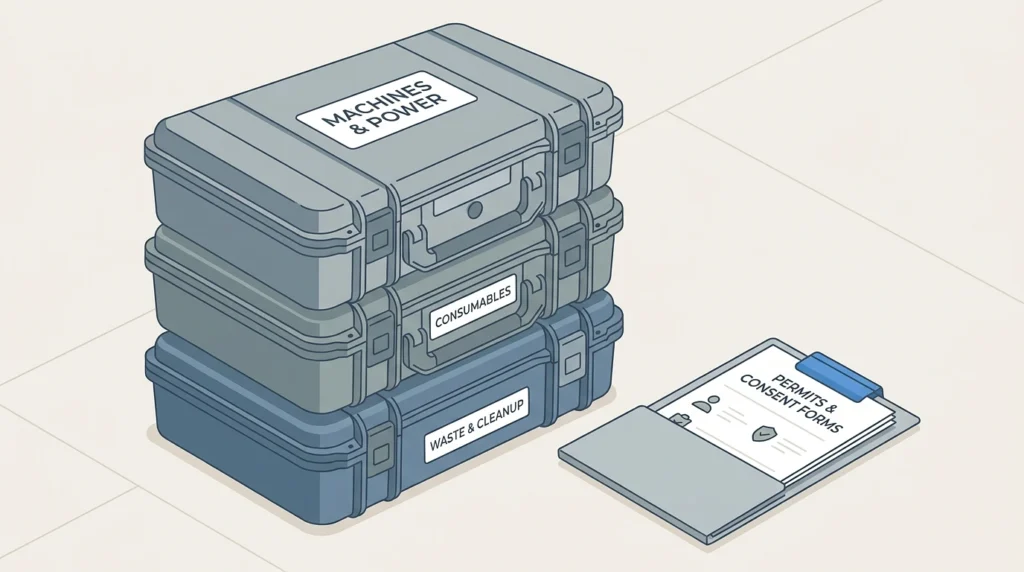
Build your kit to load and unload as a system rather than a pile. Most experienced mobile artists work from a small number of sealed cases, one for machines and power, one for consumables, one for waste and cleanup, so nothing gets hunted for mid-session with contaminated gloves.
And keep your documentation with you. Permits, certifications, consent forms and aftercare sheets, physically present, because an inspector or a venue manager may reasonably ask and because consent records matter more when the session was not in a registered premises.
Mobile tattooing done properly is a genuine professional service with a real client base. Done casually it is the version that produces infections, prosecutions and the reputational damage that makes regulators tighten rules on everyone else. The difference between the two is almost entirely the four fifths that is not equipment.