



As public facilities strive to provide welcoming, inclusive spaces, the need for safe, hygienic baby-changing stations has never been more important. Modern parents and caregivers expect convenient options that prioritize both cleanliness and safety, making the selection and upkeep of these stations a crucial responsibility for facility managers and business owners. The right baby-changing solution, such as Babymedi, protects infants and caregivers from the spread of germs and ensures a hassle-free experience in any public restroom.
Facility managers must ensure consistent hygiene, easy-to-clean surfaces, and compliance with safety regulations, as these factors impact the health of young visitors and the satisfaction of parents. Poorly maintained changing stations pose health risks and damage reputation. Investing in high-quality baby-changing stations, featuring antimicrobial coatings and durable construction, is essential for modern public restrooms and helps foster trust among visitors.
Importance of Hygiene in Baby Changing Stations
Baby-changing stations in public restrooms pose a risk of germ transmission if not properly maintained. The CDC advises strict hygiene practices during diaper changes, emphasizing the importance of disinfecting surfaces and washing hands to prevent the spread of bacteria and viruses. Neglecting these guidelines can endanger both infants and caregivers, highlighting the necessity for well-maintained stations to minimize cross-contamination and enhance community health.
Facility managers play a crucial role by ensuring that supplies such as disposable liners, cleaning wipes, and hand sanitizer are consistently stocked, thereby mitigating illness risk and providing reassurance to parents. With rising public focus on cleanliness, maintaining visible sanitation in high-traffic areas is increasingly essential for public safety.
Features of Safe Baby Changing Stations

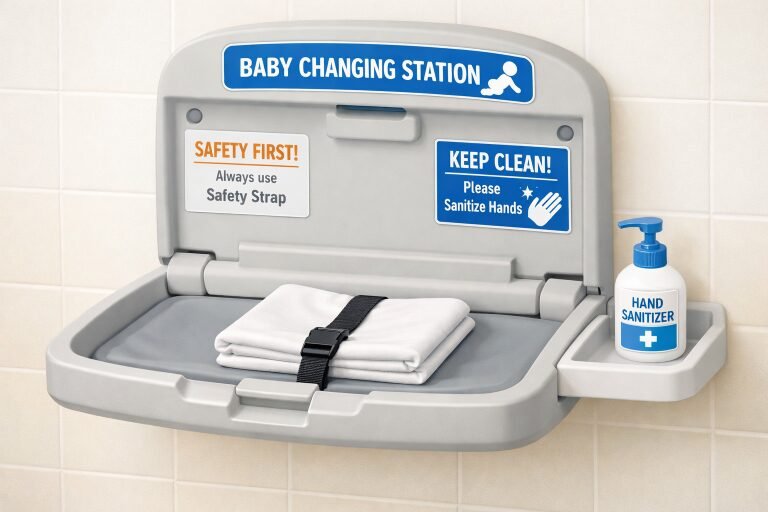
When evaluating baby changing stations, several features stand out as essential for delivering both safety and convenience:
- Sturdy Construction: A robust station supports a baby’s weight and withstands frequent use, reducing the risk of breakage or accidents.
- Reliable Safety Straps: Adjustable safety straps keep babies securely in place, allowing caregivers to focus on the task without concern for sudden movements.
- Non-Porous, Easy-to-Clean Surfaces: Surfaces made of non-porous materials prevent absorption of moisture and bacteria and are simple to disinfect after each use.
- Space-Efficient Design: Wall-mounted or foldable models can maximize available space in both compact and high-traffic restrooms.
Ensuring these features are present in your station selection dramatically improves both the user experience and the overall safety profile of your facility. Additional conveniences, such as integrated bag hooks and shelves for personal items, further enhance accessibility for busy parents. The Parents Magazine offers practical advice for caregivers seeking the safest public changing experiences, underscoring the importance of these features.
Materials and Design Considerations
Material selection is crucial for the durability and hygiene of baby-changing stations, with high-density polyethylene (HDPE) preferred for its impact resistance and ease of cleaning. Stainless steel also provides a high-end aesthetic and vandalism resistance. Modern designs feature rounded edges for safety and tamper-resistant fasteners. The DryBaby® Surface-Mounted Horizontal Baby Changing Station exemplifies the benefits of HDPE, maintaining structural integrity with regular use and ensuring efficient sanitation, creating functional and safe environments for users and maintenance staff.
Installation and Maintenance Best Practices

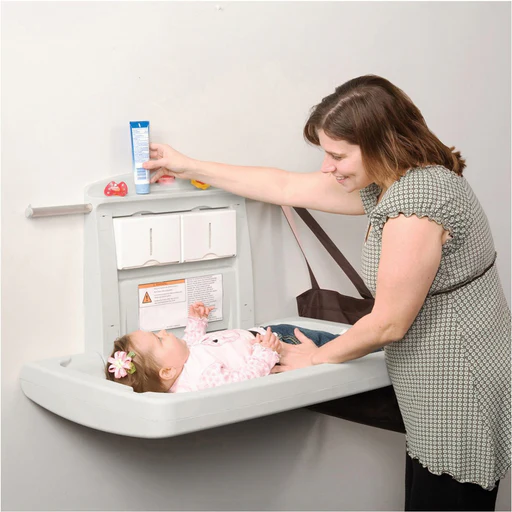
Correct installation is vital to the long-term safety of baby changing stations. Follow the manufacturer’s installation instructions closely, and opt for professional installation when necessary to ensure secure wall mounting. After installation, scheduled inspections are key to identifying issues like loosening hardware or surface wear before they escalate. Maintenance should also include daily cleaning protocols that prioritize high-contact surfaces with child-safe disinfectants.
- Install strictly according to the manufacturer’s guidelines for secure, load-bearing support.
- Perform regular safety checks to address potential hazards immediately.
- Adopt a daily cleaning schedule that ensures stations are always ready for safe, hygienic use.
Trained janitorial staff and established clear reporting processes for any incidents or malfunctions, building confidence among users while maintaining compliance with established safety standards.
Compliance with Safety Standards

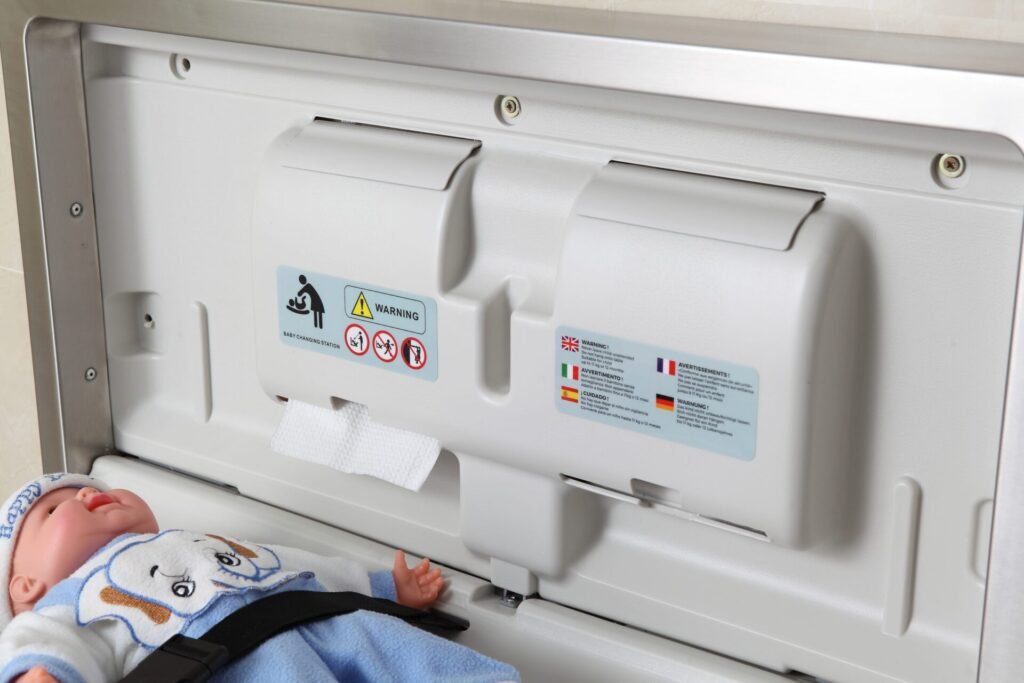
It is critical to ensure that baby-changing stations meet recognized safety standards, such as EN 12221:2008+AI:2013 or relevant local codes, to ensure their reliability. For instance, the Dolphin BC100SV-R Vertical Stainless Steel Baby Changing Station is certified to these standards, signaling a high level of trust and accountability. Facility managers should regularly consult updated safety regulations to maintain full compliance and protect their institution from liability.
Organizations, including the New York Times, are highlighting the growing visibility of baby-changing station safety in the media, encouraging wider adoption of best practices and up-to-date solutions.
Innovations in Baby Changing Station Technology
Recent advances have revolutionized the hygiene potential of modern stations. Antimicrobial coatings, integrated ionizers, and touchless operations minimize microbial contamination between uses.
The BABYMEDI® baby changing station, for instance, leverages Ion Hygienic® technology that actively neutralizes bacteria and viruses, thereby offering superior protection for users in busy public settings.
Such technological upgrades not only enhance user safety but also demonstrate a proactive commitment to health, positioning your facility as a leader in child-friendly amenities. Consistently evaluating new offerings on the market will help identify additional opportunities to improve hygiene and convenience for all users.
Choosing the Right Baby Changing Station for Your Facility
Selecting the ideal baby-changing station hinges on practical considerations specific to each environment. Available wall space, expected user traffic, and budget determine whether a vertical or horizontal model best fits the restroom’s layout. High-traffic public venues may benefit from units with advanced antimicrobial properties, while compact facilities should consider slim-profile or convertible stations that make the most of limited space.

Additionally, factor in the ease of installation, warranty support, and ongoing maintenance needs to ensure a seamless experience for both users and cleaning staff. Thoughtful choices help future-proof your facility and accommodate growing demands from families and caregivers.
Conclusion
Investing in safe, hygienic baby-changing stations is a clear marker of respect for families and a cornerstone of modern facility management. By focusing on essential features, robust materials, and compliance with safety standards, managers and business owners can create an environment that supports the well-being of both infants and their caregivers. Innovative technology and best-practice maintenance routines ensure that your facility remains trusted and welcoming for families for years to come.