


Only one in ten American adults eats enough vegetables. Not a typo. Ten percent. The other ninety of us are out here losing to broccoli, and I say that as someone who spent a good chunk of her life firmly in the losing column.
So if you grew up thinking of vegetables as the sad thing pushed to the side of the plate, the punishment course you had to clear before dessert, you are not some lost cause. You are just normal, statistically speaking. This is the basics post, eating-and-cooking 101 for anyone who has recently realized that nobody is going to make them eat their vegetables anymore, which somehow makes it harder, not easier.
I am not an adventurous cook. Want to be upfront about that before anyone shows up expecting a fennel-and-sumac situation. What follows is the stuff that actually works when you are tired and the fridge is half empty and your ambition for the evening is “fine, I’ll have a vegetable.”
How Much Are We Actually Talking About
The USDA, in the current Dietary Guidelines, says adults should aim for somewhere around two to three cups of vegetables a day, depending on your size and how much you move around. For a lot of adult women that lands at about two and a half cups.
That number sounds either trivial or enormous depending on your week. And the spread across the five vegetable subgroups, if you ever want to nerd out on it, runs roughly like this:

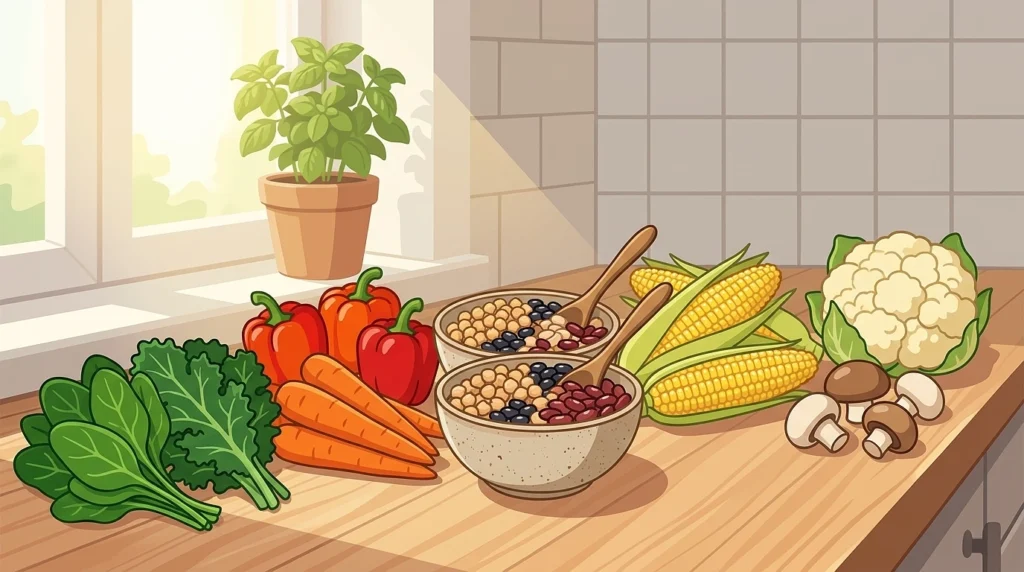
- Dark green, the spinach-kale-broccoli crowd.
- Red and orange (carrots, peppers, sweet potatoes, which, thank god, are some of the easiest to actually enjoy).
- Beans and peas, your legumes.
- Starchy ones, corn and peas and white potatoes.
- The big “other” bucket, cabbage, cauliflower, mushrooms, zucchini, the whole miscellaneous drawer.
Do not, and I mean this, sit there with a measuring cup auditing your dark-green-to-starchy ratio. Nobody does that and nobody should. The subgroups are really just a fancy way of saying the thing your grandmother already told you: eat different colors, do not eat the same two vegetables on a loop until you resent them.
One more thing, because the cost excuse comes up a lot. The USDA’s own economists ran the numbers and you can hit the fruit and veg guidelines for a couple of dollars a day. Fresh, frozen, canned, they all count. This is not a thing only people with farmers-market money get to do.
So How Do You Get There
Salads, obviously. I’m kidding. I hate salads. Find them boring to eat and somehow more boring to make, and I refuse to build a whole vegetable strategy around a food I do not want.
What actually works for me comes down to three habits, and not one of them requires you to like salad.
1. Snacks:
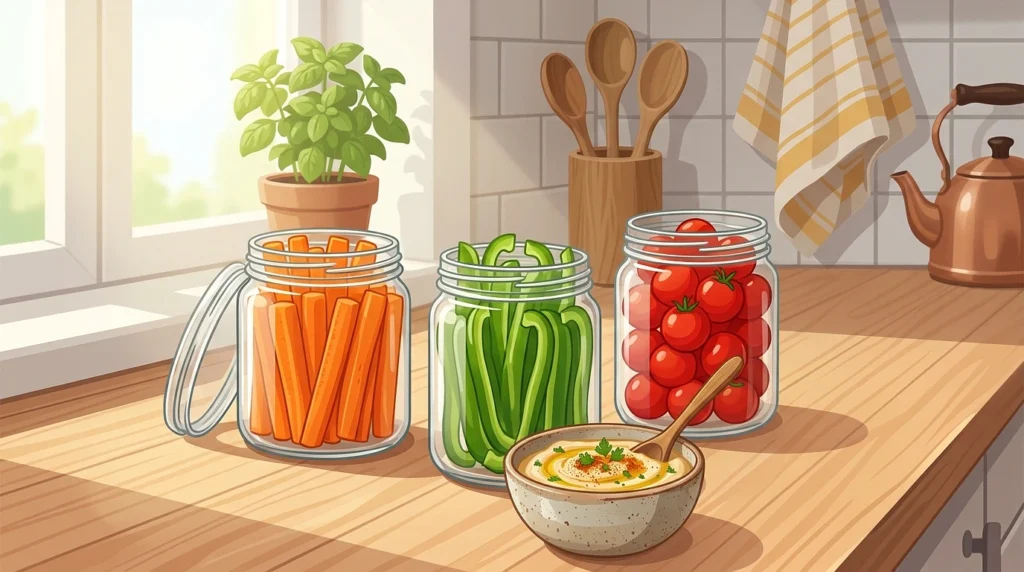
Find two or three vegetables you genuinely like to eat raw, with no cooking project attached, and the whole thing gets easier. For me that is carrot sticks, the little grape and cherry tomatoes, and green pepper in strips. I will eat all of those plain, standing at the counter, no ceremony.
If plain feels like too much, reach for hummus, not ranch. And that is not joyless health-blogger reflex. The creamy dressings turn a good habit into a sneaky delivery system for a lot of fat and sodium, and then you are basically back where you started. Hummus brings its own fiber and protein. Keep it reasonable and you are fine.
The real trick is the prep:
- Cut and portion everything at the start of the week, while you still have the energy and the good intentions.
- Make it grab-and-go, because Wednesday-night you is lazy and will not peel a carrot.
2. Sides:
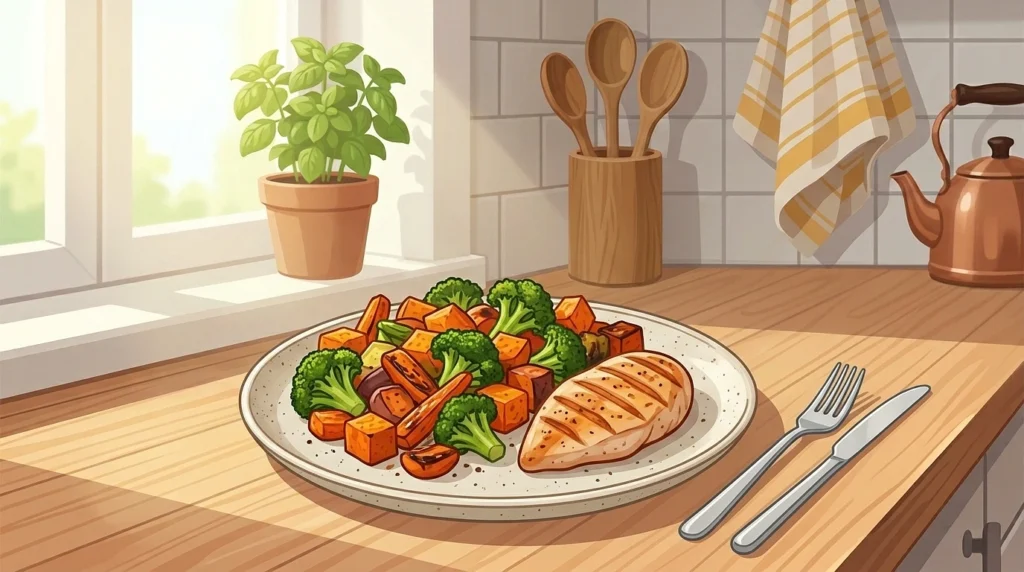
Make the vegetable the biggest thing on the plate, not the afterthought. That one mental flip does most of the work.
Maybe it is a Midwestern inheritance, but I grew up with dinner as a fixed equation: a meat, a starchy side, a vegetable, every single night. That was just the shape of dinner, and honestly it is not a bad template to steal.
You can absolutely just heat up a can of green beans. No shame. Here is the one thing to watch though canned veg can be loaded with sodium, and a lot of the newer steam-in-the-bag frozen ones now come pre-sauced, which quietly drags in extra fat, salt, and calories you did not ask for. Buy the plain frozen stuff and season it yourself. More control, costs less.
Or, on a night you have a little more in you, roast something. A sweet potato with salsa and chives on top is barely more effort than the can and about ten times better.
3. Add-ins:
This is my favorite, and it is the laziest, which is not a coincidence. The whole tactic is asking yourself, as you make a thing you were already going to make, “could a vegetable live in here?”
The answer is almost always yes:
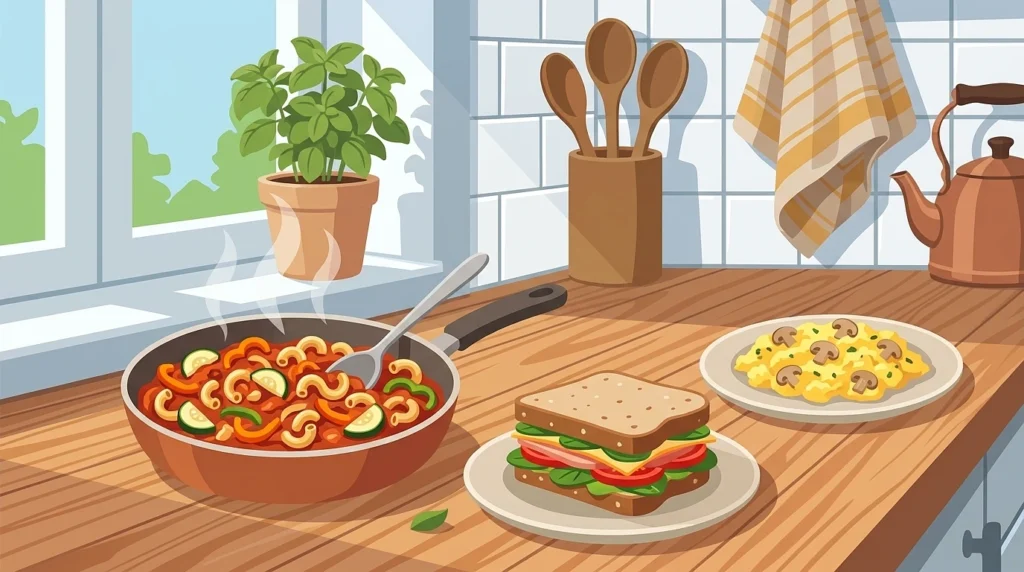
- Scrambled eggs become an omelette with mushrooms and green pepper.
- A turkey-and-cheese sandwich gains tomato, spinach, and avocado (yes, fine, avocado is technically a fruit, let it slide).
- Pasta with red sauce becomes pasta with red sauce that has peppers, onions, and zucchini cooked right into it.
That last one is the sneaky genius of it. Nobody has to confront the vegetables as a separate event on the plate. You are not adding a veg course you need willpower for, you are smuggling produce into food you already wanted. By the end of an ordinary day you have worked veg into breakfast, lunch, and dinner without once eating a salad.
That is it. Three habits, no measuring cups, no kale smoothies, no pretending you woke up a different person. Pick the one that sounds least annoying and start there.
Sources link:
- Only 10% of US adults meet vegetable recommendations (CDC, 2022)
- USDA Dietary Guidelines, 2–3 cups vegetables daily
- USDA ERS, cost of meeting guidelines ($2–$3/day)