


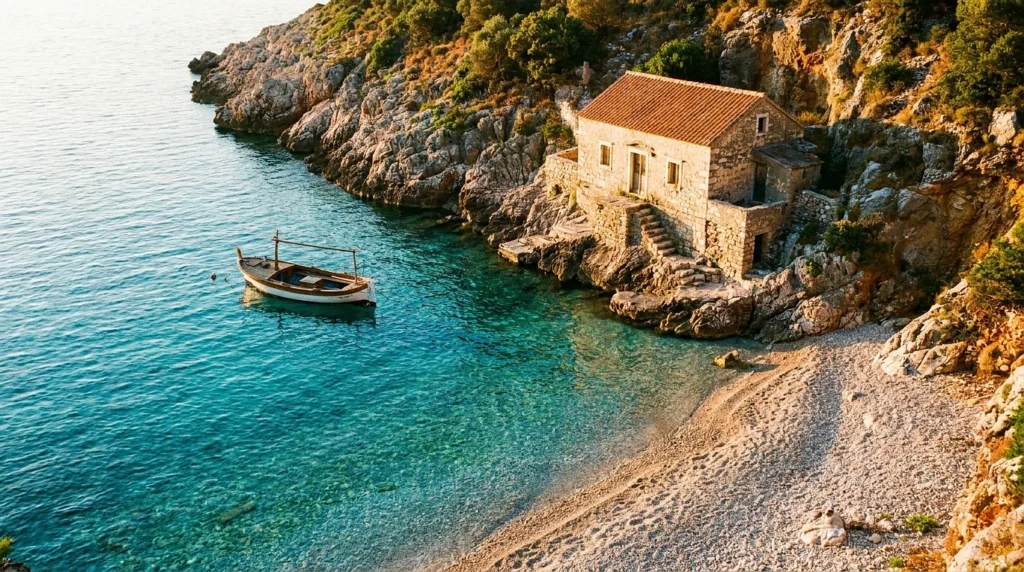
There’s a tell that separates people who live on the Mediterranean from people who fly in for a week. The locals aren’t on the famous beach. In August, when the Promenade des Anglais in Nice is shoulder to shoulder and Barceloneta looks like a music festival, the people who actually live in those cities have quietly gone somewhere else. They didn’t book it in a panic in June. They’ve known the somewhere-else their whole lives, and they go back every summer.
So the honest answer to “where’s the best Mediterranean holiday” isn’t a beach you’ve seen on a poster. It’s wherever the person who has to escape the poster goes. Two of those places are worth knowing, one for the French near Nice, one for the Catalans near Barcelona, and the good news is you can follow them there without any special password. You just have to know they exist and know the small logistical tricks that keep them from turning into the thing everyone fled.
Why The Famous Beaches Get Abandoned By The People Who Live There
Start with the mechanism, because it explains the whole pattern. A headline Mediterranean beach in a big city has one job in July and August: absorb every visitor who came for the city and also wants sea. That’s an enormous number of people funneled onto a fixed strip of sand, and the result is exactly what you’d expect, packed, loud, expensive, and photographed to death.
The locals aren’t being snobs about it. They’re doing arithmetic. Given a fixed amount of coastline and a flood of summer demand, the pleasant version of the coast is the version the flood hasn’t found yet, and residents have a lifetime’s head start on knowing where that is. What they’ve mostly settled on isn’t a secret luxury enclave. It’s a couple of places that are genuinely harder to reach, and that difficulty is the whole defense. A little friction at the door keeps the crowd thin on the other side of it.
Near Nice, The French Disappear To A Car-Free Island Called Porquerolles
An hour or so along the coast from Nice, past Toulon, there’s a peninsula at Hyères, and off the end of it sits the island the French Riviera keeps for itself. Porquerolles is about seven kilometers long, roughly three wide, with no cars allowed and a village that founder François-Joseph Fournier bought outright in 1912 with a fortune he’d made in Mexican gold mines. You get there by a short ferry, and that ferry is the entire point.
Here’s the number that matters. To protect the island, the authorities cap daily summer visitors at 6,000, and you cannot arrive without a booked crossing. That single rule does something no amount of charm could: it puts a hard ceiling on the crowd. A famous beach in Nice has no ceiling. Porquerolles has one, enforced at the dock, which is why the island in high summer feels calmer than a mainland beach in June.
What You Actually Get Once You’re Across:

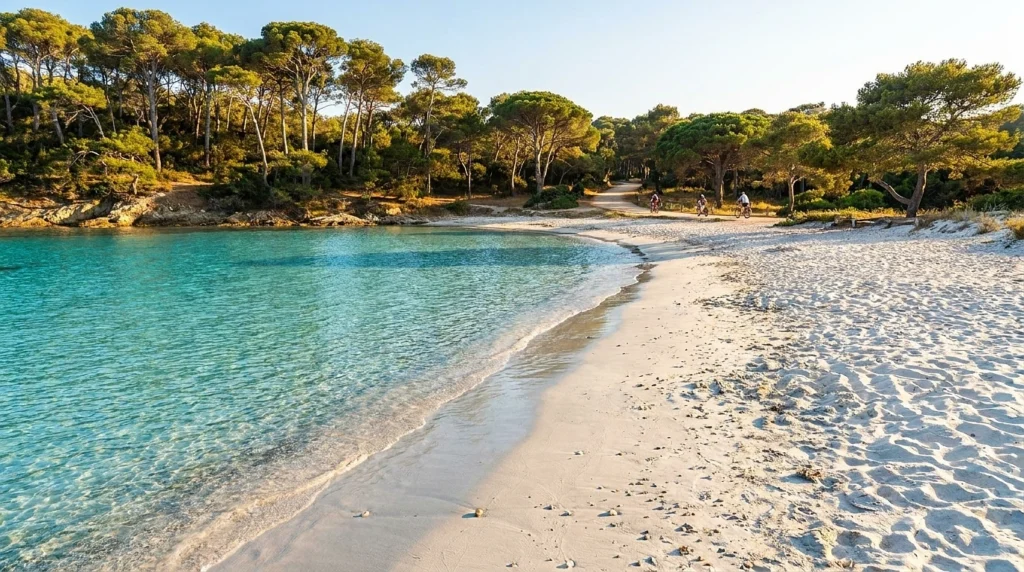
- Turquoise water on the sheltered north side, with the sandy Plage Notre Dame and Plage d’Argent reachable on foot or by rented bike, because there’s no other way to move around.
- A working village built around a place d’armes where old men play pétanque in the shade, not a resort strip.
- The Villa Carmignac, a contemporary art foundation built into a farmhouse, showing a collection that runs from Botticelli to Warhol.
- Vineyards producing the island’s Domaine de l’Île rosé, which Chanel liked enough to buy in 2019.
The move is to take the shortest ferry, the TLV crossing from La Tour Fondue on the Giens peninsula in Hyères, which runs about twenty-five minutes and goes year-round. Book it in advance in July and August, because of that visitor cap, the boat is the bottleneck and it fills. Turn up at the pier hoping for a same-day ticket in peak week and you may simply not get on.
Near Barcelona, The Catalans Drive To The Coves Of The Costa Brava
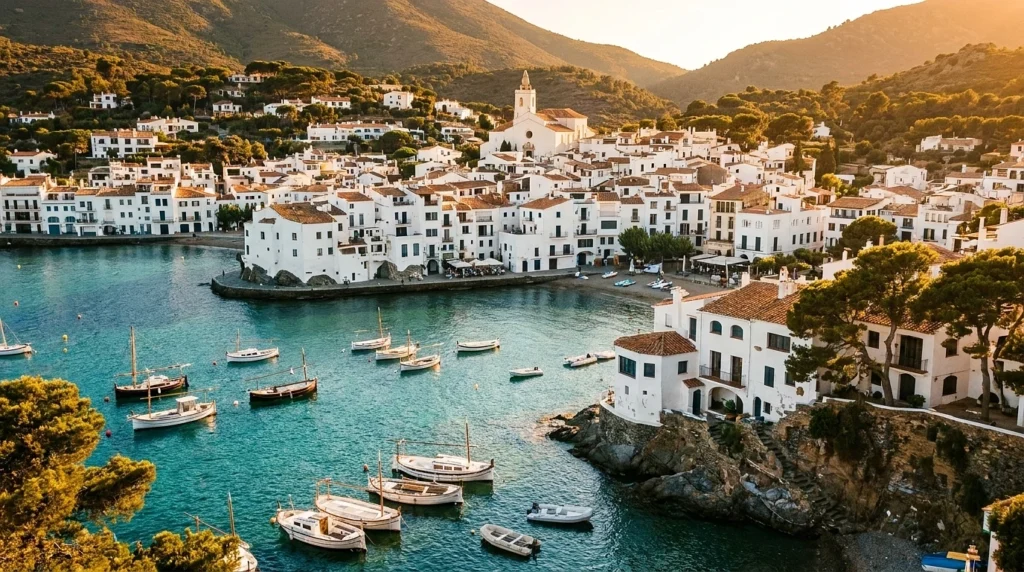
The Barcelona version of this runs north. Barceloneta belongs to the tourists in August, and the Catalans get in the car and drive up the Costa Brava, the rocky, pine-backed coastline that starts about 60 kilometers from the city and runs to the French border. This is, as Wikivoyage puts it plainly, the stretch that caters to locals while the package-holiday towns further south, Lloret de Mar especially, take the foreign crowds.
The prize here isn’t one island, it’s a series of small coves, calas, tucked below the town of Begur: Aiguablava, Sa Tuna, Aiguafreda. Aiguablava means “blue water” in Catalan and earns it, a white-sand bottom giving the water a Caribbean color that doesn’t look like it belongs in Europe. Cadaqués, further north near the French border, is the whitewashed Dalí village that the same crowd loves for its atmosphere, and it caps the number of cars allowed into town in summer for exactly the reason Porquerolles caps its ferry.
The friction here is different from the island’s, and it catches people out. There’s no visitor cap on the coves, so the limiter is parking, and it’s brutal. The car park at Aiguablava can charge up to €36 in August and reaches capacity by around ten in the morning on peak days. That’s the whole game on this coast:
- Arrive at any popular cove before 9am in July and August, or don’t bother, the difference between an empty cove and a full one is about an hour.
- Base yourself in Begur rather than day-tripping, and the coves, the medieval town, and neighbouring calas are all reachable before the day-trippers arrive.
- Walk the Camí de Ronda, the coastal footpath linking cove to cove, which almost no day visitor ever sees because it needs proper shoes and a bit of effort.
If you’re coming without a car, the Sarfa/Moventis buses run from Barcelona’s Estació del Nord up to Begur in a bit over two hours, but the smaller coves themselves aren’t reachable by public transport, which is again the friction doing its job.
Nice’s Island Or Barcelona’s Coves: Which One Is Actually For You
They solve the same problem in opposite ways, and the right pick depends on how you like to spend a day and how much you want to move around.
| Porquerolles (near Nice) | Costa Brava coves (near Barcelona) | |
|---|---|---|
| The gatekeeper | 6,000-person daily ferry cap | Parking that fills by 10am |
| How you get there | 25-min TLV ferry from Hyères, booked ahead | Drive up from Barcelona, or bus to Begur |
| Getting around | No cars, bikes and feet only | Car needed for the small calas |
| Best for | One island, slow days, no decisions | Cove-hopping, a village base, more variety |
| The catch | Book the boat or you don’t get on | Arrive before 9am or lose the cove |
Porquerolles is the pick if you want to arrive somewhere, put the logistics down, and not think again, one island, one bike, one perfect sheltered beach, no traffic, nothing to decide. The Costa Brava is the pick if you’d rather have a village as a base and a different cove each morning, and you don’t mind setting an early alarm to win the parking.
Either way, the thing worth internalizing is the underlying rule, because it works far beyond these two spots. On a crowded coast in high summer, the quality of a place is almost always guarded by some small inconvenience, a ferry you have to book, a car park that fills at dawn, a footpath that needs real shoes. The locals aren’t going somewhere secret. They’re just going somewhere that asks a little more of you at the door, and getting a much emptier stretch of the same sea in return. Follow them through the inconvenience and you get the holiday the poster was only pretending to sell.