


Cover size plus two inches equals insert size.
An 18 by 18 cover takes a 20 by 20 insert. A 20 takes a 22. A 22 takes a 24. That is the rule interior designers use constantly and almost never explain to anyone, and it is the difference between a pillow with taut full corners and the sad droopy thing currently sitting on your sofa.
Most people buy a 20 inch insert for a 20 inch cover, which seems like the obvious move and produces empty corners every time. Sizing up forces fill into those corners, pulls the fabric tight, and shows the pattern the way the designer intended it.
Now the exceptions, because a rule presented without them is how people overstuff a lumbar and wonder why it looks like a sausage.
- Covers smaller than 18 by 18 generally want an insert only 1 inch larger.
- Extra large covers, 24 by 24 and up, can take 3 inches larger without looking overfilled.
- Lumbars are the odd one. Many pillow makers recommend the same size insert as the cover, since the shape overstuffs easily, though some suggest one inch up. If in doubt on a lumbar, match the size.
Sizing Up Only Works If The Insert Was Properly Filled In The First Place
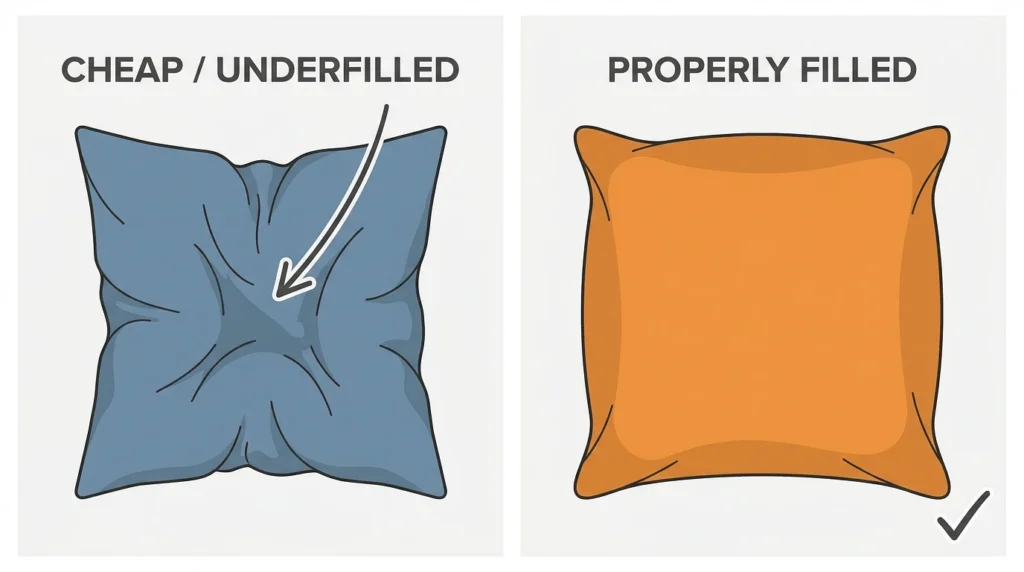
Here is the caveat nobody puts next to the rule, and it explains why some people follow it faithfully and still end up disappointed.
The two inch rule assumes the insert contains a real amount of fill. Cheap inserts are frequently underfilled, and one tester who ran six highly rated inserts through the same covers found a 22 inch insert that was swimming inside a 20 inch cover, needing to size up roughly four inches to look full. The stated dimensions of a limp insert describe the fabric shell, not the volume inside it.
So judge an insert by weight and density rather than by the number printed on the packaging. A good one feels substantial in your hands and springs back when you compress it. A bad one folds.
Fill Type Decides How The Pillow Behaves, And The Chop Is The Giveaway
| Fill | Feel and behaviour | Holds a chop | Care | Realistic lifespan |
|---|---|---|---|---|
| Standard polyester | firm, cheap, flattens early | no | machine washable | 1 to 2 years |
| Down alternative | soft, bouncy, resilient loft | good ones do | machine wash gentle | 2 to 5 plus years |
| 95/5 feather down | firmer, more affordable, occasional feather poke | yes | spot clean or professional | 4 to 5 years |
| 90/10 feather down | softer, plusher, more expensive | yes, best | spot clean or professional | 4 to 5 years |
| Foam | structured and supportive, display more than lounging | no | spot clean only, never machine wash | long |
The karate chop, that dented crease across the top of a styled pillow, is not merely a look. It is a diagnostic. Feather down holds it because the fill shifts and stays where you put it, quality down alternative can approximate it, and polyester fibre fill springs straight back out because it has no memory. If you want that styled magazine look, the fill decides whether it is even possible.
One thing to weigh honestly before choosing feather. It needs fluffing weekly to redistribute the fill, and a higher feather percentage means the occasional quill working its way through the fabric. Down alternative gives up a little of the settle and re loft character in exchange for being machine washable and hypoallergenic, which for a house with kids, pets, or allergies is not a small trade.
Is Buying Covers Separately Actually Cheaper, Or Does It Just Feel Clever?
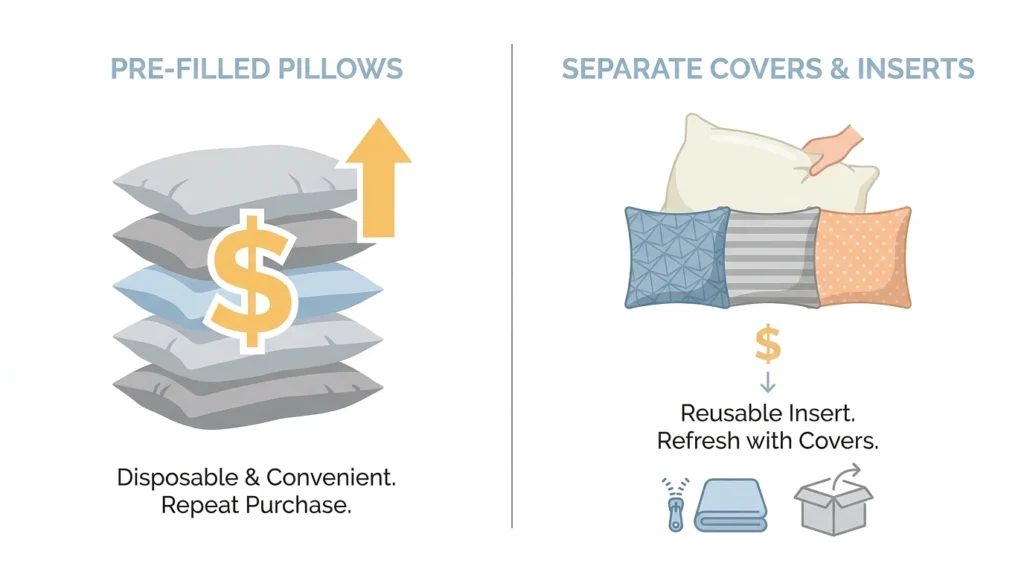
It depends entirely on whether you already own good inserts. Bought new together, pre filled sets usually cost slightly less than the same cover and insert purchased separately, commonly by a couple of dollars per unit. So on day one, the set wins narrowly.
The maths inverts the moment you buy your second set of covers.
Take the example one analysis worked through. Three 18 inch pre filled pillows at $30 each comes to $90 for a seasonal refresh. Three linen blend covers at $22 each, dropped onto inserts you already own, comes to $66. Do that twice a year and across two years the cover buyer spends about $150 while the set buyer spends close to $300.
The other half of that argument is quality. Buy a set and you get whatever fill the manufacturer decided was acceptable, which on a $30 pillow is usually thin polyester. Buy separately and you choose the fill, which is why a quality feather down insert on its own can cost $150 or more in larger sizes, and why the same cover reads as a $50 pillow or a $250 pillow depending purely on what is inside it.
The practical case against covers is real too. They are mostly an online purchase, so no instant gratification, and swapping seasonally means storing the covers you are not using. Small apartment, no linen closet, and the storage argument beats the money argument.
There is also one hardware detail worth checking before any purchase. A removable cover needs a zipper, ideally a hidden one, and plenty of inexpensive pre filled pillows have no zipper at all, meaning the entire pillow is disposable the first time something gets spilled on it.
Sizes That Work, And The Mistake Of Buying Everything At 18 By 18
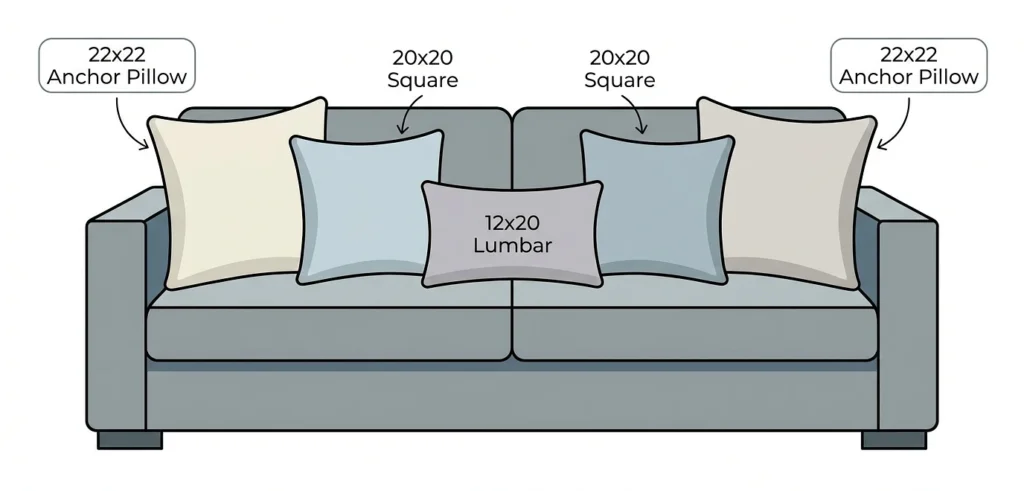
Standard sofas do best with a mix rather than a matched row of identical squares. The workhorse sizes are 20 by 20 and 22 by 22 for the anchor pillows, with 18 by 18 reading small on a full size sofa and better suited to accent chairs and smaller settees. Lumbars, commonly 12 by 20 or 14 by 22, break up the square repetition and are the ones people actually lean against.
Scale to the furniture. A deep sectional swallows 18 inch pillows entirely, while a petite loveseat with 24 inch pillows looks like it is being buried. And if you are working a bed, the usual arrangement runs largest at the back, euro squares at 26 by 26, then standard sleeping pillows, then decorative squares, then a lumbar at the front.
Buy the inserts once, buy them good, and treat covers as the thing that changes. That is the whole system, and it is considerably cheaper across a few years than replacing entire pillows every time you get bored of a colour.

