


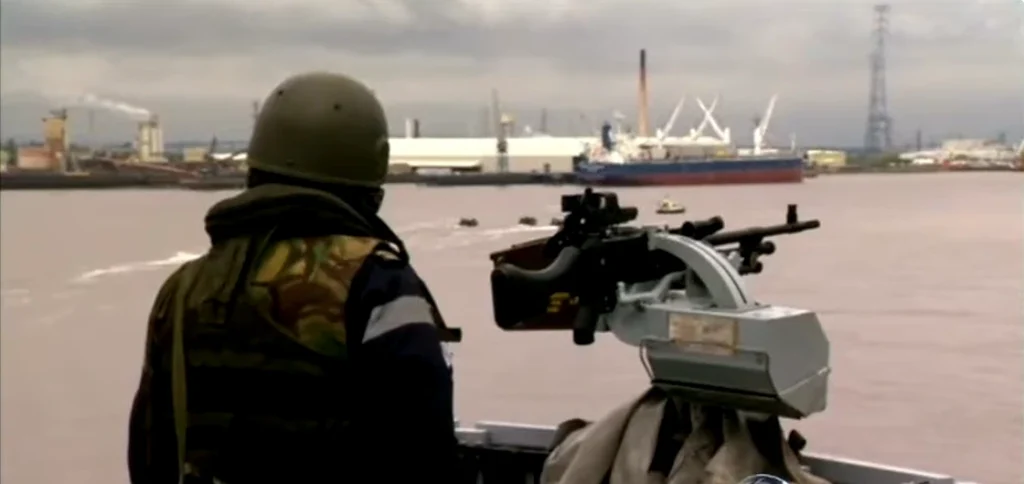
Imagine coming home from the school run, pushing through the doors of the concrete tower block you’ve lived in for years, and finding out from a leaflet that the British Army is going to bolt a battery of surface-to-air missiles to your roof. Not a military base. Not a rooftop somewhere across town. Your roof, seventeen floors above your kitchen. That actually happened to the people of the Fred Wigg Tower in east London in the summer of 2012, and the strangest part is that a High Court judge looked at their objection and told them, in effect, that they had nothing to worry about.
The Plan Was To Ring The Olympic Park With Missiles, And Two Of The Launch Sites Were People’s Homes
Start with the scale of what the government was doing, because the tower blocks were only part of it. For the London Games, running from July 27 to August 12, the Ministry of Defence set up surface-to-air missiles at six sites across the city, a ring of air defense meant to protect the Olympic Park from the nightmare scenario, a hijacked aircraft turned into a weapon.
Most of those sites were the kind of place you’d expect. A reservoir. Farmland out east. Hillsides to the south of the city. But two of them were not empty ground at all, they were residential apartment buildings full of families, the Fred Wigg Tower in Leytonstone and the Lexington building over in Bow. The military’s interest in Fred Wigg was coldly logical, it’s a seventeen-storey block on an otherwise low-rise street, and the roof gives an unobstructed line of sight across east London, over Canary Wharf, straight to the Olympic Park about two miles away. From a targeting point of view it was ideal. From the point of view of the person in the flat directly beneath, it was something else entirely.
The hardware wasn’t subtle either. We’re talking Rapier missiles and the smaller, shoulder-fired Starstreak, weapons built to bring down an aircraft, with soldiers stationed up there to operate them. On the roof of a council block. Above the beds of children.
The Residents’ Fear Was Simple, A Missile Site Turns Your Home Into A Target

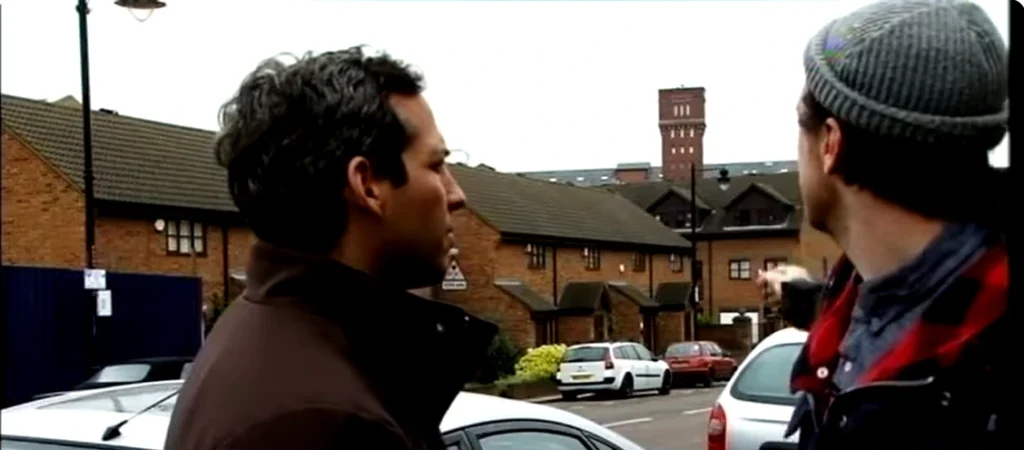
Here’s the argument the residents made, and it wasn’t hysterical, it was actually quite logical once you sit with it. Their worry wasn’t that a missile would misfire. It was that the mere presence of a missile battery on their roof would paint a bullseye on their building.
Think it through the way they did. A terrorist cell looking at the London Games sees an air-defense installation sitting on top of the Fred Wigg Tower, and suddenly that tower isn’t just housing, it’s a piece of military infrastructure, and military infrastructure is exactly what an attacker wants to hit. Their lawyer put it to the court plainly, that the residents had a fully justified fear that installing the system gave rise to the additional risk that the tower itself could become the focus of an attack. So the thing meant to keep London safe could, in their eyes, make their own specific address markedly less safe. And they’d found out about it, they said, without ever being properly consulted, the decision taken quietly between the government, the landowner and the local council.
You can hear the whole thing in what one resident, Iqbal Hossain, who lived in the block with his wife and three young children, told a reporter at the time. If it’s about safety for the Olympics, he asked, what about safety for us? Another woman, walking her kids back from school, put it even more simply. She understood the missiles had to go somewhere. But why, she asked, does it have to be us.
The People Upstairs Weren’t All Against It, Which Is The Uncomfortable Part

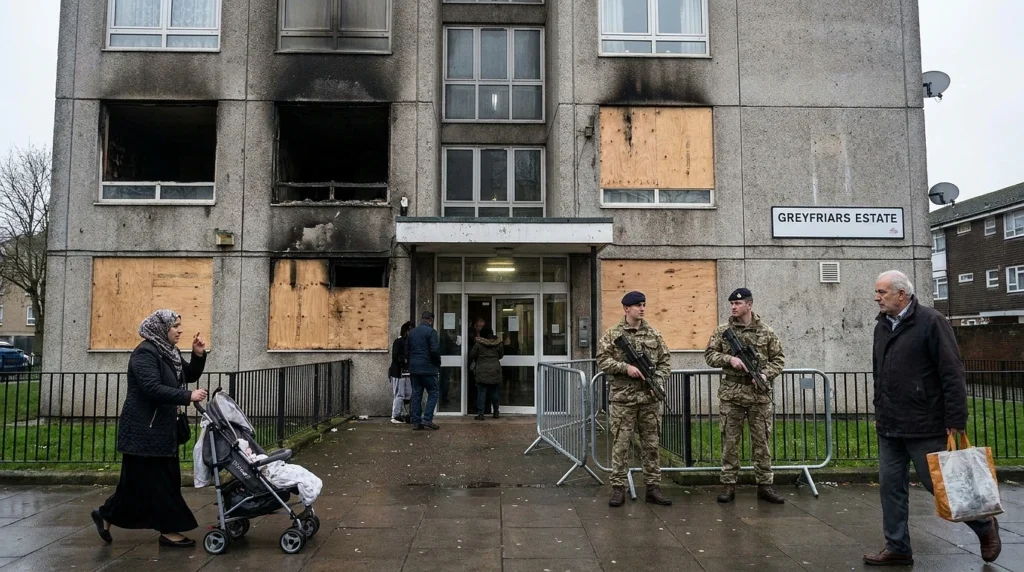
It would be a cleaner story if every resident had been united in outrage, and honestly this is where it gets more human and more complicated, because they weren’t.
The Fred Wigg Tower had been having a rough time of it. There’d been a fire the previous December that destroyed several flats and forced dozens of people out of their homes. Then, while those flats sat empty and fire-damaged, burglars came through and stripped them. One resident described the place as sometimes feeling like a war zone. So when the Army turned up talking about stationing soldiers on the roof for a few weeks, a portion of residents felt something you might not expect. Relief. A bit of order. Uniformed people around the building for once. The reporting at the time caught that split honestly, resignation from some, real fear from others, and quiet welcome from a few, all living in the same stairwell. The authorities, for their part, were betting that a silent majority would simply accept it, and they were probably right.
The Residents Took It To The High Court, And They Lost
The objectors didn’t just grumble, they went to law. On July 10, 2012, with the Games barely two weeks out, Fred Wigg residents brought a challenge in the High Court, arguing the missile deployment breached their rights under the European Convention on Human Rights, specifically Article 8, the right to respect for your private and family life and your home, and Article 1 of Protocol 1, the right to peaceful enjoyment of your property.
Mr Justice Charles Haddon-Cave heard it and ruled against them the same day, clearing the way for the missiles to go up within days. His reasoning was blunt. The missiles, he said, presented no real threat to the residents, and they were an important part of Olympic security. He went further, essentially telling the court that the residents had been operating under a misapprehension about the equipment and the risks, and that the Ministry of Defence’s engagement with the community had actually been thorough rather than the secretive stitch-up the residents felt it was. The objectors had misunderstood the facts, in his account. The missiles went up on the roof, the Games came and went without incident, and the launchers came back down when it was over.
Why This Odd Little Episode Still Says Something Worth Keeping
The missiles were never fired, no aircraft came, and for most people the whole affair evaporated the moment the closing ceremony ended. So why does it linger. Because it’s one of those small true stories that holds a much bigger question inside it, the question of who absorbs the cost of everyone else’s safety management.
The Olympic Park had to be protected, almost nobody disputes that, and air defense had to be positioned somewhere with a clear line of sight, and the Fred Wigg Tower had the best sightline going. Every individual step in that chain is defensible. And yet the end of the chain is a specific family, in a specific council flat, discovering that the state has decided their home is the most sensible place to put a weapon, and being told by a judge that their fear about it was a misunderstanding. Both things are true at once. The security was real and the imposition was real, and the people who carried it weren’t the people who benefited most from it, they were just the ones who happened to live under the best view of the Olympic Park. That tension never fully resolves, and it’s worth remembering precisely because the missiles are gone and the tower is still there, still full of people, most of whom probably never think about the summer their roof went to war.