


A coworker called me last August convinced his house was falling apart. His electric bill had doubled in two months. One of the kitchen outlets felt warm when he plugged the coffee maker in. The lights in the living room dimmed every few minutes for no obvious reason. Three completely separate problems, three different contractors to call, three different repair estimates piling up in his head.
All three were air conditioned.
The compressor was failing. It was pulling way more current than it should have on every startup, which spiked the bill, stressed the electrical panel hard enough to dim the lights when it kicked on, and put enough load on the shared circuit to warm up an outlet two rooms away. One repair well, one replacement solved all three.
This is the thing nobody tells you about household warning signs. They don’t always come labeled. A failing HVAC system can show up as an electrical problem, a plumbing problem, a “the house is just old” problem, or a mystery utility bill. By the time someone actually traces it back to the AC, the unit has usually been struggling for months and the repair bill is two or three times what it would’ve been if someone had caught it early.
What Short-Cycling Actually Means (And Why It’s Worse Than It Sounds)
The single most common warning sign people misread is short-cycling. The AC kicks on, runs for a few minutes, shuts off, then kicks on again maybe ten minutes later. Most people register this as “the AC is working — it turns on, cool air comes out.” They don’t notice the shutoff is happening way more often than it used to.
Here’s what’s actually going on. An AC compressor is designed to run in stretches of fifteen to twenty minutes minimum, sometimes longer on a hot day. That run time is what lets the system actually pull humidity out of the air and reach the temperature setpoint efficiently. When the unit instead runs in bursts of three to five minutes and shuts off, one of a few things is wrong — the system is overcharged or undercharged with refrigerant, the condenser coil is dirty enough that it’s hitting thermal cutoff, the thermostat is misreading the room, or the compressor itself is starting to fail and the safety controls are protecting it.
None of those problems fix themselves. All of them get worse. And every single short cycle puts startup current through the compressor — which is the part of the run cycle that uses the most electricity by a wide margin. So a short-cycling unit isn’t just an annoyance. It’s actively burning money and grinding its most expensive component into failure at the same time.
If you’ve noticed your AC turning on and off more frequently than it used to over the past few weeks, that’s the moment to call someone. Not in August when it dies.
The Utility Bill Tell
A jump in your electric bill during cooling season is almost always the AC, and almost always something specific. The two most common causes I’ve seen are a failing capacitor (the small cylindrical component that helps the compressor and fan motors start) and refrigerant that’s slowly leaked out over the past year or two.
Low refrigerant is the sneakier of the two. The unit will still produce cold air, just less of it, so it runs longer to hit the thermostat setting. Longer run times equal a higher bill. People look at the bill, shrug, and assume rates went up. Meanwhile the system is overworking itself trying to compensate for a leak that should have been sealed months ago.
A useful exercise pull up your utility bill from the same month last year and compare kilowatt-hours used, not just the dollar amount. Rates change, but kWh consumption is a direct measure of what your house is actually using. If your kWh is up 30, 40, 50% on roughly the same weather, something in the house is pulling more power than it used to, and the AC is the first thing to check.
Warm Outlets, Dimming Lights, and Tripped Breakers
This is the part most homeowners don’t connect to HVAC at all. An aging or failing AC compressor pulls more current at startup than it should. That excess current has to come from somewhere — usually a shared electrical circuit or a panel that’s already running closer to capacity than it should.

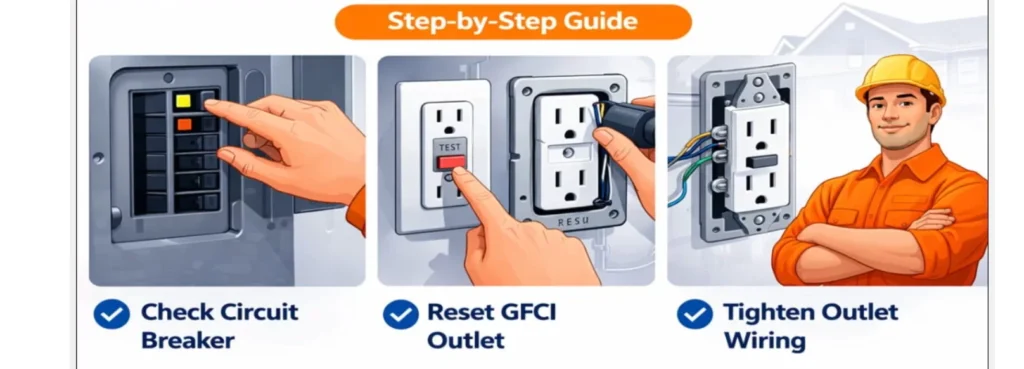
The result shows up as flickering lights when the unit cycles on, breakers that trip a few times a summer when they never used to, or outlets on the same circuit that feel warm to the touch when the AC is running. If you’re seeing any of these specifically during the cooling season and specifically when the AC is active, the diagnostic path goes through the HVAC before it goes through the electrician.
This is one of the situations where DIY diagnosis is a real trap. Refrigerant handling requires EPA Section 608 certification you legally can’t buy or work with most refrigerants without it. Capacitors hold a charge that can hurt you badly even with the unit powered off. And anything involving the electrical side of an AC system means working in a panel where mistakes are expensive in ways that aren’t financial.
When the symptoms point at the HVAC, the move is professional air conditioning repair from someone who can read the system as a whole: compressor health, refrigerant charge, capacitor function, condenser condition, electrical draw instead of replacing one part at a time and hoping. A diagnostic call usually runs $80 to $150 in most markets and gets applied toward the repair if you go ahead with it. That number is small next to the cost of a replaced compressor, which on a typical residential system sits somewhere between $1,400 and $2,800 depending on tonnage and refrigerant type.
The Sounds That Mean Something

Different noises mean different things, and most of them aren’t subtle once you know what to listen for.
- A hard clunk or thud when the unit starts up — usually the compressor straining against bad startup current. Often a failing capacitor.
- A continuous humming with no fan spinning at the outdoor unit — also typically a capacitor. The motor is energized but doesn’t have the kick to start turning.
- A hissing sound near the indoor unit or refrigerant lines — refrigerant leak. Stop running the system until it’s looked at.
- A grinding or screeching sound — fan motor bearings or blower wheel issues. Won’t get better.
A quiet, healthy AC makes a steady running noise and that’s about it. Anything new and loud is the system telling you something has changed.
The Pattern Worth Remembering
When something feels off about the house bills, sounds, the way the AC is cycling, weirdness on the electrical side during cooling season check the HVAC first. Not last. The number of “mystery house problems” that turn out to be a struggling air conditioner is higher than most homeowners realize, and catching it in June is a different conversation than catching it in late August when the compressor finally gives up.
A house tells you what’s wrong. The trick is knowing which voice is which.