


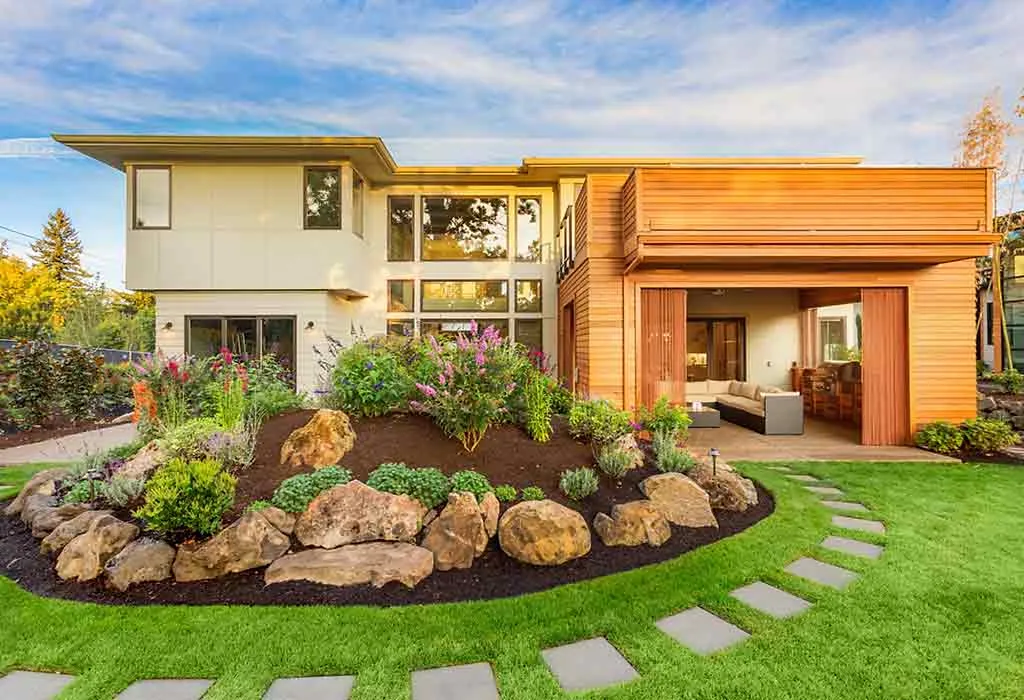
I’ve walked into a lot of backyards where the homeowner spent five figures on a patio that’s now tilting toward the house and holding a puddle every time it rains. Nine times out of ten it wasn’t the stone that failed. It was everything underneath the stone, the part nobody photographs and nobody thinks to ask about. That’s the thing about hardscaping. The stuff that decides whether it lasts twenty years or falls apart in three is the stuff you can’t see once the job’s done.
So before you start pulling inspiration photos, it’s worth understanding what you’re actually paying for, and where the money quietly makes or breaks the whole project.
1. Hardscaping Is the Bones, Not the Decoration

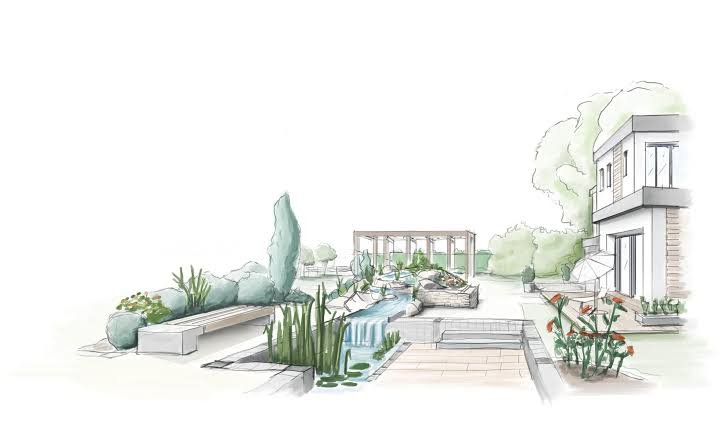
Hardscaping is the non-living, structural side of your yard. Patios, retaining walls, walkways, fire pits, pergolas, outdoor kitchens. If softscaping is the plants and lawn, hardscaping is the skeleton everything else hangs on.
The reason it matters more than most people expect is permanence. A flower bed changes with the season and gets redone every few years anyway. A patio is supposed to be there for decades. Done right, a paver patio can outlast the roof on your house with almost no maintenance. Done wrong, it becomes the most expensive thing in the yard to fix, because tearing out and relaying a failed patio costs more than building it correctly the first time.
2. Figure Out How You Actually Live Outside First
Here’s where a lot of projects go sideways before a single stone is set. People pick a look before they pick a use.
Think honestly about how you spend time out there. If you host, you want a dining-sized patio and probably a real outdoor kitchen run, not a decorative bump-out that fits a bistro table and nothing else. If your idea of a good evening is a fire and three friends, a fire pit with built-in seating does more for you than a sprawling paved acre. Got kids? You want open, flat, durable space that survives bikes and spilled juice, and you want to skip the fussy materials that stain if you look at them wrong.
The best-designed spaces start from the verb, not the noun. What will you do here. Nail that and the layout basically designs itself.
3. Materials: What You’re Really Choosing Between

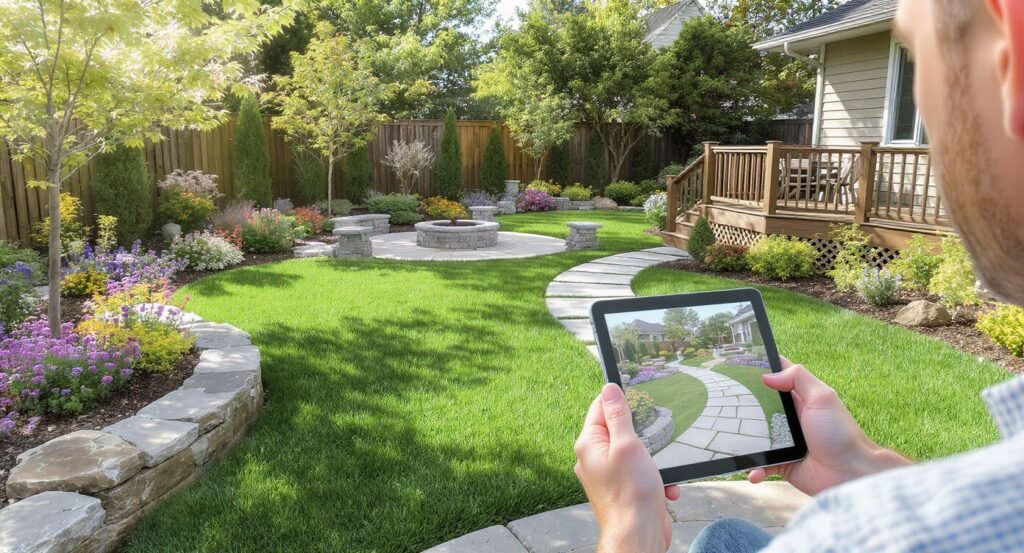
Material choice is where budgets swing hard, and the marketing photos make everything look equally good. They don’t perform equally, and they don’t cost anything close to the same.
| Material | Roughly what it runs | The honest tradeoff |
|---|---|---|
| Natural stone (bluestone, travertine) | The premium tier | Gorgeous, every piece unique, ages beautifully. Pricey, heavier to install, some types etch or stain. |
| Concrete pavers | Mid-range, most popular | Huge range of styles, many mimic stone convincingly, easy to replace a single unit if one cracks. |
| Porcelain pavers | Mid-to-premium | Sleek modern look, barely absorbs water, extremely stain and frost resistant. Less forgiving to install, needs a skilled crew. |
| Poured concrete | Usually cheapest upfront | Clean and simple, but cracks are a matter of when not if, and a crack in a slab is ugly and hard to fix. |
One thing worth knowing: with individual pavers, if a unit chips or stains years later, you pull that one and drop in a replacement. With a poured slab, damage means patching a whole section that never quite matches. That flexibility is a real reason pavers stay popular even when they cost a bit more than concrete.
4. Why Cheap Patios Fail (Read This Part Twice)
This is the section that actually matters, and it’s the one every commodity “hardscaping tips” article skips because it isn’t glamorous.
A patio is only as good as its base. Underneath those pretty pavers there should be several inches of compacted gravel base, typically in the ballpark of four to six inches for a patio and more for anything bearing weight, laid over properly graded ground and topped with a setting layer. Each lift of gravel gets compacted, not just dumped and leveled. Skip the depth, skip the compaction, or skip the grading, and physics takes over.
Here’s what goes wrong. Water is the enemy. If the ground wasn’t sloped to drain away from the house, water pools, sits, and softens the base. In climates that freeze, that trapped water expands when it freezes and heaves the whole surface up, then drops it unevenly when it thaws. That’s the freeze-thaw cycle, and it’s why a patio that looked perfect in October is a wavy mess by April. A cheap crew that laid pavers on two inches of sand over dirt didn’t save you money. They set a timer.
The joints matter too. Good installers lock the surface together with polymeric sand swept into the seams, which hardens and resists weeds and washout. The bargain version uses plain sand that rinses out in the first heavy storm, and then your pavers start wandering.
None of this is visible on day one. Every patio looks great the week it’s finished. The difference shows up in year three, which is exactly why experienced homeowners treat this as a hire-it-right decision rather than a chase-the-lowest-bid one. Proper hardscaping services from a crew that does the base correctly protect the whole investment, because the expensive part to get wrong is the part you’ll never see.
5. Making It Feel Like One Space, Not Two

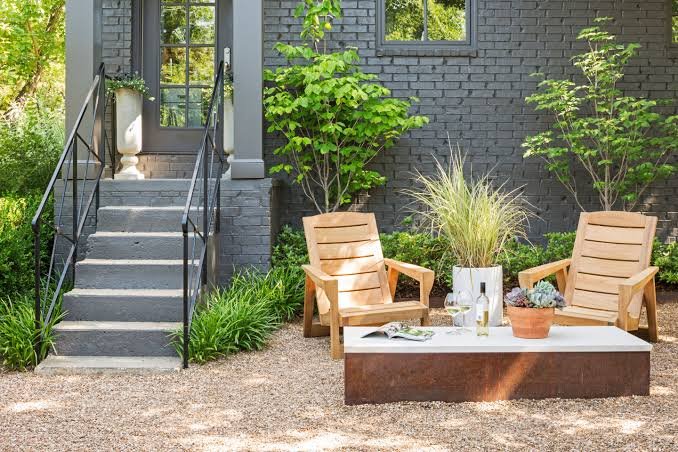
Good hardscaping connects the house to the yard instead of stopping abruptly at the back door. The move is continuity, repeating a material or a color or a line so the eye reads inside and outside as one place.
A few workhorses do a lot here. Retaining walls turn a useless slope into flat, usable terraces, and honestly a well-built one is often the most dramatic feature in a yard. Stepping stones pull people through a garden on purpose. A pergola carves out an “outdoor room” without walling anything off. You don’t need all of them. You need the two or three that fit how you answered section two.
6. Common Questions Before You Break Ground
Do I really need a professional, or can I DIY a paver patio? Small, flat, low-stakes walkways, sure, plenty of people DIY those. But the base prep, grading, and compaction on anything sizeable is where DIY jobs fail, and the tools to do it right aren’t cheap to rent for a weekend. The failure usually costs more to fix than hiring out would have cost to begin with.
What actually wrecks a hardscape fastest? Water and skipped base prep, in that order. Almost every early failure traces back to drainage that sends water the wrong way or a base that was too thin or never properly compacted.
When’s the best time to build? Depends on climate, but most crews prefer the dry stretches of spring through fall so the base can be set and compacted without fighting mud or frozen ground.
Where to Start
Begin with a site walk and a real design consult, not a Pinterest board and a phone number off a flyer. A good hardscaper will spot the drainage problems, tell you which materials survive your winters, and give you a phased plan so you can build in stages if the budget’s tight.
The whole point of doing it right is that you stop thinking about it. Build the base correctly, pick materials that match how you live, and the backyard quietly turns into the room you use more than any room inside