


Key Takeaways
- People on vacation are more active, sit less, and sleep about 21 minutes longer a night, according to a 13-month tracker study of 308 adults.
- Extra daily steps are linked with lower risks of early death, dementia, and depression. Most of that gain arrives by about 7,000 steps a day.
- Sleep improves largely because travelers spend their days in daylight, and daylight moves the body clock earlier.
- The lift in mood fades within weeks of going back to work, so the walking and the sleep routine are worth carrying home.
Three hundred and eight adults in Australia wore fitness trackers around the clock for 13 months, through workdays, weekends, and every break they took. When researchers at the University of South Australia compared the records, the vacation days stood apart from the rest. People were more active on them, spent less time sitting, and slept longer.
That result gives a practical definition of what a trip does for health. Travel rearranges the 24 hours of a day. The commute and the desk drop out, and time on foot, time in daylight, and time asleep fill the space. Many of the physical and mental gains that travelers describe can be traced to those few changes, and each one has been measured.
People On Vacation Move More And Sit Less
The Australian team reported that, on vacation days, participants did 13 per cent more moderate-to-vigorous physical activity each day and spent 5 percent less time sedentary. In minutes, that came to about 5 more of brisk activity and 29 fewer of sitting.
Those averages are modest, and they cover every kind of break, including days off spent at home. The largest changes showed up on outdoor and rest vacations, while breaks of under three days produced the smallest. A week of sightseeing in a city nobody has visited before is a different matter again. Hotels are a walk from the old town, museums are large, and the easiest way to find dinner is to wander until something looks good.
What Extra Steps Do For The Body

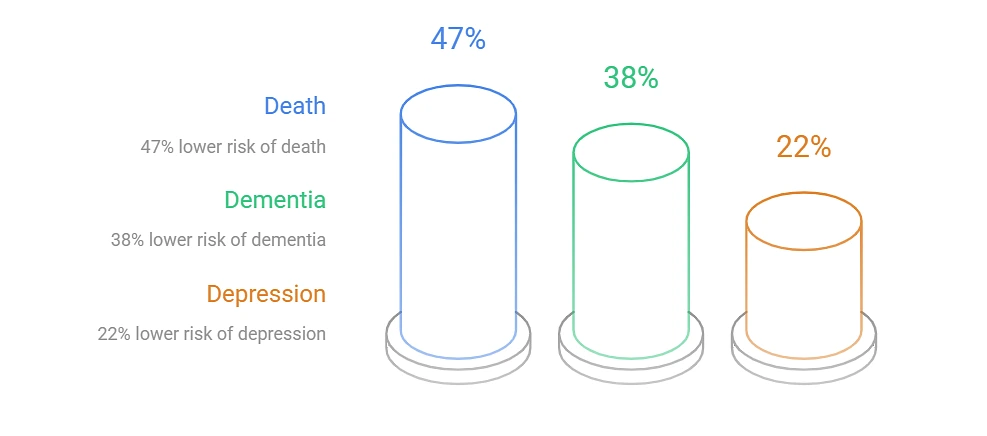
Step counts have been studied closely. A 2025 review in The Lancet Public Health pooled 57 studies and found that the risk of early death, heart disease, and dementia fell as daily steps rose, with inflection points at around 5000-7000 steps per day. Compared with people who took 2,000 steps a day, those who took 7,000 had:
- a 47% lower risk of death from any cause.
- a 38% lower risk of dementia.
- a 22% lower risk of depression.
People at around 4,000 steps were already better off than those at 2,000. These figures describe habits kept up for years, so one active week will not deliver them. What a trip can do is show a desk worker that 7,000 steps is an ordinary day when there are places to go.
Small Choices That Add Walking To A Trip
- Book a room within walking distance of the places on the list.
- Start the first morning with a walking tour, which also helps with finding the way around later.
- Walk one way and ride back when a destination is far.
- Pack shoes that have already been broken in.
Trips into the countryside need a little more planning, and these travel preparation tips for exploring the great outdoors cover the basics.
Daylight And A Looser Schedule Lead To Longer Sleep
Sleep was the clearest gain in the tracker study. Participants slept 21 minutes more each day while they were away, and the extra sleep was still there two weeks after they came back.
Part of the explanation is obvious, since nobody sets a 6 a.m. alarm on a beach. The other part is light. The body’s clock takes its timing from the sun, and office workers see very little of it. Kenneth Wright, a sleep researcher at the University of Colorado Boulder, tested this by sending volunteers camping with no phones and no flashlights. During a summer week outdoors, they received about four times as much light by day as they did at home. After one of his later trips, their melatonin levels began to rise 2.6 hours earlier in the evening. Melatonin is the hormone that prepares the body for sleep, so an earlier rise means an earlier, easier bedtime.
A single weekend under canvas produced most of the shift that a full week did. Hotel guests are not campers, of course, but the same rule works for them. A traveler who spends the day outside and keeps the evening dim will usually find sleep comes sooner.
When A Trip Makes Sleep Worse

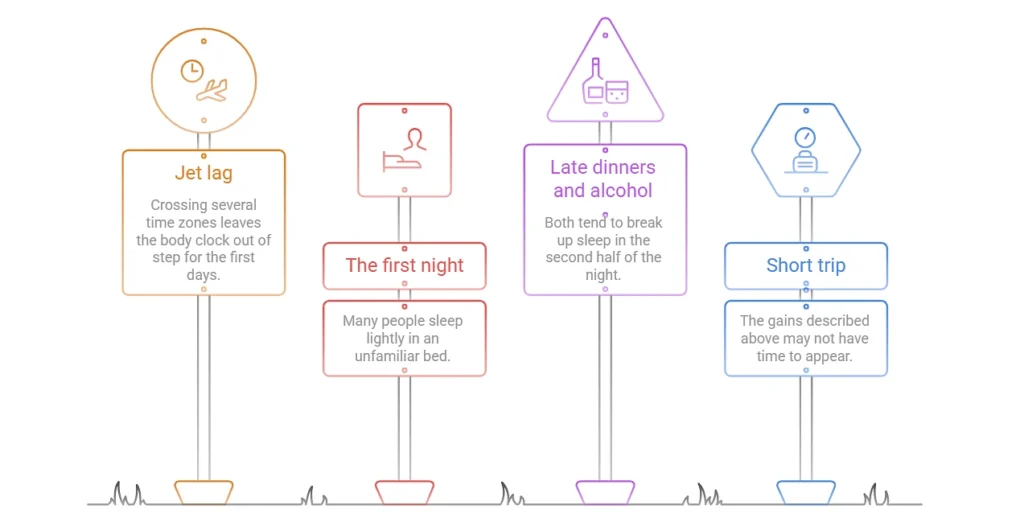
Travel can also cost sleep, and it is fair to say so.
- Jet lag. Crossing several time zones leaves the body clock out of step for the first days. Morning light at the destination helps it catch up.
- The first night. Many people sleep lightly in an unfamiliar bed, so the first day is a poor choice for an early tour.
- Late dinners and alcohol. Both are part of many vacations, and both tend to break up sleep in the second half of the night.
For a short trip across many time zones, the gains described above may not have time to appear.
Mood Improves On A Trip, But The Effect Is Short
Psychologists have followed workers before, during, and after their vacations for decades. A 2009 analysis led by Jessica de Bloom found that time away does improve health and well-being, though these effects soon fade out after work resumption. An updated analysis in 2023 covered 13 studies and 1,428 people, with trips averaging 11 days. It confirmed lower stress and exhaustion and a better mood, and it found no clear change in how satisfied people were with their lives overall.
A vacation restores what work has run down, and the benefit has to be renewed with the next break.
Walking and sleep help explain why mood rises in the first place. The step-count review linked more daily steps with fewer symptoms of depression, and a week of short sleep wears down patience and concentration in most people. Change of scene matters too, as does distance from the inbox. People close to exhaustion sometimes need more than a long weekend, and the reasons overworked entrepreneurs are turning to wellness escapes to combat burnout follow the same logic.
A trip does not replace treatment for depression or an anxiety disorder. Someone whose low mood has lasted for weeks should talk to a doctor before, or as well as, booking a flight.
Choose A Trip That Has Walking, Daylight, And Rest Built In
Some travelers now plan the whole trip around their health. The Global Wellness Institute calls this wellness tourism, meaning travel taken to maintain or improve personal well-being, and it puts spending on such trips at $894 billion in 2024.
A wellness label is not required, though. The tracker study found its largest changes on plain outdoor and rest vacations. What counts is how the days are spent, and a few questions settle that before booking:
- Can the main sights, the beach, or a trail be reached on foot from the room?
- Will most of the daytime be spent outdoors?
- Is there at least one day with nothing scheduled?
- Do the flights avoid arriving exhausted and leaving at 3 a.m.?
- Is the trip long enough to get past the first night or two of poor sleep?
Spa stays fit this pattern when they are chosen with the same care. Someone comparing a Vietnam spa resort with a city hotel, for instance, might look at whether the grounds invite a morning walk, how early the treatment rooms open, and whether the evenings are quiet. Massage has its own place in recovery, and this account of a weekly spa massage routine explains what it does and does not do.
What To Keep Doing After The Flight Home
The tracker data carried a warning about the weeks after a trip. Sleep stayed longer for two weeks, which is good news. Light activity, however, fell below its pre-vacation level for about four weeks, and sitting time went up. The researchers did not pin down a cause, though catching up on missed work is a likely one.
Two habits are simple enough to bring back in a suitcase.
Keep one daily walk. Pick the walk from the trip that was easiest to enjoy, such as the one before breakfast, and give it a fixed slot at home for the first month. Twenty to thirty minutes covers a large part of the distance between 2,000 and 7,000 steps.
Get outside in the morning. Wright’s advice for people who cannot go camping is to seek bright natural light by day and to switch off phones and laptops well before bed. A walk to work, or coffee on a balcony, is enough to start.
Anyone with a heart condition, joint problems, or a long gap since their last exercise should check with a doctor before raising their daily step count sharply, at home or abroad.