



Willow tree spiders are not a single species but a loose term people use for spiders commonly found living on or around willow trees. These trees create the perfect setting: flexible branches, high moisture, and plenty of insects. That combination attracts several web-building spiders, especially orb-weavers and sheet-web spiders.
Understanding Willow Tree Spiders: What They Are and Why They Gather

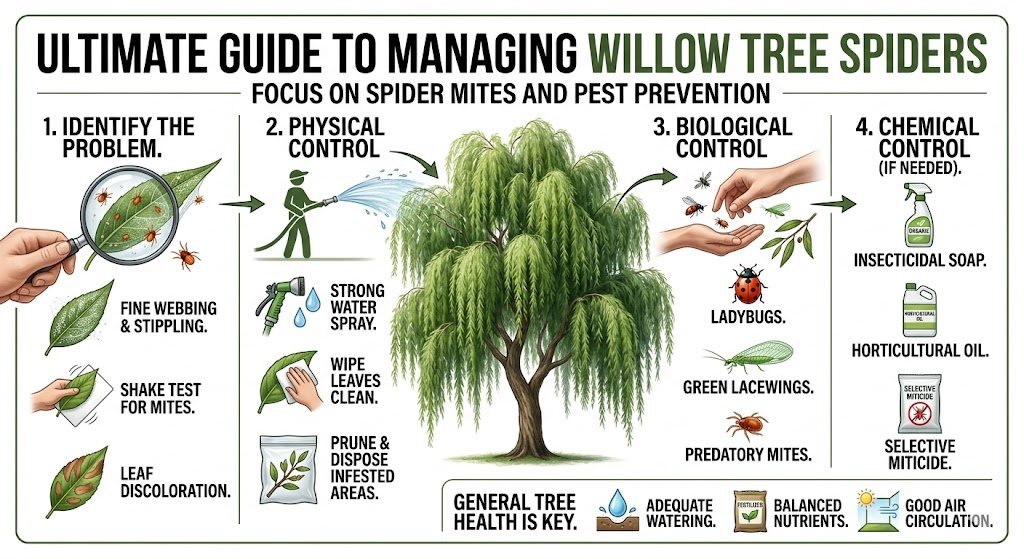
Most of these spiders are harmless to humans. They play a role in controlling insect populations, which can actually benefit your garden or outdoor space. The problem begins when their numbers grow too large, webs become messy, or people feel uncomfortable around them.
A common mistake is assuming they are dangerous or aggressive. In reality, most willow tree spiders avoid humans and only bite if handled directly.
Characteristics of willow tree spiders:
- Found on drooping branches and near water sources
- Build visible webs, often in clusters
- Active mostly during early morning and evening
- Feed on flies, mosquitoes, and small insects
| Feature | Description |
|---|---|
| Size | Small to medium (0.5–2 inches total) |
| Color | Brown, gray, or yellow patterns |
| Web Type | Orb-shaped or sheet-like |
| Behavior | Non-aggressive, avoids humans |
| Peak Activity | Late summer to early fall |
Why Willow Trees Attract So Many Spiders

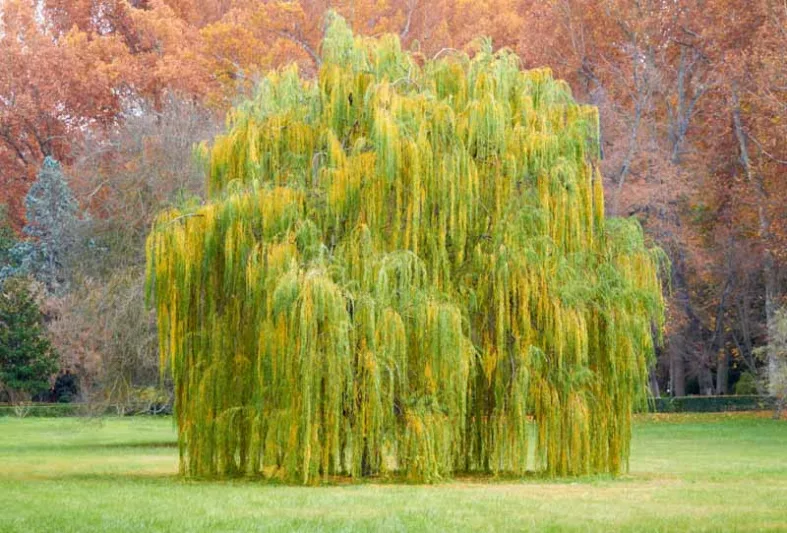
Willow trees create a near-perfect habitat. Their thin leaves and hanging branches trap moisture and insects. This leads to a small ecosystem where spiders can thrive without competition.
The main driver is food. Wherever insects gather, spiders follow.
Moisture also matters. Willow trees often grow near ponds, rivers, or damp soil. This increases insect activity, especially mosquitoes and flies.
Factors that attract spiders to willow trees:
- High insect population
- Humid conditions
- Dense branch structure
- Low disturbance areas
- Nearby water sources
Cause and Effect Table
| Condition | Result |
|---|---|
| Standing water | More mosquitoes → more spiders |
| Dense branches | Easier web-building |
| Night lighting nearby | Attracts insects → spider buildup |
| Poor pruning | Creates hidden nesting areas |
Are Willow Tree Spiders Dangerous?
This is where most people overreact. The majority of spiders found in willow trees are harmless. Their venom is meant for insects, not humans.
Bites are rare and usually happen only when the spider is trapped or pressed against skin. Even then, symptoms are mild: slight redness, itching, or minor swelling.
However, there are rare exceptions depending on your region. Some areas may have species like widow spiders nearby, but they are not typically associated with willow trees specifically.
Risk assessment summary:
- Low chance of bites
- Very low chance of serious reaction
- Higher risk of fear than actual harm
| Spider Type | Risk Level | Notes |
|---|---|---|
| Orb-weaver | Very Low | Most common, harmless |
| Garden spider | Very Low | Beneficial insect control |
| Widow spider | Moderate | Rare in willow trees |
| Wolf spider | Low | Ground-based, not tree-focused |
Signs You Have a Spider Problem in Your Willow Tree
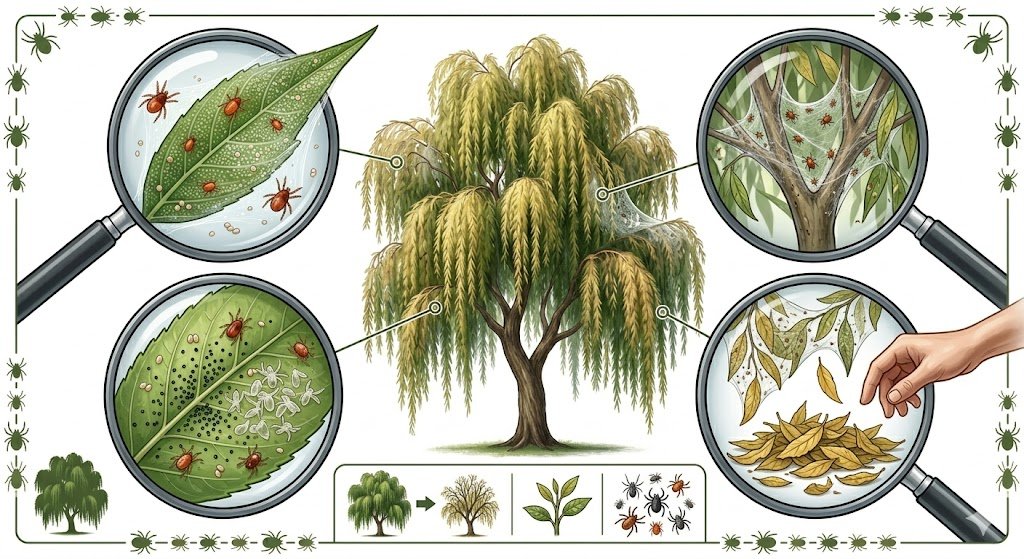
Not every spider presence is a problem. A few webs are normal. The issue starts when the population grows beyond comfort or affects your outdoor use.
You can tell things are getting out of control by looking at web density and frequency.
Clear signs of overpopulation:
- Multiple webs layered over each other
- Webs blocking walkways or entrances
- Large clusters of spiders in one area
- Increase in insects trapped around the tree
- Webs reappearing quickly after removal
Severity Indicator
| Observation | Level of Concern |
|---|---|
| Single web | Low |
| Multiple scattered webs | Moderate |
| Thick web clusters | High |
| Daily web rebuilding | Very High |
Natural Ways to Manage Willow Tree Spiders
If your goal is control, not elimination, natural methods work well. They reduce spider numbers without harming the environment.
One of the most effective steps is reducing insects. If food disappears, spiders move elsewhere.
Another method is disrupting their habitat regularly.
Practical natural control methods:
- Spray water on webs early morning
- Prune branches to reduce density
- Turn off outdoor lights at night
- Use essential oil sprays (peppermint, eucalyptus)
- Introduce natural predators like birds
Natural Control Methods Table
| Method | Effectiveness | Notes |
|---|---|---|
| Water spraying | Medium | Needs consistency |
| Pruning | High | Long-term impact |
| Light reduction | High | Cuts insect attraction |
| Essential oils | Low–Medium | Temporary deterrent |
| Birds/bats | High | Natural population balance |
Mechanical Removal Techniques That Work
Manual removal is the fastest way to reduce visible spider activity. It doesn’t solve the root cause, but it gives immediate results.
Timing matters. Removing webs in the morning is most effective because spiders are less active and more likely to leave.
Effective removal tools:
- Long-handled broom
- Garden hose with pressure nozzle
- Vacuum (for nearby structures)
- Gloves for safety
Step-by-step removal approach:
- Remove visible webs early morning
- Spray branches to break hidden webs
- Repeat daily for several days
- Combine with pruning for lasting results
Removal Efficiency
| Method | Speed | Long-Term Impact |
|---|---|---|
| Broom sweeping | Fast | Low |
| Water spraying | Fast | Medium |
| Vacuum | Medium | Low |
| Combined method | Fast | High |
Chemical Solutions: When and How to Use Them
Chemical control should not be your first move. It works, but it comes with risks to beneficial insects and the environment.
If you choose this route, target areas where spiders build webs instead of spraying the entire tree.
Types of treatments:
- Insecticides (reduce food source)
- Residual sprays (repel spiders)
- Contact sprays (kill on touch)
Safe usage tips:
- Apply during low wind
- Avoid spraying flowers
- Follow label instructions strictly
- Keep pets and children away
Chemical Option Table
| Type | Effectiveness | Risk Level |
|---|---|---|
| Contact spray | High | Moderate |
| Residual spray | Medium | Moderate |
| Insecticide | Indirect | High |
Long-Term Prevention Strategies
The real solution is prevention. If you remove the conditions spiders depend on, they won’t return in large numbers.
Consistency matters more than intensity.
Long-term prevention actions:
- Trim tree regularly
- Improve airflow around branches
- Reduce standing water nearby
- Control insect population
- Clean surrounding structures
Prevention Impact Table
| Action | Long-Term Effect |
|---|---|
| Regular pruning | High |
| Water control | High |
| Insect management | Very High |
| Cleaning surroundings | Medium |
Unique Insight: Why Removing Spiders Alone Fails
Most people focus only on spiders. That’s a mistake.
Spiders are a symptom, not the cause. The real issue is the insect population and habitat conditions.
If you remove spiders but leave insects, new spiders will replace them within days.
Think of it as a cycle:
- Insects increase
- Spiders follow
- You remove spiders
- Insects remain
- Spiders return
Breaking the cycle requires targeting insects first.
Cycle Breakdown Table
| Stage | What Happens |
|---|---|
| Insects increase | Food supply grows |
| Spiders arrive | Population builds |
| Removal only | Temporary relief |
| Root cause stays | Problem returns |
Expert Insight
A horticulture specialist once explained it simply:
“Spiders are indicators of a healthy insect system. If you see too many spiders, you’re really seeing too many insects.”
This perspective changes how you manage the problem. Instead of reacting, you adjust the environment.
Managing Spiders Without Harming Your Garden
Total removal can backfire. Spiders actually protect plants by reducing pests.
The goal should be balance, not elimination.
Balanced approach:
- Keep spiders away from living areas
- Allow some presence deeper in the tree
- Focus control near human activity zones
Balanced Management Table
| Area | Strategy |
|---|---|
| Near seating | Remove webs regularly |
| Tree interior | Allow limited presence |
| Garden edges | Monitor only |
Seasonal Patterns of Willow Tree Spiders
Spider activity is not constant. It changes throughout the year.
Peak season usually occurs in late summer when insect populations are highest.
Seasonal behavior:
- Spring: Low activity
- Summer: Rapid growth
- Late summer: Peak webs
- Fall: Decline begins
- Winter: Minimal presence
Seasonal Activity Table
| Season | Spider Activity |
|---|---|
| Spring | Low |
| Summer | Medium |
| Late Summer | High |
| Fall | Medium |
| Winter | Very Low |
Common Mistakes People Make
Most spider problems get worse because of poor handling.
Frequent mistakes:
- Ignoring the issue until it grows
- Using too much pesticide
- Not addressing insects
- Removing webs at night (less effective)
- Leaving outdoor lights on constantly
Mistake Impact Table
| Mistake | Result |
|---|---|
| Overusing chemicals | Kills helpful insects |
| Ignoring insects | Spider return |
| Inconsistent removal | No long-term improvement |
| Poor timing | Reduced effectiveness |
Practical Example: A Realistic Control Plan
Here’s a simple, workable plan you can follow:
Week one:
- Remove all visible webs
- Spray tree lightly with water daily
- Turn off outdoor lights
Week two:
- Prune dense branches
- Apply natural deterrent spray
- Monitor insect levels
Week three and beyond:
- Weekly maintenance
- Spot removal of webs
- Maintain low insect attraction
Plan Summary Table
| Week | Focus |
|---|---|
| Week 1 | Immediate cleanup |
| Week 2 | Habitat control |
| Week 3+ | Maintenance |
Final Thoughts
Willow tree spiders are not your enemy. They are part of a natural system that becomes noticeable when conditions favor them too much.
Trying to eliminate them completely is unrealistic and unnecessary. What works is control through balance.
If you reduce insects, improve airflow, and stay consistent with maintenance, spider numbers will drop naturally.