


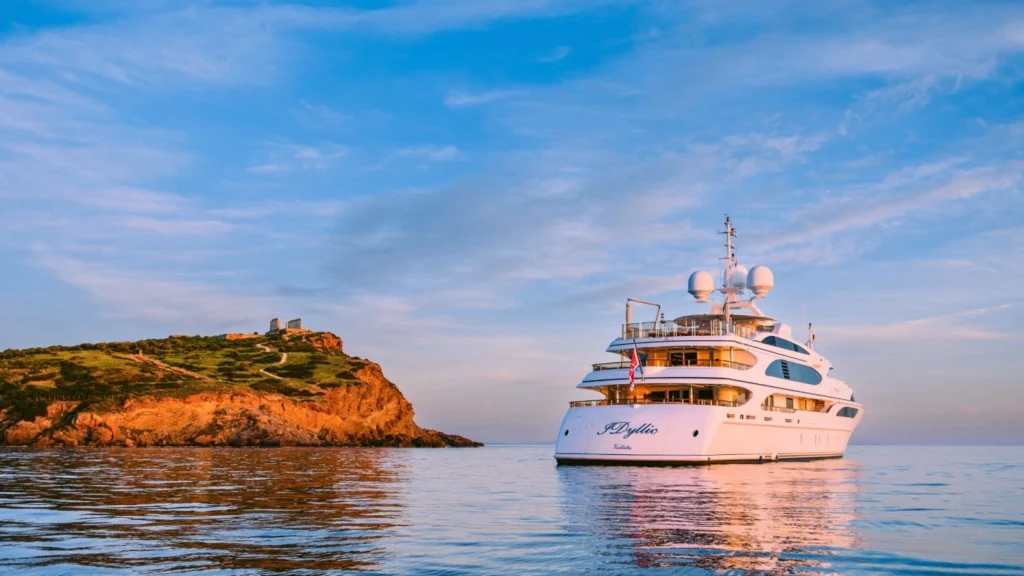
Every yacht charter listing for the Mediterranean shows the same picture. Flat turquoise water, an empty cove, someone diving off a swim platform into glass. What the picture never tells you is that it was almost certainly shot in June, before the wind arrives, before the August fleet descends, and before the cove in the photo fills with forty other boats fighting for the same patch of seabed. The gap between that photograph and the actual experience is the whole subject worth writing about, because the Mediterranean is not one easy paradise. It is a set of very specific places with very specific moods, and chartering well means knowing which one you are walking into and when.
The water in the photo has a season, and a wind

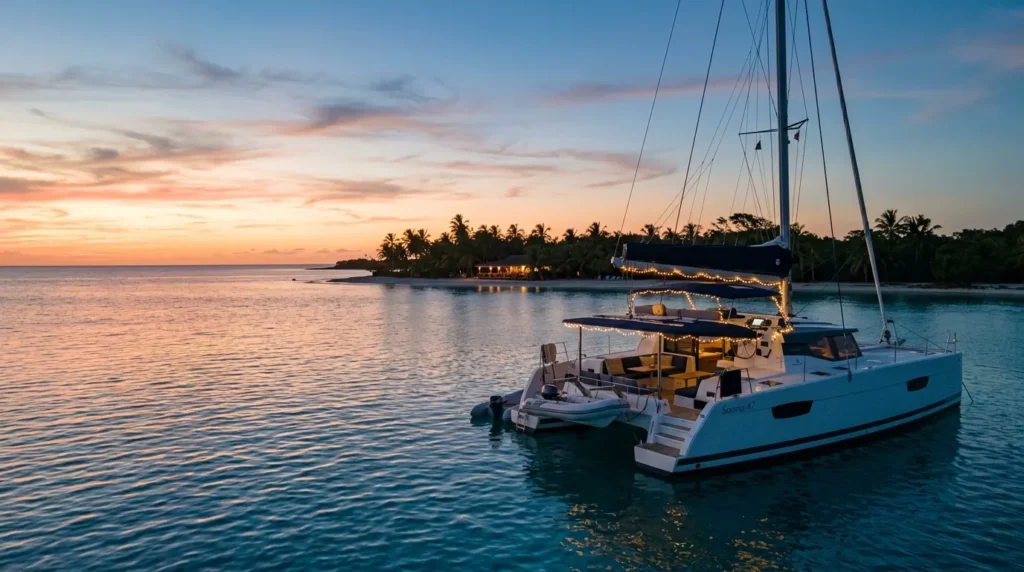
A yacht charter in the mediterranean allows guests to travel at their own pace and adjust the itinerary whenever they choose.
The Mediterranean does not behave the same in May as it does in August, and the difference is not a matter of degrees on a thermometer. On the French and Italian side, the mistral and its cousins can turn a postcard anchorage into something nobody wants to sleep in, a hard, dry wind that funnels down off the land and can pin a boat in port for a day or two with very little warning. Experienced crews do not fight it. They plan around it, choosing the lee side of an island and waiting it out.
A bareboat charterer who has never met the mistral learns about it the hard way, usually at three in the morning when the anchor starts dragging.
This is the first thing the brochure flattens. The “ideal sailing conditions most of the year” line is technically true and practically misleading. The shoulder weeks, late May into June and then September, give you the warm water and the empty coves at the same time. July and August give you the warm water and the crowds and the high-season prices and, in places, the wind. Chartering well is largely a matter of reading that calendar correctly, and it is exactly the knowledge a listing has no incentive to share.
The Itinerary You Won’t Find in Any Charter Listing
One of the biggest advantages of chartering a yacht is the freedom it provides. Traditional vacations often follow fixed schedules, crowded tourist routes, and limited flexibility. A yacht charter in the mediterranean allows guests to travel at their own pace and adjust the itinerary whenever they choose.
Travelers can enjoy:
- Private access to quiet beaches
- Flexible daily schedules
- Gourmet dining onboard
- Water activities and entertainment
- Personalized service from experienced crews
This level of customization creates a more intimate and memorable vacation experience. Many charter companies focus on designing tailor-made itineraries that match the specific interests of their clients.
The three ways to charter are really three different holidays
The standard explainer lays out bareboat, skippered, and crewed as if they were sizes of the same coffee. They are not. They are three different holidays that happen to involve the same hull.

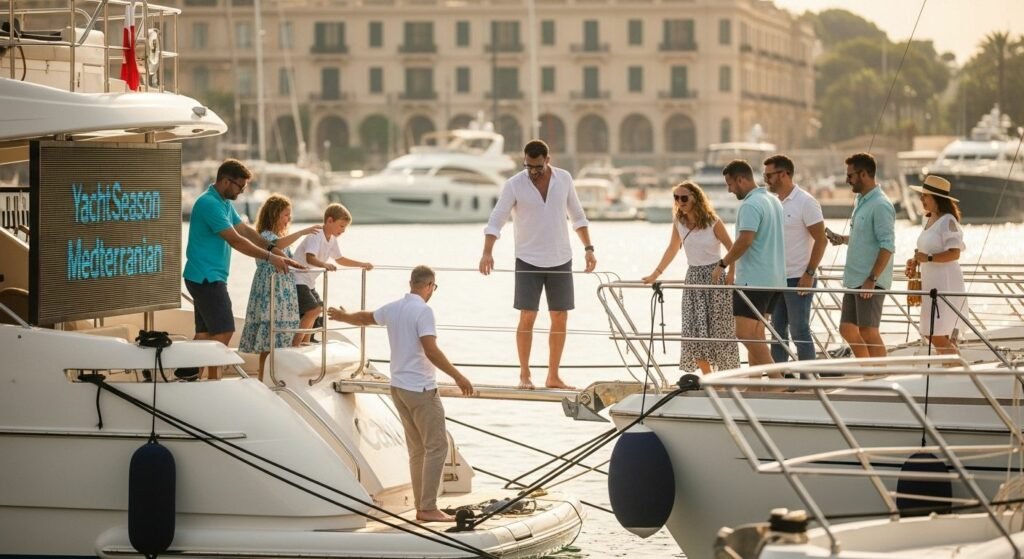
A bareboat charter is genuine independence. You are the captain, which means you are also the one reading the weather, picking the anchorage, and answering for the boat. It rewards people who actually sail and quietly punishes people who thought they did. Most operators will not hand over the keys without seeing a sailing résumé, and the ones who do not ask are the ones to worry about. A skippered charter keeps your independence over where you go but hands the responsibility for getting there to someone who knows the coast, which, on a complicated cruising ground full of unlit fishing nets and shifting summer wind, is worth far more than it costs. A crewed charter is not a sailing trip with extra staff. It is closer to a small floating hotel that happens to relocate every morning, where the thing you are actually paying for is a chef who provisions at the local market and a captain who knows which cove empties out by six.
The choice between them is not about budget tiers. It is about how much of the work you want to be doing on what is supposed to be a holiday, and that is a question the symmetrical three-bullet list never actually asks you.
What a good crew knows that no itinerary contains
The single most valuable thing on a crewed charter is also the thing that never appears in the listing: the captain’s mental map of the coast. Not the famous harbours, since anyone can point a boat at Monaco, but the unmarked stuff. The cove that is perfect until the afternoon ferry wake rolls in, so you leave by two. The family taverna up a goat track behind a beach with no road to it, reachable only by tender, where the fish was swimming that morning. The anchorage everyone piles into versus the identical one around the headland that nobody bothers with.
This local knowledge is the difference between a charter that feels like a guided tour of the places already on Instagram and one that feels like someone let you in on a secret. It is also, not coincidentally, impossible to commoditise. It lives in a person, accumulated over seasons, and it is the reason a good crewed week costs what it does.
The French Riviera: glamorous, expensive, and quietly logistical
The Riviera deserves its reputation, but the part nobody mentions is that it is a logistics exercise as much as a glamour one. The marinas at the heart of it, the prime berths in Monaco or the old port at Saint-Tropez in peak season, are eye-wateringly expensive when you can get them at all, and in high summer you often cannot without booking far ahead. The genuine appeal of the region for chartering is not only the shopping and the beach clubs. It is that the iconic stops sit close enough together that you can wake up off one town and have lunch off another, covering ground that would take a frustrating day of road traffic to manage by car.
That density is the real luxury, not the marble bathrooms, but the fact that the coast lets you sample several distinct places in a few days without packing a bag twice. It is also why the region works so well for short charters and for corporate use. A yacht off Cannes during a festival is both an address and a venue, which is a combination land cannot easily offer.
Onboard, the toys matter less than the rhythm

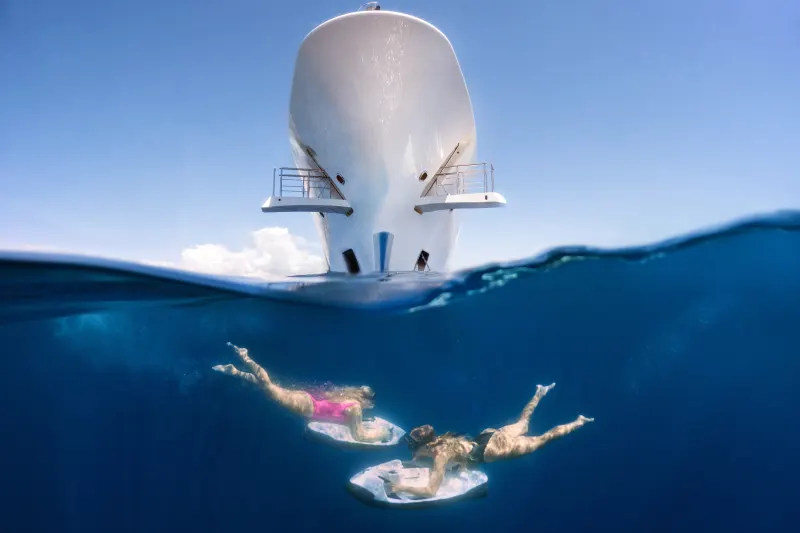
Listings love to inventory the hardware: jet skis, paddleboards, the jacuzzi, the cinema room on the bigger boats. Fine. But the thing that actually defines the experience is not the gadget count. It is the rhythm a boat makes possible. You swim off the back before the world is awake and the anchorage is still empty. You move while you eat lunch. You watch the view change through the afternoon rather than staring at the same stretch of hotel beach for a week. A hotel gives you one room and one view. A yacht gives you a different one every few hours, and that constant motion is the part guests remember long after they have forgotten which water toys were aboard.