



Ranking 9th, repetitive motion injuries from microtasks re-entered the top 10 causes of workplace injury, according to the 2025 Workplace Safety Index.
Repetitive motion injuries occur most frequently among workers who perform repeated tasks. Typing work, assembly line operations, carrying objects, scanning items, or operating tools that produce vibrations are examples of tasks that develop strain in the muscles. And because they develop gradually, there is difficulty diagnosing these injuries early. It also makes it difficult to prove in workers’ compensation claims.
Let’s take a closer look at how these injuries occur and what they mean for workers’ rights.
What Are Repetitive Motion Injuries and Why Should You Care?
Repetitive motion injuries (RMIs) are becoming a growing concern among workplaces in all industries. They strain your muscles, tendons, and nerves.
As the symptoms persist, they will affect your day-to-day tasks and even your overall well-being. Activities such as typing and lifting and assembly line work create conditions that lead to RMIs.
If these injuries remain untreated, they will develop into permanent disabilities that result in chronic pain and decreased work efficiency. Chronic pain can impact people’s lives so much that they may experience depression or become completely debilitated by their pain, or they are forced out of their jobs and require Social Security Disability benefits just to stay financially afloat, according to https://www.heltonlaw.com/.
The reasons to care about this matter exist because understanding RMI risk factors together with RMI symptoms enables you to create effective self-protection strategies.
Your physical health needs to come first because it creates a work atmosphere that functions better and operates with increased safety.
How to Recognize Symptoms of Repetitive Motion Injuries?
Suffering debilitating pain or lack of motion prevents you from performing your daily job tasks, says Los Angeles repetitive motion injury lawyer Christopher J. Canlas. And chances are your condition is related to your work.
The possibility of repetitive motion injury exists when you experience ongoing pain that affects particular body parts. The symptoms you should seek include muscle and joint areas that exhibit swelling and stiffness and a burning sensation. The affected areas will show two changes, which include decreased strength and restricted movement capabilities.
You should observe your condition because active movements make your pain worse, while resting brings it relief. Numbness and tingling symptoms indicate nerve damage while specific muscle fatigue that persists indicates muscle strain.
The signs require urgent attention because they must receive complete attention. Getting help early helps people avoid more serious health problems later on in life.
Listen to your body’s signals. If you are feeling uncomfortable, it’s best to see a healthcare professional for accurate diagnosis and treatment.
Common Repetitive Motion Injuries Found in the Workplace

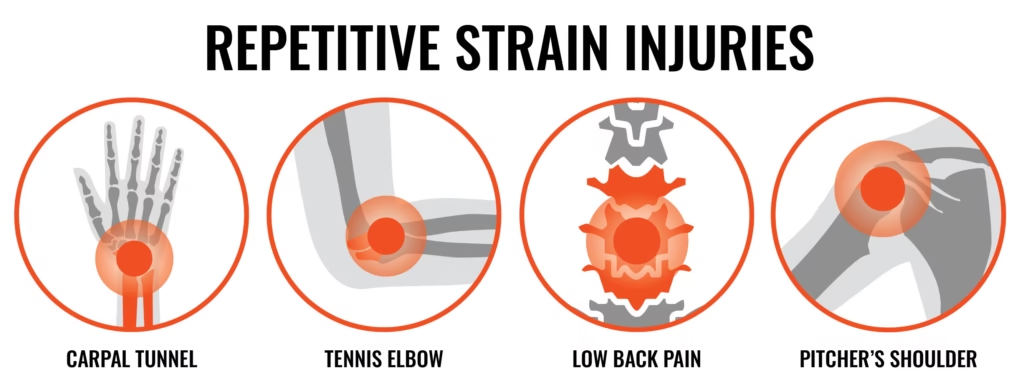
The first requirement for recognizing repetitive motion injury symptoms needs to be completed before learning about the most common workplace injuries that people experience.
Carpal tunnel syndrome affects the wrist and hand. It happens commonly for those who use their hands and wrists repeatedly. Tasks like typing and using mouse are the usual cause of this condition.
People who repeatedly lift or reach overhead develop tendonitis. This is a condition that affects the elbow and shoulder joints. Bursitis represents a typical injury that results in joint discomfort that mainly affects the knees and hips.
Check out the knee replacement procedure if required. Thank you,
The activities that need you to grip items for extended periods while you maintain uncomfortable body positions will cause you to develop trigger finger. Neck strain happens with repeated head rotation and holding the neck in one posture.
If you know the causes, you can stop these injuries from disrupting your work.
Causes of Repetitive Motion Injuries
The workplace has multiple factors that increase the risk of developing repetitive motion injuries. Still, there are specific factors that serve as primary causes.
The main problem occurs when workers execute the same work activity without taking any time off because this pattern results in both physical exhaustion and body strain.
The body undergoes excessive stress when employees work at a workstation that lacks proper ergonomic design.
The improper way people use tools creates more problems because non-comfortable and non-efficient tools make it difficult to use them properly.
Muscle weakness together with insufficient exercise development will make people more likely to sustain injuries because their bodies lack proper training to handle the physical demands of repeated movements.
You can track the possible dangers that exist in your occupational space if you know their causes. And ultimately, you may be able to slow down or even prevent them from developing.
Effective Strategies for Preventing Repetitive Motion Injuries at Work


There are ways to prevent workplace repetitive motion injuries. First, you must establish proper ergonomics and have regular break times.
Adjust your workstation so that your chair, desk and equipment reach your preferred comfortable height. You should use supportive seating while positioning all necessary items at your workspace for quick access.
You should take brief breaks after every hour to perform stretching exercises and body movements because this practice helps decrease your tension and tiredness. Your body should maintain an upright position while you keep your spine straight and prevent yourself from using uncommon body positions.
You should use task rotation as a method to decrease your need for repetitive tasks throughout the entire workday. The use of ergonomic tools like wrist supports and specialized keyboards will help you maintain physical protection.
Conclusion
Workplace safety needs to include knowledge about repetitive motion injuries. You can safeguard yourself and your coworkers through early symptom detection and common injury identification.
The implementation of effective prevention strategies needs proper ergonomic design together with scheduled work breaks because these measures will decrease the probability of work-related injuries. Your physical health improvement will increase your work efficiency while creating a safe and supportive workplace for all employees.