


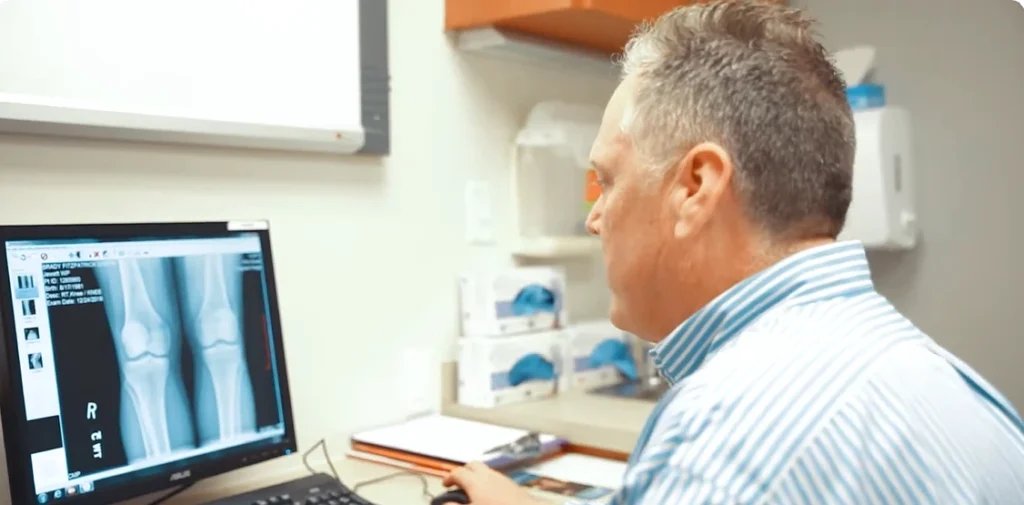
I put off seeing an orthopedic surgeon about my knee for five months, and the reason is right there in the job title. Surgeon. You don’t visit a barber expecting to leave with your hair intact, and some part of my brain was certain that walking into a surgeon’s office meant walking out with an operation scheduled. So I iced, I limped, I rearranged my life around a knee that was clearly not fixing itself, all to avoid a conversation I’d already written in my head.
The actual appointment lasted forty minutes and ended with a physical therapy referral and a follow-up in eight weeks. Nobody mentioned an operating room. I remember sitting in the parking lot feeling something close to deflated, all that dread for a stretching plan, and then feeling foolish, because it turns out my expectation wasn’t just wrong, it was statistically backwards. If you’ve got an appointment booked and a knot in your stomach, this article is the forty minutes explained: what the visit actually contains, what genuinely gets decided in that room, and why the odds say you’ll leave with a plan instead of a surgery & treatments.
The Number That Should Change How You Walk In
Here’s the statistic I wish someone had handed me during my five months of stalling. A large population study published in PLOS ONE tracked nearly 478,000 patients from their first visit to an orthopedic surgeon and found that 79.3 percent did not receive surgery within the following 18 months. Not the first visit, the following year and a half. For injuries the figure was even higher, 84.5 percent, and even for arthritis, the most surgery-prone category, 73 percent of patients went unoperated. The researchers’ own conclusion was that a substantial share of referrals exist for expert diagnosis and management advice, not for procedures.
Practicing surgeons say the same thing in plainer words. Physicians at one health system put it directly: roughly 70 percent of orthopedic injuries can be effectively treated without any surgery at all, and some practices report treating as many as 90 percent of their cases conservatively. The job title says surgeon. The job, most days, is closer to diagnostician and traffic director, and surgery is one road out of many, reserved for the cases that genuinely need it.
What the Appointment Actually Contains


Knowing the odds helps; knowing the agenda helps more. A first orthopedic visit is surprisingly consistent from clinic to clinic, and per the American Academy of Orthopaedic Surgeons’ own patient guidance, it’s built from three parts.
The conversation carries the most weight. Expect detailed questions: when it started, what movement provokes it, what makes it better, what you’ve already tried, how it’s changing your daily life. This history is not small talk before the real medicine. For musculoskeletal problems, the story of the pain is frequently more diagnostic than any scan, which is why the best thing you can bring is a clear timeline.
Then the hands-on exam. The surgeon will move the joint, test strength against resistance, compare sides, press specific spots, and watch you walk or reach. Some of it may reproduce your pain briefly, which is informative rather than careless, since where it hurts under which maneuver narrows the diagnosis fast.
Then imaging, usually simpler than you expect. Most clinics shoot standard X-rays on site the same day. The MRI that everyone assumes is mandatory frequently isn’t ordered at all on visit one, because if the history, exam, and X-ray already tell a coherent story, an expensive scan adds cost without changing the plan. If an MRI does get ordered, that’s not an escalation, it’s a specific question the surgeon needs answered before deciding anything.
What Actually Gets Decided in That Room

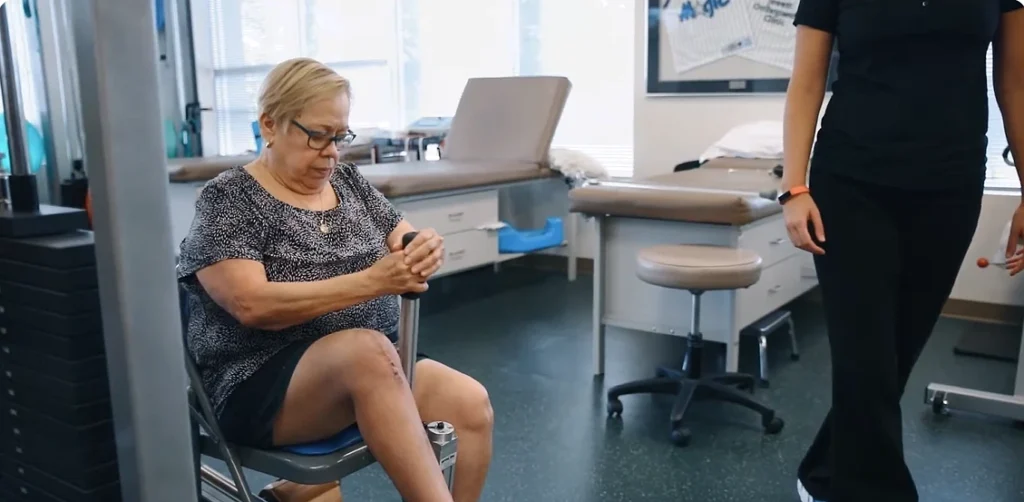
This is the part nobody explains, and it’s the reason the visit is worth the copay even when it ends without drama. Four real decisions come out of a good first appointment:
- The problem gets a name, or at least a working one. After months of guessing and searching your symptoms at midnight, a specific diagnosis from someone who examines these joints all day is worth more than it sounds.
- A first-line plan gets chosen, and it’s nearly always conservative: physical therapy, activity modification, anti-inflammatories, bracing, sometimes an injection. Not because surgeons are withholding the good stuff, but because for a huge share of conditions the evidence says conservative care works as well or better, without the risks and recovery of an operation.
- The failure condition gets defined. A good plan comes with a tripwire: “if this isn’t meaningfully better in eight weeks, we image further,” or “if the numbness spreads, call immediately.” You’re not being sent away, you’re being sequenced, and knowing exactly what would trigger the next step is the difference.
- The surgical criteria get named, even when surgery isn’t recommended. You’re entitled to hear what, in your specific case, would make an operation the right answer, and asking for that directly is the single best question available to you.
Notice what’s not on the list: a sales pitch. If your consultation feels like one, surgery pushed at a first visit for a non-emergency problem before any conservative option is tried, that’s precisely the situation second opinions were invented for, and no reputable surgeon resents a patient seeking one.
The Honest Exceptions
Fairness requires the other side, because “rarely ends in surgery” is not “never.” Some situations genuinely do move fast: displaced fractures, complete tendon or ligament ruptures in the wrong places, joints that lock or give way from structural failure, infections, and any nerve symptoms that are progressing. In those cases, prompt surgery isn’t aggression, it’s the correct medicine, and part of what you’re paying for in that room is a trained eye that can tell the urgent minority from the wait-and-strengthen majority. If you’re in the minority, you want to know soon, which is one more argument against my five months of stalling.
How to Get the Most Out of Your Forty Minutes
A little preparation converts a decent visit into a genuinely useful one. Bring any prior imaging and reports, a list of medications, and a written timeline of the problem, because memory gets vague under a clinician’s gaze. Wear clothes that expose the joint in question, shorts for a knee, a tank top for a shoulder, and skip the day’s stiffness-hiding efforts, since the surgeon needs to see the real thing. And walk in with two questions written down: “What would have to be true for surgery to become the right answer for me?” and “What does success look like on the non-surgical plan, and by when?” Those two questions bookend everything that matters, and they signal that you’re a partner in the decision rather than a passenger.
One closing note, offered plainly this article describes the typical shape of a first visit, and your knee, hip, spine, or shoulder is not typical, it’s yours. Nothing here replaces the exam, and if something feels wrong enough that you’re reading articles about surgeons at night, the strongest move is the appointment itself, made sooner rather than after five months of parking-lot dread. The odds, as it turns out, were on my side the entire time. They’re very likely on yours too, and the only way to collect on them is to walk in.