


Dentists call it a white spot lesion: a dull, chalky patch on a tooth where acid has drained minerals from just under the enamel. The surface on top is still in one piece. That is what separates it from a cavity, and it is also why fluoride can still repair it.
Most people never notice theirs. It doesn’t hurt, it doesn’t catch food, and from a normal distance it looks like a bit of light on the tooth.
How a White Spot Forms, And Where To Find One
The bacteria in plaque live on sugar. Every time you eat or drink something sweet or starchy they make acid, and the acid dissolves a little calcium and phosphate out of the enamel. Saliva puts some of it back between meals. If snacks and sweet drinks keep coming all day, though, saliva falls behind, and the NIDCR explains that a white spot may appear where minerals have been lost. The agency adds that decay can still be stopped or reversed at that point.
Left alone, the patch changes color. The ADA’s patient site says a cavity in an early stage can look like a white spot and later goes brown or black.
To look for one, brush first, dry the tooth with a tissue and stand near a window. A wet tooth hides the spot; a dry one shows it as matte next to the shiny enamel around it. Check along the gum line first, then the grooves of the back teeth. People wearing braces should look hard around each bracket, because Colgate’s professional site reports that up to 96% of teenagers who wear fixed orthodontic appliances develop white spot lesions. Between the teeth you won’t see much at all, which is one job a dental X-ray still does better than a mirror.
Not every white mark is decay. Mild fluorosis and marks left from when the tooth was forming look similar, and a dentist can tell the difference in a few seconds.
What Fluoride Does to The Spot

When minerals go back into weakened enamel, fluoride gets built into the new crystals. The repaired layer resists acid better than the enamel was ever able to before. A healed spot may stay faintly visible, but if it stops growing, the tooth is out of danger.
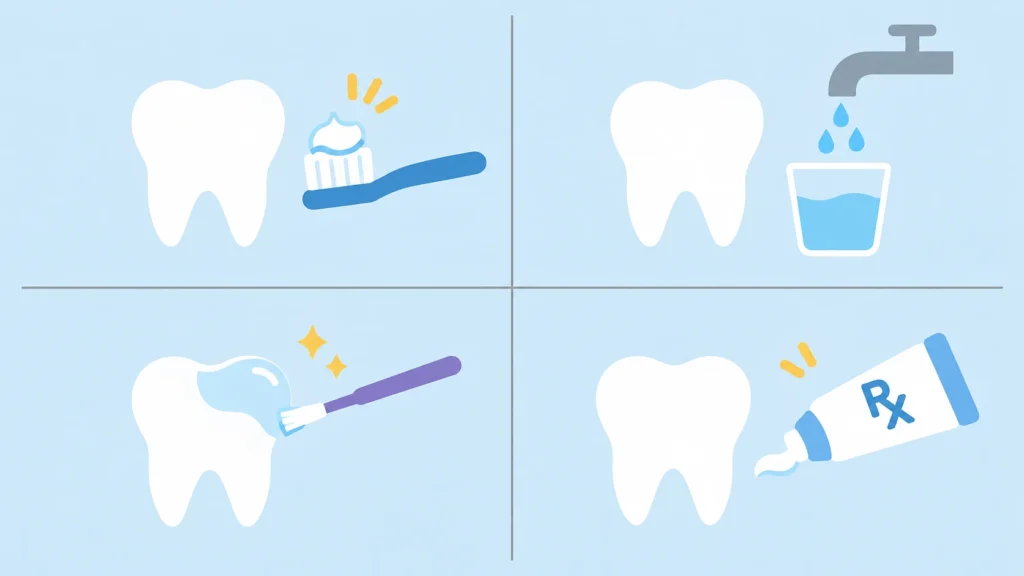
There are a few ways to get fluoride onto the teeth, from the everyday to the ones a dentist hands out:
- Fluoride toothpaste, twice a day, a pea-sized amount.
- Tap water, in towns that add fluoride. The CDC reports 25% fewer cavities than communities without water fluoridation, though some states have recently voted to stop adding it, so the water supplier’s annual report is worth a look.
- Varnish painted on at the dental office, a sticky 5% sodium fluoride coat that keeps working for hours after you leave.
- A prescription toothpaste.
The Prescription Option
That last one carries 5,000 parts per million of fluoride, several times stronger than anything on a supermarket shelf. According to the American Dental Hygienists’ Association, the ADA found that toothpaste or gel with 5,000 parts per million fluorides tripled the chance of stopping or reversing decay on tooth roots. Dentists usually keep it for adults and older children who can spit it out properly.
Habits That Help The Enamel Heal
The sugar question is less about how much and more about how often. A slice of cake at dinner is one acid attack. A sweetened latte sipped from nine until noon is three hours of them. Keeping sweet things to mealtimes gives saliva the gaps it needs to rebuild the spot.
The other change costs nothing. After brushing, spit the foam out and don’t rinse with water, because rinsing carries away most of the fluoride the paste just left on the teeth. Britain’s Oral Health Foundation has pushed “spit, don’t rinse” since 2016. A fluoride mouthwash is fine, just at a different time of day, after lunch say.
A few more that dentists commonly suggest:
- water instead of soda in the afternoon (the case against one daily soda goes well beyond teeth).
- sugar-free gum after meals.
- floss once a day, since a lot of white spots start where two teeth touch.
- nothing but water after the bedtime brush.
Give it a few months. A dentist comparing one visit’s notes or photos with the next can tell you whether the spot has stopped growing.
Signs The Spot Has Already Become a Cavity
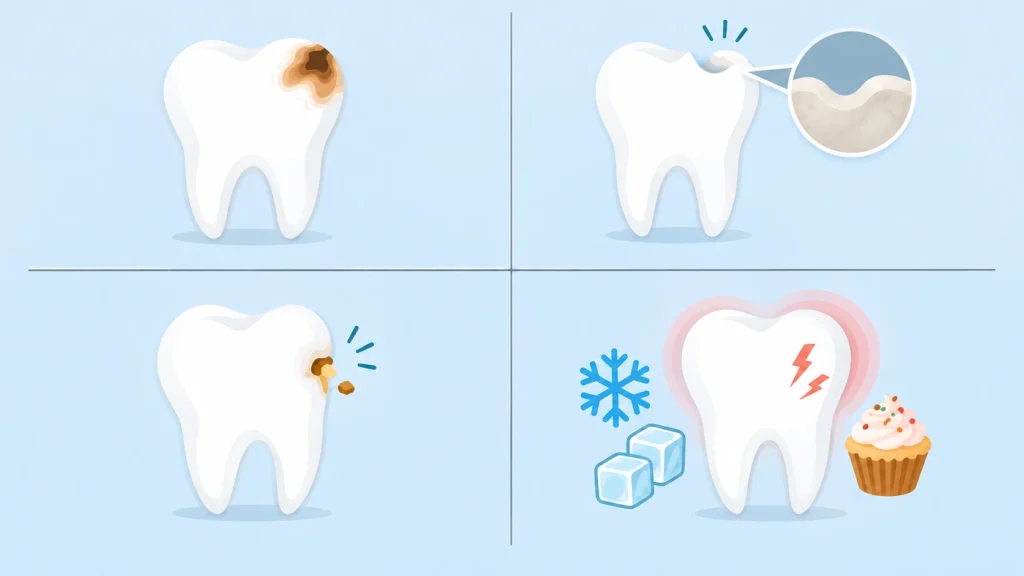
Once the surface gives way, acid reaches the softer dentin below and the damage moves faster. Fluoride can’t fill a hole. You are probably past the white stage if:
- the patch is brown or black.
- your tongue finds a dip or a rough edge there.
- food keeps catching in the same place.
- the tooth stings with something sweet or cold.
At that point a dentist cleans out the soft part and fills it. Waiting lets tooth decay creep toward the nerve, and then the conversation turns to crowns and root canals, which cost a great deal more than a coat of varnish.
Why The Six-Month Checkup Matters Here
White spots between the teeth rarely show up in a bathroom mirror. A routine visit, or a more frequent one for anyone in braces or with a history of fillings, is when a dentist finds them while fluoride still has a chance. A clinic such as Nuffield Dental can check for them at a regular appointment and suggest varnish or a stronger paste if one turns up. It is the plainest kind of preventive care there is.
And keeping your own enamel is still the cheapest route to a smile worth investing in. Seen a chalky patch tonight? Book the visit, and spit instead of rinsing in the meantime.