



A lot of what hangs in a closet gets worn for about 3 months and then waits 9. That is fine for a swimsuit. It is a waste for a sweater that cost $120. The pieces below are the ones that do not wait, because they are built from fabrics that are comfortable in heat and still carry warmth under something else in cold, and because the cuts are plain enough to take a layer over them or under them.
None of this is about looking a particular way. A woman who likes bright prints will build a different closet from one who wears black, and both can have these 10 underneath it.
Fabric first, then cut, then color. Get the fabric wrong and the piece is a one season piece no matter how good it looks on the hanger.
Where the item was bought does not change the rule. A thin merino from a department store, from a women’s clothing chain at the cheaper end, or off a charity shop rail is the same fiber doing the same thing, and the prices below are left out for that reason.
1. Fitted Cotton Tees

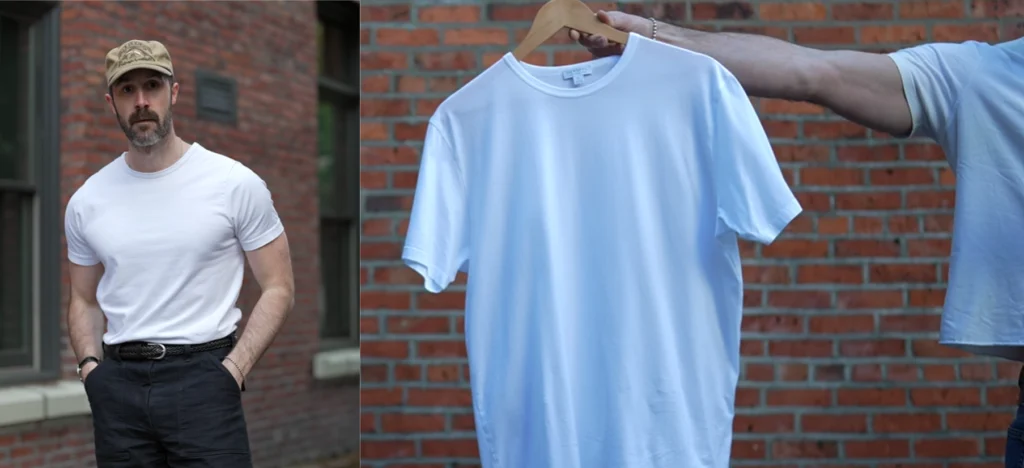
Three of them, white, black and a neutral, fitted through the body with the sleeve stopping around the middle of the upper arm. Cotton with a little modal or elastane in it, so the neck does not go after 10 washes. The oversized one everyone has is a summer tee and that is all it is, since it bunches into a lump the moment a sweater goes on over it.
The white one is worth a word. A plain white cotton tee blocks very little sun, less than a cheap sunscreen, so on a beach day the shoulders under it are basically out in the open. That is one of the reasons the shirt in item 3 matters more than it looks.
2. A Ribbed Tank
Two of them. Ribbed, because the flat jersey kind goes sheer and loses its shape. Worn on its own in summer, and in winter it is the only thing that fits under a shirt under a sweater without a sleeve bunching at the elbow.
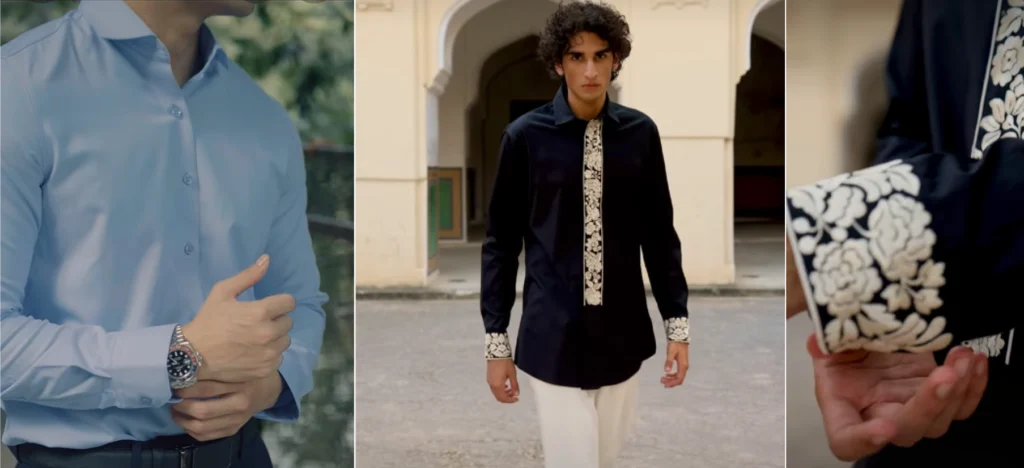
3. A Dark Cotton Shirt, Long Sleeved
“I bought the linen one first, and now it is November and it looks wrong with everything.” That is the usual story with shirts, and the linen one is not wrong, it is just a summer shirt. Creases by lunch, no warmth under a coat.
The shirt that works the year round is cotton poplin or a cotton and Tencel mix, long sleeved, in navy or olive or a dark stripe. Dark on purpose. A dark, tightly woven cotton lets far less sun through than a pale one, so in July it goes open over the tank with the sleeves rolled and it is doing a proper job on the arms. In January it goes buttoned up under the sweater with the collar out, and the collar is what makes a sweater and jeans look like an outfit.
Buy the dark cotton shirt before the linen one. It covers the arms in July and shows at the neck in January.
4. Straight Jeans In A 12 Ounce Denim
Denim is sold by weight, ounces per yard, and the number is on the website if not on the label. Under 10 ounces is the thin stretchy kind that bags at the knee by the end of one summer. Fourteen and up is the heavy rigid kind that is punishment in July. Twelve or 13 ounces with a little stretch is the pair that gets worn more than anything else in the closet, and most of the straight leg jeans at the big chains sit right there without saying so.
Straight from the knee, mid blue or dark. Check the fit sitting down, because jeans that fit in the mirror and dig in at a desk are the ones that end up at the back of the drawer. On wash and cut, The Zoe Report notes Rachel Zoe’s own denim rules come back to the same 2 things every time, and she has been dressing people in jeans for longer than most of us have been buying them.
5. One Trouser In Tropical Wool Or Heavy Viscose
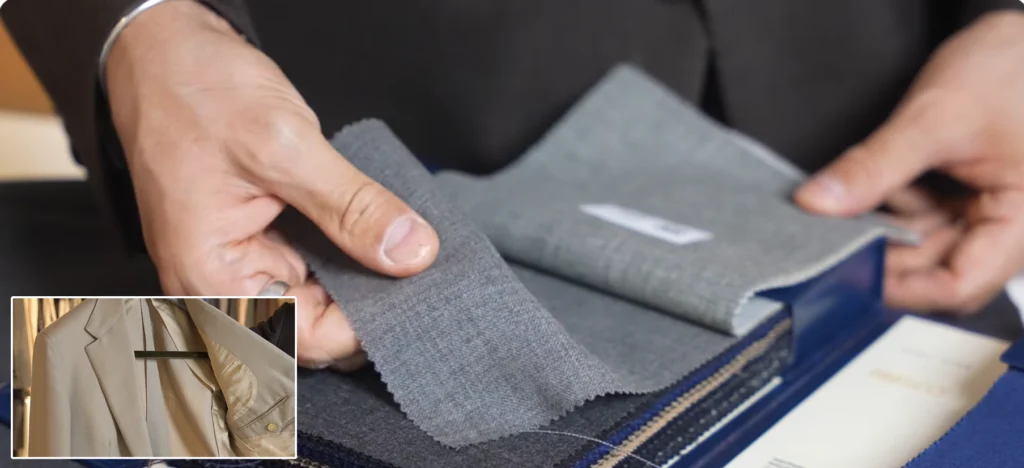
For the days jeans are wrong. A funeral, an interview, dinner with someone’s parents. There are more of those days than anyone budgets for, and the pair that covers all of them in any month is a trouser in tropical weight wool, which is a wool woven light enough that tailors in hot countries have used it for a hundred years, or in a heavy viscose crepe that hangs the same way. Both feel cool on the leg in summer and take a thin thermal underneath in winter.
Polyester suiting looks the part and does not breathe, so it is out. Cotton chino is a sheet of cloth with no warmth in it, so that is out too for winter, though it is fine as a second summer pair.
Black or charcoal for the first one. Pleated or flat, straight or wide, depends on the body and not the season, and the body shape post on this site goes through that properly, so read it before buying either pair.
6. A Thin Merino Sweater
If only 1 thing on this list gets bought, this is it. Merino is cool in an air conditioned office in August and warm on a bus stop in January without changing sweaters, and the reason is what the fiber does with sweat. It pulls moisture off the skin and lets it go, so it never gets clammy, and if it does get wet it keeps you warm anyway, which cotton does not. A wet cotton sweater is colder than no sweater. Everyone who has walked home in one knows that already.
Thin gauge, the kind that can go against the skin, and a crew neck so the shirt collar sits over it. Black, navy or gray. Two if possible, because the one worn 4 days a week goes at the elbow after a couple of winters. The chunky cable knit is lovely and it is a winter sweater, nothing more, because nothing fits over it.
7. A Plain Midi Dress With Some Weight To It
The dress is here for a trick that only shows itself in winter. In summer it is a dress, sleeveless or short sleeved, midi length, in jersey or crepe or sateen, worn with the flat shoes and nothing else. In winter the same dress goes over a long sleeved tee and tights, the merino goes on top, and from the waist down it is a skirt and from the waist up it is hidden.
It only works with a plain dress in a fabric with weight. A floral says July whatever is over it. A thin voile shows the tee through it and looks odd over tights.
A plain midi in jersey or crepe is a dress for 3 months and a skirt for 9, and it is the only skirt on this list.
8. An Unlined Cotton Trench
Unlined is the point. The lined wool trench is a winter coat with a belt, and the padded one is a winter jacket, and neither goes anywhere near July. The unlined cotton one does. In summer it goes on for the walk in the sun and comes off at the desk, and a tank and jeans with a long trench over them look dressed for a meeting where the same tank and jeans without it do not. The sun part is real, too. A dark cotton or denim layer blocks almost all of it, more than any sunscreen, which is the same point as the shirt in item 3 with more length. In spring and fall it is the outer layer on its own, and on a dry January day it goes between the sweater and the coat.
9. A Roomy Single Breasted Wool Coat
The coat is never worn in July, and it is still on the list, because the other 9 are chosen to fit under it. Tee, shirt, sweater, all thin on purpose so the 3 of them go under 1 coat without bulk. A slim tailored coat cannot take that stack and the whole thing falls apart on the first cold morning, so the coat is straight and a little roomy, knee length, single breasted so the sweater shows at the neck, in camel or black or charcoal. If there is money for 1 upgrade anywhere on the list, it goes here, on a water resistant finish, because wet wool stops being warm.
10. A Leather Loafer Or A White Leather Sneaker
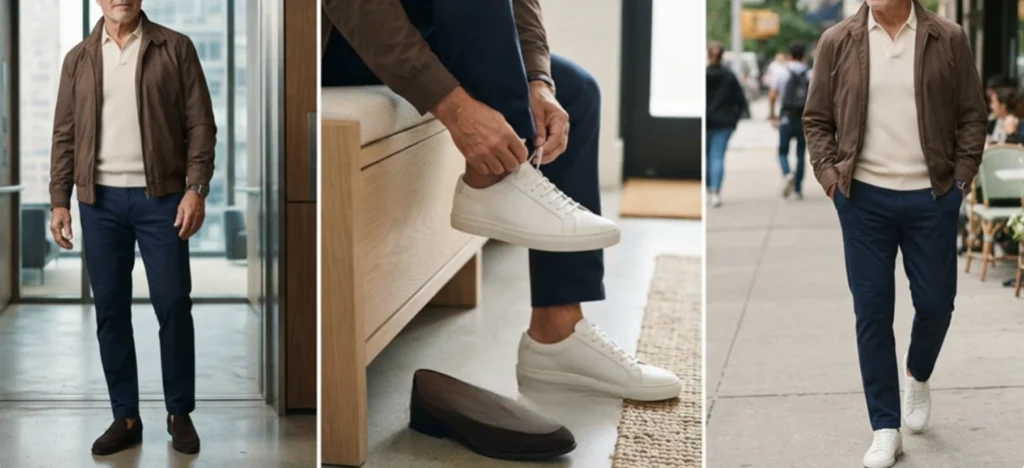
Sandals are out in January and boots are out in July, and the 1 shoe that does both is a closed leather flat with enough sole for a wet pavement. A loafer in black or tan, bare with the jeans or the dress in summer and over a thin wool sock with the trouser in winter. A plain white leather sneaker does the same job dressed down. Not suede, because 1 wet walk marks it for good, and not canvas, because a cold foot in canvas stays cold all day.
The Winter Order, And 2 Things Left Off
In summer there is nothing to work out, it is 1 top and 1 bottom and the shoes, with the shirt or the trench carried for the sun. Winter has an order and it is thin to thick.
- Fitted tee against the skin.
- The shirt over it, collar out.
- The merino over the shirt.
- The coat over all of it, with the trouser or the dress over tights below, and the loafer with a wool sock.
That is 4 layers and it does not look like 4, because every one of them is the thin version of itself. In April it is 2 of those and in October it is 3, and the loud sweater or the jacket of the year goes on top of any of it, which is how the styling trends for 2026 get worn without buying a new closet to go with them.
The blazer is not on the list and people ask about that. It is a good piece, and it is a spring and fall piece, too warm in July and too thin in January without a coat over it, and a coat over a blazer is 2 lots of tailoring and a lot of bulk at the shoulder. The bag is not on it either, because a bag passes every weather test there is and so tells you nothing about the season.
Before buying anything, go through the closet for thin merino, 12 ounce denim, cotton poplin and heavy jersey, and lay what turns up on the bed. Four or 5 of the 10 are usually there already. The gaps are the shopping list, and the shirt is nearly always one of the gaps.