


Key Takeaways
- A cash reserve is money held in an insured, easy-to-reach account to pay essential bills if income drops or stops.
- Three to six months of essential expenses is the usual target. People paid by commission, bonus, or client invoices often aim higher.
- In October 2026, 27.6 percent of unemployed Americans had been job hunting for 27 weeks or longer, so a short buffer can run out before a new paycheck arrives.
- Savings held at a bank are insured up to $250,000 per depositor, per bank, per ownership category.
- Owners need two buffers, one for the household and one for the company. The median small business holds only 27 days of cash.
- The fund is finished when it reaches the target. Extra money after that can go to debt, retirement, and investing.
A cash reserve is a sum of money set aside in a bank account where it can be withdrawn within a day or two without a loss in value. Its job is to pay the rent or mortgage, groceries, insurance, and loan payments during a period when a salary, a bonus, or client payments are interrupted. It is a separate pot from retirement accounts and from money meant for investing, because those can fall in price in the very months when they are needed.
Managers, consultants, salespeople, and owners tend to build this buffer before anything else when the outlook turns shaky. Their earnings are often higher than average, but a large share of that pay can depend on targets, contracts, and company results. The sections below explain what an unsettled economy does to that kind of income, how large the fund ought to be, where to hold it, and when to stop adding to it.
An Unsettled Economy Cuts Variable Pay Before It Cuts Jobs
Companies under pressure usually trim costs in stages. Bonuses shrink, commissions fall as customers delay orders, and consulting contracts are paused well before layoffs are announced. A professional whose base salary covers only part of the household budget can feel a downturn months before any job is lost.
A Job Search Can Outlast A Small Savings Balance
Figures from the Bureau of Labor Statistics show how long a gap can last. In October 2026, 2.0 million people had been unemployed for 27 weeks or more, which was 27.6 percent of everyone out of work. The agency’s 2025 annual averages put the median search for people from management, business, and financial occupations at 11.4 weeks, while the average was 24.1 weeks. The average is pulled up by the long searches, and nobody knows in advance which group they will fall into.
Most Households Start From A Thin Base

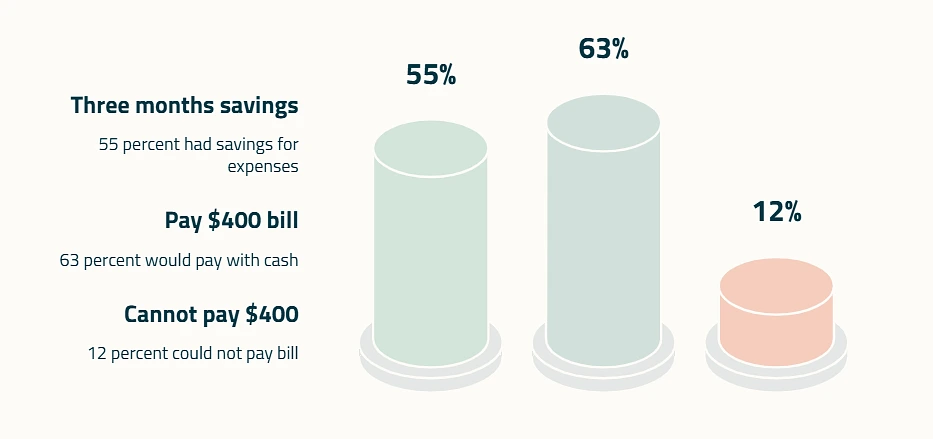
The Federal Reserve asks adults about this every year. In its 2025 survey:
- 55 percent said they had savings to cover three months of expenses, down from 59 percent in 2021.
- 63 percent would pay an unexpected $400 bill with cash or its equivalent.
- 12 percent could not pay that $400 bill by any means.
Nearly half of adults, then, would be short within three months of losing their income.
Cash Comes First Because Every Other Plan Depends On It
Investing and faster debt repayment both assume that the money will stay where it is put. Without a buffer, a single bad quarter can force a person to undo them.
- Shares may have to be sold at a low price. Markets often fall in the same period when employers cut pay, so an investor without savings may sell at a loss to cover bills.
- Retirement withdrawals are costly. Money taken early from a 401(k) or an IRA is generally taxed, and an extra penalty can apply.
- Credit cards fill the gap at a high rate. A balance run up during three months without income can take far longer than three months to clear.
Job loss is only one of the reasons for an emergency fund. A medical bill, a car repair, or a late-paying client can strain a budget just as quickly, and savings cover all of them without new borrowing.
There are two sensible exceptions. A worker whose employer matches 401(k) contributions usually keeps contributing enough to collect the match while saving. Someone carrying high-interest card debt may build one month of expenses first and then split spare money between the debt and the fund.
Household costs matter here as well, since a smaller monthly budget needs a smaller reserve. These smart everyday habits to offset the rising cost of living are a practical place to find the first savings.
Three To Six Months Of Essential Expenses Is The Usual Target
The Consumer Financial Protection Bureau says the right amount depends on a person’s own situation and on the unexpected costs they have faced before. Banks and planners commonly suggest three to six months of essential expenses as a working range. The figure is based on necessary spending, so vacations, dining out, and other optional costs are left out of the sum.
Stable Salaries Sit At The Lower End Of The Range
Three months may be enough for a household with two steady incomes, low fixed costs, and skills that are in demand. A larger fund suits these cases:
- Pay that is mostly commission, bonus, or equity.
- A single-income household.
- Self-employment or contract work.
- A senior or specialist role, where openings are fewer and hiring takes longer.
- An industry that is already cutting staff.
Owners Need A Second Buffer For The Company
Personal savings ought to stay apart from business money. The JPMorgan Chase Institute studied the accounts of 597,000 small firms and found that the median business held 27 cash buffer days, meaning it could pay 27 days of normal outflows if sales stopped. A quarter of firms held fewer than 13 days. The data is from 2015, but it remains the most cited benchmark for small-company liquidity.
An owner who knows the firm’s monthly outflows can set a target in the same way as a household. Good records make that sum easier to work out, and this guide to project accounting covers how costs are tracked job by job.
Keep The Money In An Insured Account That Pays Interest
A reserve has to meet three tests. It must be safe from loss, quick to withdraw, and separate from daily spending. The accounts below meet them.
- High-yield savings account. It pays more interest than a standard account and transfers to checking within a day or two.
- Money market deposit account. It works in a similar way and sometimes comes with check-writing.
- Short-term certificates of deposit. These suit the part of the fund that is unlikely to be needed soon, though early withdrawal usually costs some interest.
FDIC deposit insurance covers $250,000 per depositor, per insured bank, for each account ownership category. Checking, savings, money market deposit accounts, and CDs at the same bank are added together under that limit. Anyone holding more can spread the balance across banks or ownership categories. Credit unions carry equivalent cover through the National Credit Union Administration.
Stocks, funds, and digital coins fail the first test because their prices move. The FDIC does not insure them. They belong to the investing stage that follows, and readers at that stage can turn to this guide on crypto portfolio management.
Build The Fund In Steps And Stop When It Reaches The Target
A six-month fund can look out of reach when it is viewed as one number. It is easier to treat it as a series of smaller goals.
- Add up essential monthly costs. Housing, utilities, food, insurance, transport, and minimum debt payments make up the base figure.
- Open a separate account. Money that is mixed with spending money tends to be spent.
- Set an automatic transfer for payday. The CFPB recommends automatic saving because the decision is made once.
- Send irregular income to the fund. Bonuses, tax refunds, and commission checks can shorten the timeline by months.
- Save one month first, then three, then the full target.
The Fund Has A Finish Line
Cash held beyond the target loses ground to inflation over time. Once the goal is met, the monthly transfer can be redirected to retirement accounts, debt, or investments. If a withdrawal is made, the transfer goes back to the reserve until the balance is restored. The target itself deserves a review after a raise, a move, a new child, or a change from salaried to self-employed work.
This article gives general information and is not personal financial advice. A licensed financial adviser can review an individual situation.