


Key Takeaway
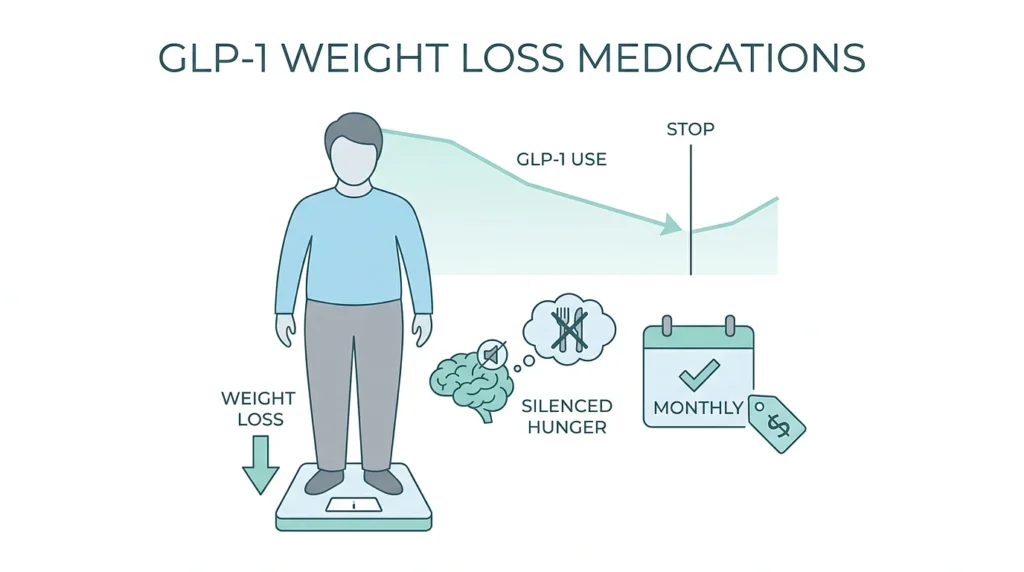
GLP-1 medications like Wegovy and Zepbound produce weight loss of roughly 15% to 21% of body weight in clinical trials, far beyond anything diet drugs achieved before. The catch comes in two parts. They cost hundreds of dollars a month even after 2026’s price cuts, and the weight tends to come back once you stop, because the drug treats an ongoing condition rather than curing it. That last fact reframes the whole decision this is closer to blood pressure medication than a crash diet.
If you feel like half the people you know got noticeably thinner over the past two years, you’re not imagining it. A class of injectable drugs originally built for type 2 diabetes turned out to melt away body weight at rates the obesity field had never seen outside an operating room, and word traveled fast. What follows is the honest version, what these drugs actually do, what they genuinely cost in 2026, and the part the before-and-after photos never show you, which is what your body does the month you stop paying for them.
What GLP-1 Drugs Are And Why They Work So Well

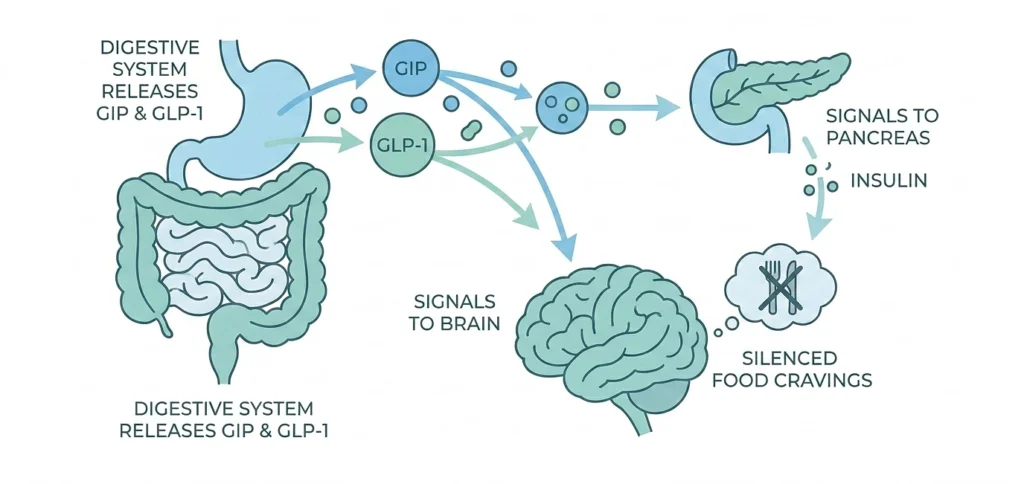
GLP-1 stands for glucagon-like peptide-1, a hormone your gut releases after you eat. It does a few things at once. It tells your pancreas to release insulin, it slows how fast your stomach empties, and it signals your brain that you’re full. The drugs, semaglutide (sold as Wegovy for weight loss and Ozempic for diabetes) and tirzepatide (sold as Zepbound and Mounjaro), are engineered copies of that hormone that stick around in the body for a week instead of minutes.
The practical effect, described by nearly everyone who takes them, is that the constant mental chatter about food goes quiet. The snack you’d normally grab stops calling. Portions shrink without the white-knuckle willpower that makes ordinary diets collapse by February. Tirzepatide adds a second hormone target, GIP, which is part of why it edges out semaglutide in head-to-head results.
The Weight Loss Numbers Are Genuinely Striking
Here’s where the excitement is earned rather than hyped. In the landmark STEP 1 trial, published in the New England Journal of Medicine in 2021, adults on semaglutide lost an average of 14.9% of their body weight over 68 weeks, against 2.4% for the placebo group. For a 220-pound person, that’s roughly 33 pounds from a weekly injection plus lifestyle support.
Tirzepatide pushed the ceiling higher. In the SURMOUNT-1 trial, the highest dose produced mean weight loss around 20.9%. And when the two drugs finally went head-to-head in the SURMOUNT-5 trial, published in NEJM in 2025, tirzepatide delivered 20.2% average weight loss versus 13.7% for semaglutide over 72 weeks. Roughly 50% more weight lost on the newer drug.
Two things worth holding in mind next to those figures. Real-world results tend to run a bit lower than trial results, because people miss doses, stop early, or never reach the top dose, one clinic cohort found median weight loss of about 9.4% at six months and 14.4% at a year among those who stuck with it. And the benefits reach past the scale. The SELECT trial found semaglutide cut the risk of major cardiovascular events by around 20% in people with existing heart disease, which is why doctors increasingly talk about these as metabolic drugs, not vanity drugs.
The Real Cost In 2026, And It’s Still Not Cheap

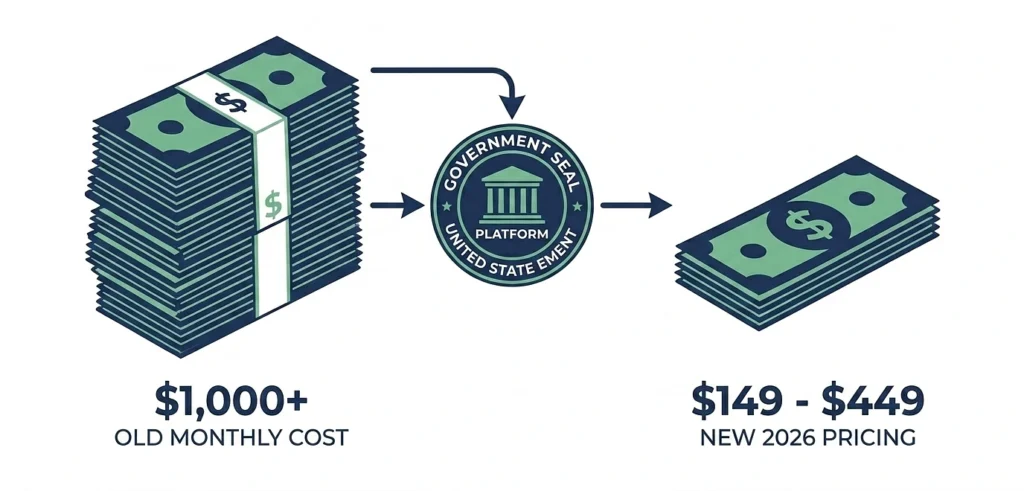
For a long time the honest answer to “what does this cost” was a brutal $1,000 to $1,350 a month out of pocket, which put the drugs out of reach for most of the people who needed them. That changed in early 2026.
Under a federal pricing deal, the drugmakers dropped their direct-to-consumer prices sharply, and a government purchasing platform launched to sell them at negotiated rates. The rough 2026 landscape looks like this:
- Wegovy injection, self-pay: around $349 a month at standard pricing, with introductory pricing near $199 for the first couple of fills for new patients.
- Zepbound, self-pay: roughly $299 for starter doses, rising toward $449 for the highest maintenance doses.
- Oral Wegovy (pill): as low as $149 a month on introductory terms for certain doses.
- Medicare: for the first time covering these for obesity with qualifying conditions starting mid-2026, at about a $50 monthly copay for eligible beneficiaries.
Better, clearly. Still, do the arithmetic on the long haul. Three to four hundred dollars a month, indefinitely, is four to five thousand dollars a year, every year, and that word “indefinitely” is not a throwaway. It’s the whole problem, and it brings us to the part that matters most.
What Happens When You Stop: The Part Nobody Wants To Hear

This is the section I wish more people read before they started, because it changes what an informed decision even looks like.
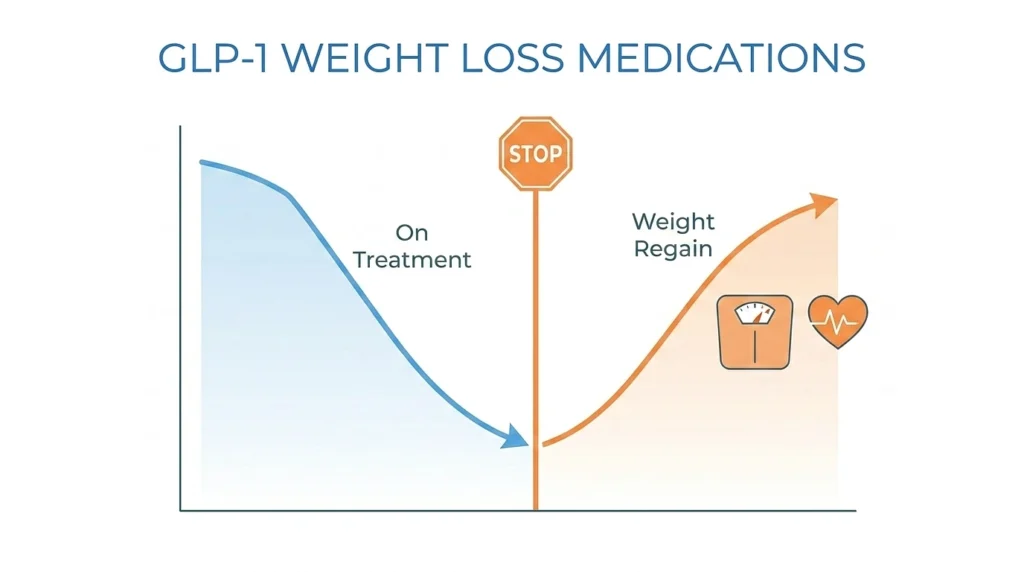
When you stop a GLP-1 drug, the hunger comes back, and so does much of the weight. This isn’t a rumor or a willpower failure. It was measured. The STEP 1 extension study, published in Diabetes, Obesity and Metabolism in 2022, followed participants for a full year after they stopped semaglutide. They regained about two-thirds of the weight they’d lost. People who had lost 17.3% of their body weight on the drug were left with a net loss of just 5.6% a year after stopping, and the cardiovascular improvements, the better blood pressure and blood sugar, drifted back toward where they started too.
Tirzepatide behaves the same way. In the SURMOUNT-4 trial, people who switched off the drug regained an average of 14% of their body weight, while those who stayed on it kept losing.
The reason is not mysterious once you accept what obesity actually is. Your body defends a set point, and these drugs work by holding that biology in check for as long as they’re in your system. Remove the drug, remove the effect. It’s the same logic as blood pressure medication, nobody expects their blood pressure to stay fixed after they quit the pills, and yet we somehow expected weight to behave differently. As the STEP 1 lead investigator put it, this is exactly how you’d expect a treatment for a chronic condition to behave.
So the real question isn’t “how much will I lose.” It’s “am I prepared to treat this as a long-term commitment,” medically and financially. For some people, framed honestly with their doctor, the answer is a confident yes, and the drugs are life-changing. For others, the ongoing cost and the regain risk change the math. Neither answer is wrong. The wrong move is starting without knowing the second half of the story.
Side Effects And Who These Are Actually For
The most common side effects are gastrointestinal, nausea, vomiting, constipation, diarrhea, especially while the dose climbs. Most fade with time and slow titration, which is exactly why doctors ramp the dose up gradually instead of starting high. Rare but serious risks exist too, including pancreatitis and gallbladder problems, and there’s a warning against use in people with certain thyroid cancer histories.
These drugs are approved for adults with obesity, or overweight plus a related condition like high blood pressure or type 2 diabetes. They are prescription medications requiring real medical supervision, not a shortcut to drop ten pounds before a wedding, and the screening, the dose management, and the decision about how long to stay on all belong in a conversation with a doctor who knows your history. If you’re weighing one of these, that conversation is the actual first step, not the pharmacy.
None of this is meant to talk anyone out of a medication that has genuinely changed lives, because it has. It’s meant to make sure you walk in seeing the whole thing: the remarkable results, the real and recurring cost, and the biology that doesn’t care whether you’re tired of injecting yourself. Know all three, and whatever you decide is at least a decision made with your eyes open.
References:
- Wilding JPH et al. “Once-Weekly Semaglutide in Adults with Overweight or Obesity.” New England Journal of Medicine, 2021. (STEP 1 trial)
- Aronne LJ et al. “Tirzepatide as Compared with Semaglutide for the Treatment of Obesity.” New England Journal of Medicine, 2025. (SURMOUNT-5)
- Wilding JPH et al. “Weight regain and cardiometabolic effects after withdrawal of semaglutide: The STEP 1 trial extension.” Diabetes, Obesity and Metabolism, 2022.
- Jastreboff AM et al. “Tirzepatide Once Weekly for the Treatment of Obesity.” New England Journal of Medicine, 2022. (SURMOUNT-1)
- Lincoff AM et al. “Semaglutide and Cardiovascular Outcomes in Obesity without Diabetes.” New England Journal of Medicine, 2023. (SELECT trial)