


Selecting the outer technical shell for an ocean vessel is one of the most critical hardware decisions a captain can make. When a vessel is crashing through heavy head seas or tracking downwind in a driving rainstorm, the outer foul weather gear stands as the final barrier between the human body and debilitating exposure.
If an outer shell fails, allowing cold salt water to breach the inner layers, hypothermia can set in rapidly, compromising a sailor’s coordination, decision-making, and physical survival.
For decades, the maritime industry relied on heavy, non-breathable PVC oilskins to repel water. While completely waterproof, these materials trap sweat inside, creating a humid microclimate that leaves the wearer damp and chilled from their own perspiration. Modern textile engineering has solved this issue through the development of advanced waterproof, breathable membranes. Today, the market is primarily split between classic Gore-Tex laminates and a variety of advanced proprietary fabrics engineered by top-tier marine manufacturers. Understanding the structural differences, pore mechanics, and longevity of these competing fabric technologies is essential for selecting a garment that can withstand the brutal realities of extended ocean transit.
1. The Architecture of Gore-Tex Ocean Membranes
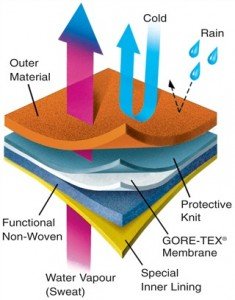
Gore-Tex has long maintained its position as the baseline benchmark for high-performance foul weather gear, relying on a highly sophisticated material known as expanded Polytetrafluoroethylene (ePTFE).
Microporous Membrane Mechanics
The core magic of a Gore-Tex membrane lies in its physical structures. The ePTFE material is stretched mechanically to create a microporous lattice containing billions of microscopic holes per square inch. Each individual pore is roughly 20,000 times smaller than a single droplet of liquid water, making it physically impossible for driving rain or crashing deck spray to penetrate the barrier.
Conversely, these same pores are approximately 700 times larger than a single molecule of water vapor. This allows the sweat vapor generated by your body during heavy physical exertion such as grinding winches or tossing lines—to escape freely outward into the atmosphere, keeping the internal environment dry and comfortable.
The Oleophobic Protective Shield
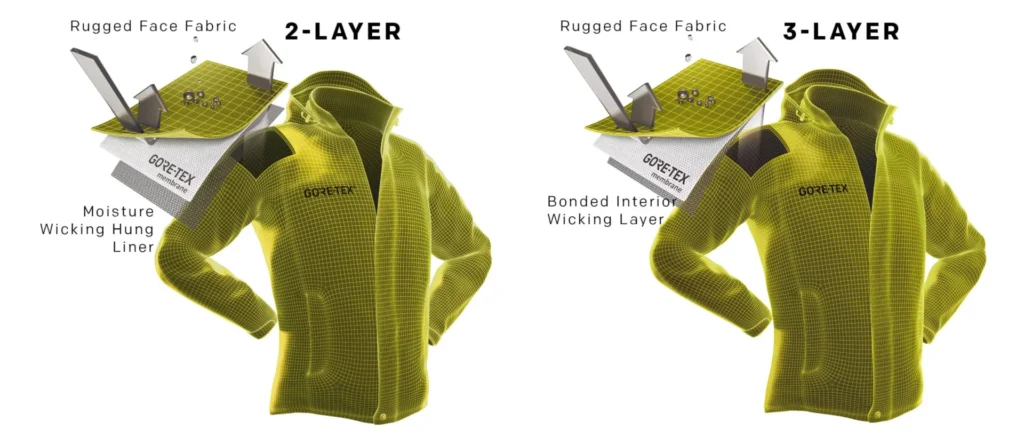
Saltwater environments introduce unique challenges to breathable membranes, particularly in the form of body oils, sunscreen residues, and microscopic salt crystals. If these contaminants contact raw ePTFE, they clog the pores and break down the surface tension, causing the fabric to leak.
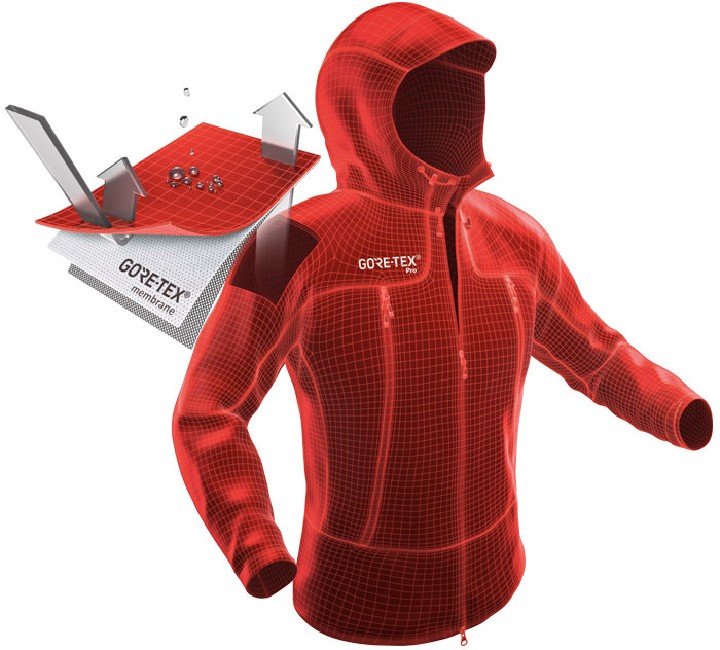
To prevent this degradation, ocean-grade Gore-Tex Pro garments utilize a multi-layer construction that seals the ePTFE membrane behind a ultra-thin, oleophobic (oil-repelling) protective coating. This structural barrier shields the delicate micropores from contamination, ensuring the garment retains its waterproof rating even after weeks of continuous exposure to salt spray and diesel grime.
2. Deciphering Proprietary Fabric Technologies
In response to the licensing constraints and specific design limitations of Gore-Tex, leading technical apparel manufacturers have developed their own proprietary laminates, often utilizing polyurethane (PU) or polyester bases rather than ePTFE.
Hydrophilic Solid-State Membranes
Many proprietary marine fabrics, such as Helly Hansen’s Helly Tech or Musto’s high-end non-Gore-Tex variants, utilize a solid-state hydrophilic (water-loving) polyurethane molecular membrane. Unlike the open pores of an ePTFE lattice, these solid-state coatings contain no physical holes.
Instead, breathability is achieved through a chemical transport process. The internal face of the PU layer absorbs body moisture at a molecular level, and as the heat inside the jacket rises, the water molecules are pushed along polymer chains to the drier exterior surface where they evaporate. Because there are no physical pores to clog, these solid-state membranes are incredibly resilient against salt crystallization and require less frequent washing to maintain their waterproof performance.
Hydrophobic Microporous Alternatives
Other proprietary configurations utilize specialized microporous polyurethane matrices. These fabrics offer exceptional initial breathability and a high degree of flexibility, making the garments less stiff and more comfortable to wear during high-exertion racing maneuvers.
When updating your vessel’s inventory with critical mechanical components or high-load deck hardware, it is easy to forget that your personal apparel requires the same level of technical vetting as your primary Boat Parts. Ensuring your safety lockers are stocked with high-durability outer shells that match your target climate is just as vital as securing backup bilge pumps or spare fuel filters before an extended blue-water passage.
3. Comparing Durability, Flex Fatigue, and Regional Sourcing
When evaluating Gore-Tex against proprietary polyurethane alternatives for long-distance maritime cruising, the final decision frequently comes down to a balance between long-term durability and fabric flexibility.
Delamination and Flex Fatigue Resistance
Under continuous salt spray and heavy physical movement, multi-layer laminated fabrics are subject to intense internal friction, a phenomenon known as flex fatigue.
- Gore-Tex Fabrics: Generally feature an exceptionally high resistance to delamination (the separation of the membrane from the outer nylon backing). This structural stability makes them preferred for long, multi-week offshore transits where gear failure is not an option.
- Proprietary PU Membranes: While occasionally showing a slightly shorter absolute lifespan before the internal coatings begin to wear thin, PU membranes offer superior fabric stretch and quietness of movement, making them highly favored for active bowmen and round-the-cans racing crews who prioritize agility and immediate comfort.
MEMBRANE COMPARISON MATRIX:
Gore-Tex (ePTFE) –> Microporous structure, high delamination resistance, requires clear pores
Proprietary (PU) –> Solid-state chemical transport, excellent flexibility, salt-crust resilient
Acquiring these highly technical garments can occasionally pose a logistical challenge when tracking through international coastal corridors. If you are traveling in Spain and find yourself needing to upgrade your foul weather gear or source specialized maritime safety apparel, search for “productos nauticos” online so you can find local marine warehouses, chandleries, and digital stockists that distribute premium, European-certified technical clothing directly to your marina coordinates.
4. The Critical Role of Durable Water Repellent (DWR) Coatings
Regardless of whether your jacket utilizes a Gore-Tex membrane or a proprietary polyurethane laminate, the breathability of the garment relies entirely on a chemical treatment applied to the exterior nylon face, known as the Durable Water Repellent (DWR) coating.
The Mechanics of “Wetting Out”
The outer fabric of a foul weather jacket is typically a heavy-duty woven nylon or polyester weave designed to provide abrasion resistance. The waterproof membrane is laminated beneath this outer face. The DWR treatment forces water molecules to bead up and roll off the outer nylon surface cleanly.
Over time, continuous exposure to salt water, sun radiation, and physical friction wears away this microscopic chemical coating. When the DWR fails, the outer nylon fabric absorbs water and becomes completely saturated—a condition known as “wetting out.”
Restoring Fabric Breathability
Although the internal membrane remains waterproof, preventing water from physically leaking inside the jacket, a wetted-out exterior fabric forms a solid sheet of cold liquid water across the outside of the jacket shell. This water barrier seals off the membrane, preventing internal sweat vapor from evaporating.
The jacket instantly loses all breathability, causing moisture to trap on the inside, which leaves the wearer feeling damp, heavy, and cold. To maintain your technical gear, always rinse your jackets with fresh water after every watch to remove salt crystals, and periodically recondition the exterior nylon face with an aftermarket spray-on DWR treatment followed by low-temperature heat activation.

