


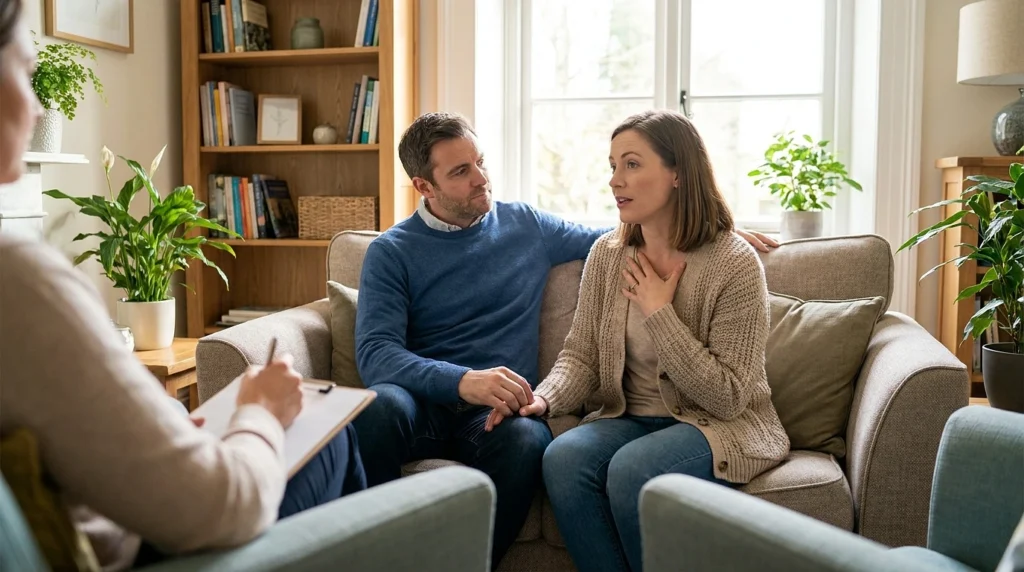
There’s a particular kind of exhaustion that comes from apologizing sincerely, repeatedly, and watching it change nothing. You said the words. You meant the words. Your partner maybe even accepted them in the moment. And a week later the same wound is back on the table, raw as ever, and you’re standing there thinking, what else am I supposed to do, I already said I was sorry. If that loop sounds familiar, the useful news is that researchers have actually studied why it happens, and the answer isn’t that your apology was insincere. It’s that an apology, on its own, was never going to be the repair.
Let me walk through what the research says about why solo repair attempts stall, and what structured couples therapy adds that turns out to be measurable.
Why The Apology Keeps Failing: It’s The Delivery System, Not The Words
The most illuminating research here comes from work on what therapists call attachment injuries, the specific betrayals and abandonments, an affair, a broken promise at a critical moment, a partner who wasn’t there when it mattered, that break emotional trust rather than just causing an argument. Susan Johnson and her colleagues studied exactly how these injuries heal in therapy, and the finding is quietly devastating for the DIY approach apology worked, but only as part of a deeper process. In their repair model, the apology had to happen inside a moment of genuine emotional engagement, where the injuring partner truly experienced and expressed the impact of what they’d done, and the hurt partner could risk showing the pain underneath the anger. When that depth was present, the researchers observed more partner support, less blaming, and successful repair. The same apology delivered flat, as words aimed at ending a conflict, didn’t produce it.
That maps exactly onto why kitchen-table apologies loop. At home, the apology usually arrives mid-conflict or as a peace offering to close the topic, and the hurt partner hears it as “please stop being upset now” rather than “I understand what I broke.” So the wound stays open, resurfaces, the apology gets repeated with mounting frustration, and each failed round teaches both people that talking about it doesn’t work, which is itself corrosive. The trust wasn’t going to be rebuilt by words at all. It gets rebuilt by the injured partner watching something change, consistent behavior over time, plus at least one experience of their partner genuinely feeling the injury with them, and that second thing is remarkably hard to reach unassisted, because the very conversation that could produce it is the one that keeps collapsing into defense and counterattack.
What Therapy Actually Adds, And What The Outcome Research Shows

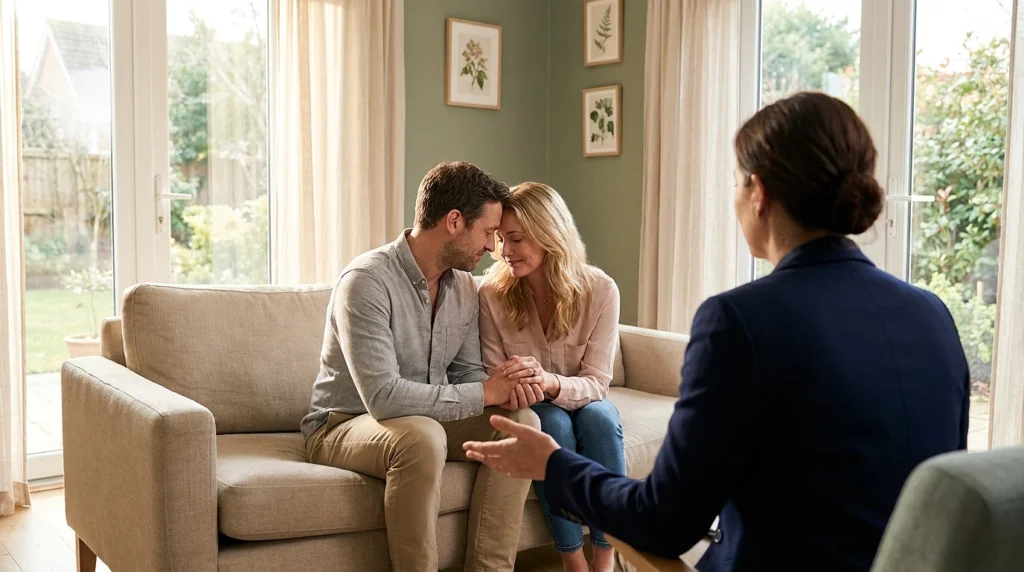
So what does a therapist’s room have that your kitchen doesn’t? Structure, mostly, and a third person whose job is to keep the conversation from following its usual doomed script. A therapist slows the exchange down, interrupts the attack-defend cycle before it locks in, and helps each partner say the vulnerable thing under the angry thing, which is precisely the depth the repair research says the apology needs to land inside. The focus shifts from prosecuting the incident to understanding the pattern, how past experiences, communication habits, and unmet expectations set the stage, which is why decent therapy doesn’t just relitigate the betrayal on a loop the way home arguments do.
And this is one of the few corners of relationship advice with genuinely strong numbers behind it. The best-studied approach for exactly this kind of trust repair is Emotionally Focused Therapy (EFT), built on attachment science, and its outcome research is striking: the landmark review found 70 to 75 percent of significantly distressed couples moved to recovery, with roughly 90 percent showing meaningful improvement, and the gains held at two-year follow-up. A comprehensive 2022 meta-analysis across 20 studies backed this up, finding about 70 percent of couples symptom-free at the end of treatment with large effect sizes sustained at follow-up. For comparison, traditional behavioral couples therapy tends to land in the 35-to-70-percent improvement range depending on the variant, with more relapse. EFT has also been studied specifically for rebuilding trust after infidelity, which is the hardest version of this problem.
Two honest asterisks, because numbers this good deserve scrutiny. A meaningful share of the early outcome research came from the labs of EFT’s own founders, and independent replication always matters. And the flip side of a 70-percent recovery rate is that roughly three in ten couples don’t recover, with outcomes depending heavily on both partners actually engaging and on the therapist’s skill with the model. Therapy is the best-evidenced tool for this job. It is not a guarantee, and anyone selling it as one is overselling.
The Signs The DIY Phase Has Run Its Course
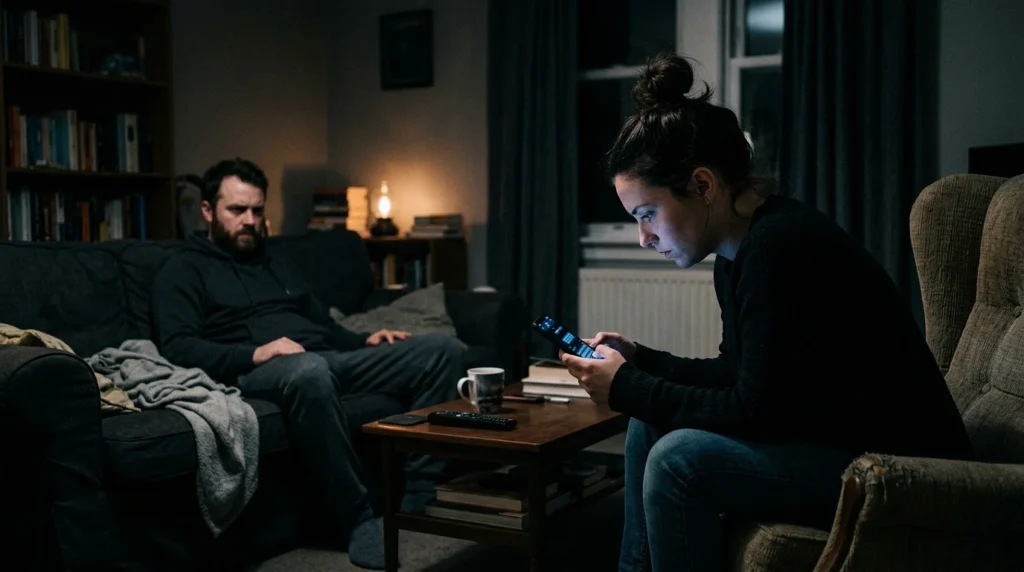
How do you know you’re in the failed-apology loop rather than a rough patch that will settle? A few patterns are worth taking seriously, especially when they’ve persisted for months:
- The same injury keeps resurfacing despite apologies both of you considered sincere at the time.
- Suspicion has become the default, checking, doubting intentions, reading neutral acts as threats.
- Vulnerable conversation has stopped, one or both of you now withholds feelings because raising them “just starts a fight.”
- You’re questioning the relationship’s future more than you’re talking to each other about it.
None of these means the relationship is doomed. They mean the repair requires a conversation the two of you haven’t been able to have alone, which is a normal thing to need help with, not a verdict on either of you. The research is consistent on one more point worth acting on: couples who seek help sooner after problems emerge do better than couples who arrive after years of entrenchment.
One important boundary, stated plainly because it matters if what’s broken trust is ongoing abuse, or you’re afraid of your partner, couples therapy is not the recommended starting point, clinicians generally advise individual support and safety planning first, because joint sessions can make things more dangerous rather than less. Trust repair work presumes two people who are safe with each other and both willing.
What Rebuilding Actually Looks Like From There
Inside therapy, the trust rebuild is less mystical than people fear. It’s the structured version of what the research says works: communication retraining so partners stop mishearing each other, clear boundaries and accountability agreements so the hurt partner sees reliability demonstrated rather than promised, conflict-resolution skills so disagreements stop reopening the original wound, and, at the center, guided versions of exactly the deep exchange the attachment-injury research identified, the injuring partner truly engaging with the harm, the hurt partner risking the softer feelings under the anger. Trust doesn’t return as a decision. It accretes, through repeated experiences of the partner being emotionally reachable and behaviorally consistent, which is why the process takes months and why the two-year follow-up data matters more than how anyone feels after session three.
The honest close is the one the failed apologies have probably already taught you. If saying sorry was going to fix it, it would have worked by now, and the fact that it hasn’t is not evidence that you’re bad at apologizing or that your partner is impossible. It’s evidence that the repair this particular wound needs is a process, not a sentence, and the process has a strong track record when both people show up for it. Finding a licensed couples therapist, ideally one trained in an evidence-based approach like EFT, isn’t an admission of failure. It’s what taking the apology seriously looks like when the apology alone has stopped being enough.