


Most brands buy creator management Strategies software about a year before they need it, and then quietly blame the spreadsheet they left behind for problems the new tool also fails to solve. That is the uncomfortable opening position of this article and the rest of it is the argument. The software category is real, the good platforms genuinely earn their money at a certain scale, but the sales motion of this industry is built on making a 20 creator program feel like it has a 200 creator problem, and the pricing spread, roughly $199 a month at the bottom to $200,000 a year at the top, tells you exactly how much room there is to overbuy.
Where The Spreadsheet Actually Breaks
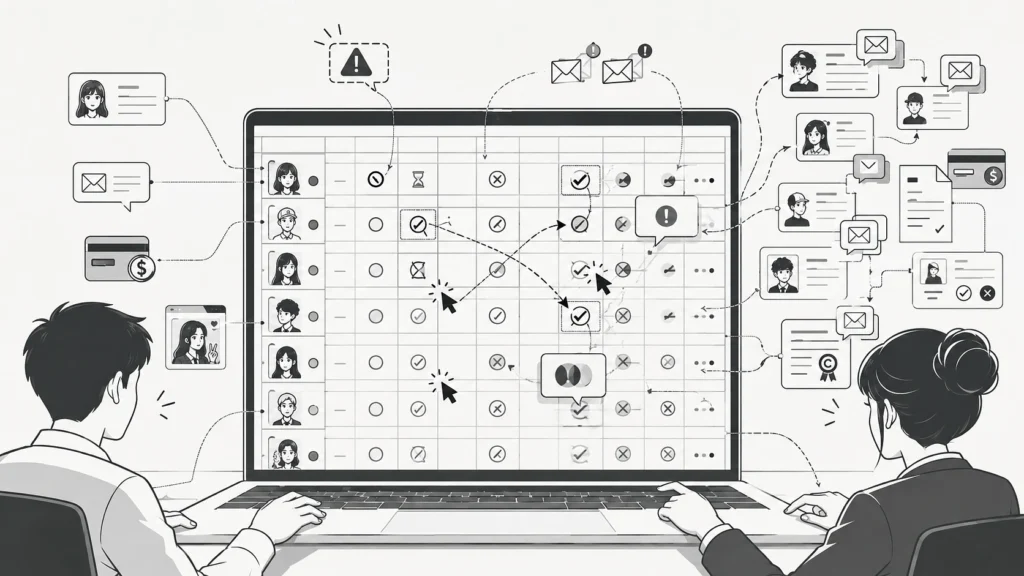
A spreadsheet plus email plus a payments app runs a creator program better than people admit, and it fails on a schedule you can more or less predict. It is not the number of names in the sheet that kills it, a sheet holds ten thousand names happily. It is the number of live, simultaneous relationships with states attached, negotiating, briefed, content in review, posted, awaiting payment, and the moment you feel it is when two people are working the same sheet and neither one knows whether the DM reply came in, whether the draft got approved, or whether the invoice was paid. Concurrency breaks it, not volume.
In practice that pain arrives somewhere around 25 to 50 active partnerships running at once, and the platform comparison guides themselves back into the same range, one of them flatly calls enterprise tooling overkill under 25 creators. So the honest crossover test is not “do we have a lot of creators,” it is three questions. Are two or more people managing the same relationships at the same time? Are you paying creators on different terms, flat fees, affiliate percentages, gifting, where tracking who is owed what has itself become a job? Have you missed a usage rights renewal or reposted content you no longer had the licence for? Two yeses and the software conversation is legitimate. Zero yeses and the software is a subscription shaped way of avoiding writing down your process.
And a thing people rarely say out loud, moving to a platform does not organize a disorganized program. It gives your existing chaos better dashboards. The teams that get value from these tools had a working system in the spreadsheet first and outgrew it, which is a very different animal from never having had a system at all.
What The Pricing Models Really Look Like
The category prices four different ways and the model matters more than the number, because it decides how the cost scales as you grow.
| Model | How It Charges | Who Uses It | Typical Range |
|---|---|---|---|
| Flat subscription tiers | Fixed monthly fee by plan | Modash, GRIN’s self serve tiers | $199 to $1,799 per month |
| Quote only annual contract | Negotiated, sales call required | CreatorIQ, Aspire, Upfluence | roughly $24,000 to $100,000+ per year |
| Per creator or per seat scaling | Price rises with tracked creators or users | most platforms inside their tiers | varies by tier |
| Transaction percentage | No subscription, cut of each deal | marketplace style tools like Collabstr | around 5 to 10 percent per transaction |
A few realities behind that table. Modash publishes everything, $199 a month on annual billing for the entry plan, and its enterprise tier starts around $14,700 a year. GRIN switched to published self serve tiers in January 2026 after years of demo only pricing, $399 to $1,799 a month, but Vendr’s transaction data shows its actual mid market and enterprise contracts landing in the mid five figures and running past $100,000 for large deployments. CreatorIQ starts around $2,350 a month and only sells on annual commitment, with enterprise scale deals reported anywhere up to and beyond $90,000 a year. Aspire sits in the same quote only club at roughly two thousand a month upward.
My position on the quote only model is simple and it will annoy the vendors, hidden pricing is itself information. It means the price is what the salesperson thinks your budget is, it means renewals are a negotiation you have to staff, and it means comparing tools takes weeks of demos instead of an afternoon of reading. Sometimes the enterprise depth justifies all that, multi brand governance and direct platform API access are real things, but walk into those calls knowing the published tier tools cost a fifth to a tenth as much, because that gap is your leverage. And whatever the model, measure the cost per creator you actually activate per quarter, not the sticker. A $500 a month tool used to run eight collaborations is more expensive software than a $2,000 tool running eighty.
Budget for the hidden line items too. Annual commitments you cannot exit when the program pivots, onboarding periods that run six to eight weeks on the enterprise platforms before anyone ships a campaign, and usage caps, profile analyses, tracked creators, team seats, that quietly force the next tier mid year.
What None Of The Tools Fix

This is the section the vendor content skips, so it gets the last word.
No platform picks good creators. Discovery databases with 250 million profiles widen the funnel and the audience quality filters catch the fake follower cases, but the judgment call, whether this person’s audience actually overlaps your buyer and whether their content style survives contact with your product, stays a human call, and it is the call the whole program lives or dies on.
No platform writes a good brief. The most common failure in creator campaigns is not workflow, it is creators handed a vague brief producing content the brand then dislikes, and a content approval feature just moves that disappointment into a nicer interface. Same with negotiation, the tool sends the offer, it does not know what the creator is worth.
And no platform repairs a relationship being run like a transaction. Creators talk to each other, the ones treated as line items churn, and the programs that compound year over year are built on the unautomatable stuff, paying on time without being chased, giving usable feedback, coming back to the same people. The software can log all of that. It cannot do any of it.
So the buying order that actually works runs backwards from how the category sells. Fix selection, briefs and payment discipline in the spreadsheet, because they are free to fix there. When live concurrency starts breaking that working system, buy the cheapest published price tool that covers your real workflow, and let the enterprise platforms earn the six figure conversation only when multi market scale genuinely forces it. Most programs never get there, and that is fine, the spreadsheet was never the thing holding them back.

