



Overview
- Screening is not just early detection, it’s prevention. A colonoscopy removes the precancerous polyps that cause most colorectal cancers, stopping the cancer before it ever forms.
- The numbers are not close: colonoscopy screening can cut colorectal cancer incidence by around 83% and deaths by around 89%. No diet or lifestyle change comes near that.
- The screening age is now 45, not 50. Guidelines were lowered in 2021 because this cancer is rising in younger adults. If you’ve been waiting for 50, don’t.
- Colonoscopy isn’t the only option. Stool-based tests (FIT, stool-DNA) are valid screening choices and the best test is the one you’ll actually do.
- Diet, exercise, and not smoking genuinely lower risk, but they modify it at the margins, they don’t remove the precancer the way screening does.
- See a doctor promptly for rectal bleeding, a lasting change in bowel habits, or unexplained weight loss, at any age.
Why Screening Is In A Completely Different
Here’s the thing that separates screening from everything else, and it’s the key to the whole topic. Most cancer prevention advice tries to lower the odds that a cancer forms. Screening for colorectal cancer does something categorically different: it finds and removes the thing that turns into the cancer, before it becomes cancer.
Colorectal cancer treatment almost always starts as a polyp, a small growth on the inner lining of the colon that develops slowly over years. Most polyps never become cancer, but the ones that do follow that path, and a colonoscopy lets a doctor see and remove those polyps in the same procedure. Take out the polyp, and you’ve removed the future cancer’s raw material entirely. That’s not detection. That’s prevention at the source.
The magnitude of this is genuinely striking, and it’s why the title isn’t hyperbole. Because colonoscopy removes the polyps responsible for 75% to 80% of colorectal cancers, screening can reduce colorectal cancer incidence by about 83% and mortality by about 89%. Sit with those numbers, an intervention that can prevent roughly four out of five cases and nearly nine out of ten deaths. Nothing on the diet-and-lifestyle list operates anywhere near that scale, because nothing else reaches in and removes the precancer.
The Correction That Matters Most: The Age Is 45, Not 50
The source version of this advice, and a lot of what’s still floating around online, tells you to start screening at 50. That guidance is out of date, and following it could cost you five critical years.
In 2021, the U.S. Preventive Services Task Force lowered the recommended starting age for average-risk adults to 45, down from 50. The reason is important and a little alarming: colorectal cancer has been rising in younger adults, and the data showed that screening people in their late forties finds precancerous polyps and cancers at nearly the same rate as screening those in their early fifties. A Kaiser Permanente study in JAMA confirmed the real-world benefit, adults 45 to 49 had polyp and cancer rates closely mirroring the 50-to-54 group.
So the current, evidence-based rule is: if you’re 45 or older and average risk, you should be screened. And earlier if you’re higher risk, a family history of colorectal cancer or polyps, a personal history of inflammatory bowel disease like Crohn’s or ulcerative colitis, often means starting at 40 or ten years before your youngest affected relative’s diagnosis. If you have risk factors, that’s a conversation to have now, not at some round-numbered birthday.
You Have Options, And The Best Test Is The One You’ll Actually Do

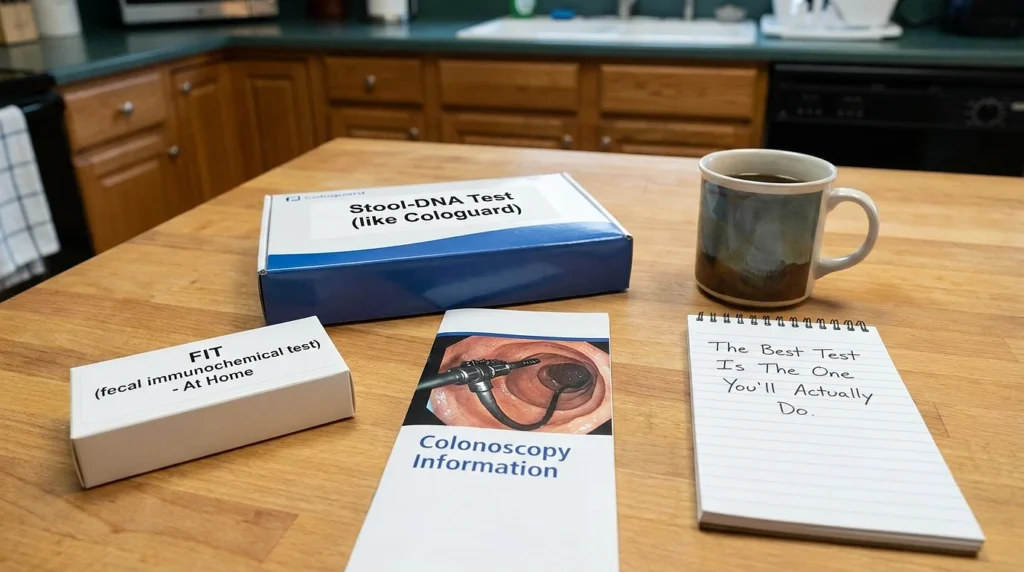
A big reason people avoid screening is that they picture the colonoscopy prep and decide to put it off indefinitely. So here’s the part that removes that excuse: colonoscopy is the most thorough option, but it is not the only valid one.
The guidelines endorse several screening strategies, and the honest truth is that a less-thorough test you’ll actually complete beats a perfect test you keep dodging:
- Colonoscopy every 10 years. The gold standard, because it both detects and removes polyps in one go. If it’s clear, you’re set for a decade.
- FIT (fecal immunochemical test) every year. A simple at-home stool test that detects hidden blood. No prep, no clinic visit.
- Stool-DNA test (like Cologuard) every 1 to 3 years. An at-home test that looks for blood and abnormal DNA markers.
- CT colonography or flexible sigmoidoscopy every 5 years, as other options.
The catch worth knowing: if any non-colonoscopy test comes back positive, the follow-up is a colonoscopy, because that’s how the suspicious finding gets examined and any polyp removed. But for a lot of people, starting with a simple stool test is the difference between getting screened and not, and getting screened is what matters.
So Where Does Diet And Lifestyle Actually Fit?

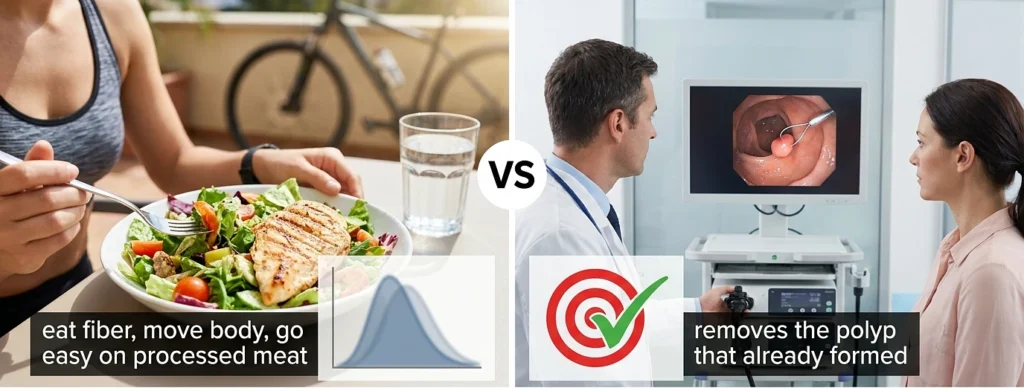
Not nowhere, to be clear. The lifestyle factors are real, and they’re worth doing, they just belong in proportion.
The evidence links higher colorectal cancer risk to diets heavy in processed and red meat and low in fiber, physical inactivity, excess alcohol, and smoking. Improving those genuinely shifts your risk downward, and they benefit far more than just your colon, which is reason enough. So eat the fiber, move your body, go easy on the processed meat and alcohol, don’t smoke.
But understand what that’s doing versus what screening does. Lifestyle changes adjust the probability that a polyp forms in the first place. Screening removes the polyp that already formed. One nudges the odds; the other eliminates the specific threat. That’s why a person with a flawless diet who skips screening is far more exposed than a person with mediocre habits who gets their colonoscopy on schedule. The diet is a helpful hedge. The screening is the actual protection.
The Symptoms That Mean “See A Doctor Now,” At Any Age
Screening is for people without symptoms. If you already have symptoms, that’s not a screening situation, that’s a see-a-doctor-promptly situation, regardless of your age, and this matters more than ever given the rise in younger cases. Get checked out for:
- Rectal bleeding or blood in the stool, which should never be shrugged off, even when hemorrhoids seem the obvious cause.
- A persistent change in bowel habits, diarrhea, constipation, or narrower stools that lasts more than a few days.
- Unexplained weight loss, ongoing abdominal cramping, or a feeling that the bowel doesn’t fully empty.
- Persistent fatigue or weakness, which can signal the slow blood loss of a bleeding tumor.
These don’t usually mean cancer, plenty of benign conditions cause them, but they’re exactly the symptoms that shouldn’t wait, and a young age is not a reason to dismiss them.
The bottom line I’d leave you with reorders the usual list on purpose. If you do one thing for your colorectal health, get screened starting at 45, because that single act can prevent the cancer outright, not just catch it early. Eat well, move, and skip the cigarettes as genuine supporting measures. And talk to your doctor about which screening test fits you and when to start based on your own risk, because the most protected person isn’t the one with the perfect diet. It’s the one who actually booked the test.