



Waterproof is a measurable number, not an adjective, and the number that matters for a rain hat is the hydrostatic head rating, 10,000mm for serious use and 20,000mm for sustained downpours. Breathability is a second number, MVTR, and the two trade against each other, so buy by activity, not by label. For glasses wearers, a stiffened front brim of about 3 inches is what actually keeps lenses dry, and the tested hats that do it well cluster in a $50 to $100 band where laminated, seam sealed construction begins. Below that band you are buying a coated hat that will serve light use fine and fail the all day storm.
Waterproof is a number. That is the single most useful thing to know before buying any rain hat, because the word on the hang tag means nothing and the number behind it means everything, and most shoppers never see the number at all.
So let me define the two ratings properly, since the title of this article promised buying by what you actually do, and the ratings are how the doing gets matched to the hat.
Hydrostatic Head And MVTR Are The Two Numbers, And They Pull In Opposite Directions

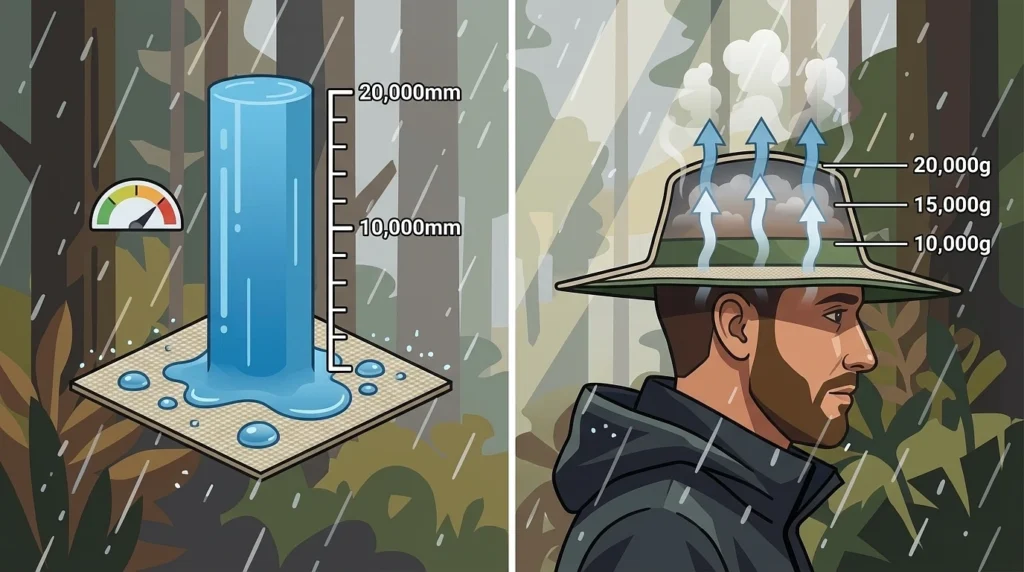
Hydrostatic head, usually written HH and given in millimeters, measures how much water pressure a fabric withstands before it leaks. The test is exactly what it sounds like. A column of water stands on the fabric and rises until droplets push through, so a 10,000mm rating means the fabric held back a 10 meter column of water, which in field terms handles moderate to heavy rain and is the accepted floor for serious outdoor use. Ratings of 20,000mm and above are the premium tier for driving rain and all day exposure. Below about 5,000mm you are in water resistant territory, fine for drizzle and a dash to the car, wrong for a day outside.
Breathability is the second number and the one people discover the hard way. A sealed hat that lets no rain in also lets no sweat out, and a sweat soaked head under a waterproof crown is wet either way, just from the inside. The measure is moisture vapor transmission rate, MVTR, in grams of vapor passing through a square meter of fabric in 24 hours. The working bands from rainwear testing run like this: 10,000 g or less suits low exertion, above 10,000 suits hiking, and only above 15,000 performs well for genuinely aerobic work, with 20,000 considered a premium score. One honest technical footnote belongs here, because the trade uses the word loosely. Most waterproof fabrics do not actually pass air, they pass vapor through a membrane, and only a handful of high end laminates genuinely breathe. The practical effect is the same for a hat buyer. Higher MVTR, less swamp.
Why does this matter more for a hat than a jacket?
Because your head is the body’s radiator, and the activity decides everything. A dog walker in November needs waterproofing and barely any breathability. A trail runner needs the reverse, and honestly a soaked running cap often beats a sealed hat for them, a point real backpackers make on the forums without embarrassment. A hiker doing all day miles in Pacific Northwest rain needs both numbers high at once, which is exactly the combination that costs money, and we will get to the money.
There is a third term worth defining while we are at it, DWR, durable water repellent. It is the factory coating that makes water bead and roll off the outer fabric, and it wears off with use and washing. When an older hat starts soaking up water instead of shedding it, wetting out, the membrane underneath may still be waterproof, but the saturated face fabric kills breathability and adds weight. A wash and a spray on DWR refresh restores it for a few dollars, which is the cheapest gear repair in the outdoors and the least performed.
The Brim Is What Keeps Glasses Dry, And The Tested Numbers Are Specific

Everything above is about your head. Glasses wearers have a second problem the ratings do not touch, and it is the reason a hat beats a jacket hood outright. Rain rarely falls straight down, and a hood sits so close to the face that wind driven rain and your own breath fog reach the lenses anyway, while cutting your peripheral vision to a tunnel.
The hats that solve it share one measurable feature, a stiffened front brim around 3 inches. The Outdoor Research Seattle Rain Hat, the current version of the most famous rain hat in American hiking, carries a foam stiffened brim 3 inches wide at the front and sides and 3.75 inches at the back, and the reviewer, a glasses wearer, reports it keeps rain and condensation off his lenses completely while the rear width sheds water past the jacket collar instead of down it. Independent testing of the older Seattle Sombrero measured 2.5 inches front and 4 inches back, and sailing gear testers put the useful range for weather brims at 3 to 3.5 inches. The pattern across all of them is the same. Stiffness matters as much as width, because a soft brim folds in wind exactly when you need it, which is why the good ones carry foam or stitched stiffening, and why several float, a detail boaters care about and hikers discover at the first river crossing.
The working rule for glasses, then, in one sentence. A stiffened brim of about 3 inches in front, wider in back, worn instead of a hood, is the difference between wiping your lenses every minute and forgetting you wear glasses at all.
The Price Bands, And Where Lasting Actually Starts
Rain hats sell in three bands, and the construction changes at each step, not just the logo.
- Under roughly $30 buys coated fabric bucket hats, polyester or nylon with a polyurethane coating, usually no published ratings and no sealed seams. They shed a shower, dry fast, pack small, and they are the right purchase for commutes, travel, and occasional light rain. They are the wrong purchase for the all day storm, because coatings are the part of rain gear that wears out first.
- Roughly $50 to $75 buys laminated, seam sealed construction, and this is where lasting begins. The Tilley TWP1, a longtime tester favorite, is laminated seam sealed nylon around a floating foam brim and sells in the $53 to $70 range at major retailers. Sealed seams matter because stitching punches thousands of holes in a waterproof fabric, and tape over those seams is the difference between a hat that is waterproof on paper and one that is waterproof on your head in hour four.
- Roughly $75 to $110 buys the full membrane hats, Gore-Tex three layer construction with linings, the Seattle line being the standard bearer, and this band is for the person whose life includes sustained rain, the Pacific Northwest commuter, the wet climate hiker, the boater. Testers who run these hats for years report the same thing, the construction outlives the price difference several times over.
The honest buying advice falls out of the bands directly, and it cuts against gear culture’s usual direction. Buy down, not up. The under $30 hat genuinely serves most casual use, and the $100 hat earns its cost only when your actual weeks contain hours of real rain. The waste in this category is not people buying cheap hats that fail. It is fair weather buyers paying for a membrane they will use six times a year, while the daily dog walker who needed it squints through wet glasses under a soaked cotton cap. Match the number, the brim, and the band to what you actually do, which was the whole promise of the title, and the hat disappears from your thinking for a decade. That disappearance is what lasting means.