


It is 1:40pm. The sandwich was an hour ago. Your eyelids have acquired weight, the document on screen has stopped meaning anything, and you are calculating whether a second coffee counts as a personality flaw.
Almost everyone explains this to themselves the same way. Blood rushed to my stomach to digest, so my brain got less of it. Reasonable, intuitive, and wrong, which is where this article starts.
Clearing Out The Explanation You Were Given
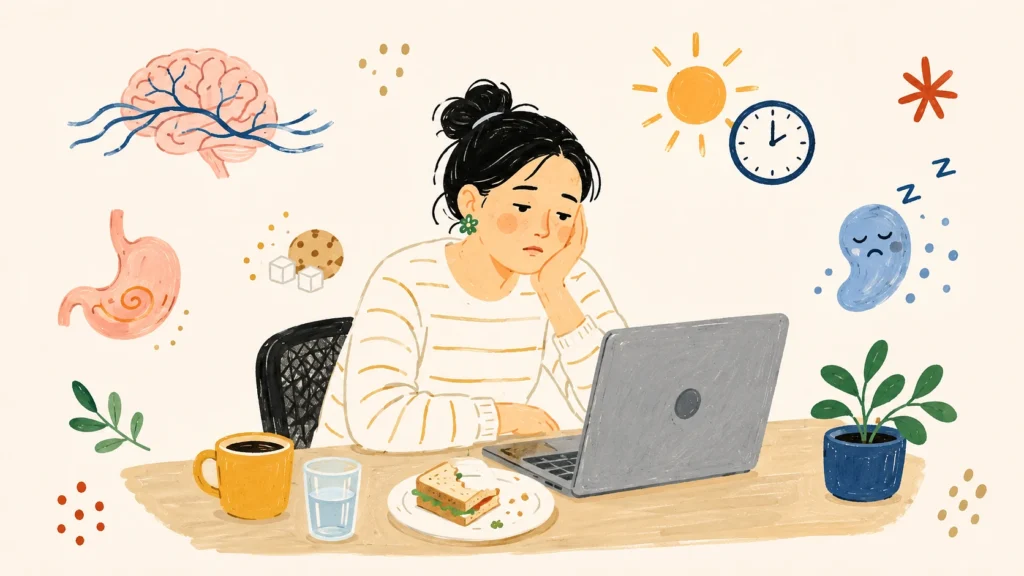
The Blood Flow Story Does Not Survive Measurement
Digestion genuinely does increase blood flow to the gut. What it does not do is starve your brain.
Ultrasound measurements of the carotid artery, the main supplier of blood to the brain, show no detectable reduction in flow after meals. Imaging studies using fMRI and PET find cerebral blood flow stays consistent or rises slightly after eating, partly because glucose has gone up. Your body maintains brain perfusion as a priority, and it does not negotiate that away for a sandwich.
The myth survives because it feels obviously true. Digestion demands resources, so something else must be going short. The body simply does not run on that kind of budget.
What is Actually Happening Instead
Four mechanisms, and the interesting part is that only some of them involve the meal at all.
Your circadian rhythm dips in the early afternoon whether or not you eat. The signals promoting wakefulness decline in that window, which is why the slump has a name in sleep research, the post lunch dip, and why it shows up in people who skipped lunch entirely.
Glucose suppresses orexin. Orexin, also called hypocretin, is the neuropeptide that stabilises wakefulness. Rising glucose inhibits orexin neuron activity, which reduces its wake sustaining effect. This is the mechanism most people are actually feeling when they blame the pasta.
Adenosine accumulates through the day. It is the sleep pressure molecule, building steadily from the moment you wake, and it is what caffeine blocks. By early afternoon there is simply more of it.
Digestive hormones nudge you toward rest. Cholecystokinin, released after eating and especially after fatty meals, signals fullness and has been shown to promote sleepiness. Gut produced melatonin may contribute too, though that pathway is less well characterised than the others.
Read those together and the picture reorganises. The afternoon dip is scheduled biology that your lunch amplifies. It is not something your lunch creates from nothing, which changes what you can realistically do about it.
What The Meal Actually Controls
Size and Composition, in That Order
The research is consistent that larger meals worsen the post lunch dip in sustained attention and subjective sleepiness, independently of the circadian baseline but compounding it. High carbohydrate lunches, particularly refined ones, exacerbate it further, and high fat meals contribute through the CCK route.
So the meal is a dial rather than a switch. You cannot turn the afternoon dip off, and you can decide whether it arrives as a mild lull or a wall.
| Lunch | Glucose behaviour | Typical afternoon feel |
|---|---|---|
| Large white pasta bowl, no protein | Fast rise, sharp fall | Heavy sedation by 2pm, hunger again by 3.30 |
| Sandwich on white bread, chips, soda | Fast rise, sustained by the drink, then fall | Dip plus a second dip after the sugar clears |
| Chicken, lentils, vegetables, olive oil | Blunted rise, slow decline | Noticeable circadian lull, no collapse |
| Skipped lunch | No meal response | Circadian dip still arrives, plus distraction from hunger |
That last row is the one people find annoying, and it matters. Skipping lunch does not exempt you from the afternoon dip, because most of the dip was never about lunch.
The Fiber Gap, And Why It Belongs in a Conversation About Energy
Now the number in the title, and the size of the shortfall is genuinely striking.
Recommended intake sits at roughly 25 grams a day for women and 38 for men, or about 14 grams per 1,000 calories, dropping somewhat after age 50. The average American adult eats around 15 to 17 grams. Only about 5 per cent of adults meet the recommendation, and the Dietary Guidelines analysis found roughly 90 per cent of women and 97 per cent of men falling short.
That is one of the most consistent nutritional shortfalls in the entire diet, and it connects directly to the mechanism above. Fiber is not digested and does not convert to sugar, so it slows the absorption of everything alongside it. A meal carrying meaningful fiber produces a flatter glucose curve, which means less of the orexin suppression that drives the sedation.
Closing The Gap Without a Project
Doubling your fiber sounds like a lifestyle overhaul. In food terms it is roughly one addition per meal.
- Beans or lentils in one meal a day. A cup of lentils alone covers a large share of the daily target.
- Whole grain in place of refined, at whichever meal you eat the most bread, rice or pasta.
- Fruit with skin on, and a vegetable at lunch specifically rather than only at dinner.
- Nuts or seeds as the afternoon snack instead of the biscuit.
One caution worth stating. Increase gradually and drink more water while you do, because a fast jump, particularly above 50 grams, causes bloating and cramping. This is a project measured in weeks rather than one ambitious Tuesday.
What Actually Helps in The Afternoon

Ranked by how much evidence sits behind them and how easily they fit a working day.
Eat a smaller lunch with protein and fiber in it. This is the highest leverage change available and it addresses the amplifier directly.
Walk for ten minutes afterwards. Light activity after eating blunts the glucose response and interrupts the sedation window, and it is the single most reliable intervention people report.
Get outside light. Daylight exposure pushes back on the circadian dip, which is the part of the problem your lunch cannot touch.
Time caffeine deliberately. Coffee blocks adenosine, and taking it early in the dip rather than at 4pm gets the benefit without wrecking that night’s sleep, which would deepen tomorrow’s dip.
Fix the sleep underneath. Chronic short sleep raises adenosine pressure all day and makes every afternoon worse. Nothing in a lunchbox compensates for six hours a night, and pretending otherwise is how people end up chasing dietary fixes for a scheduling problem.
When it is worth mentioning to a doctor
Mild afternoon sleepiness is normal biology. Extreme or daily post meal collapse is not, and it can point to insulin resistance or diabetes, reactive hypoglycaemia, sleep apnoea, anaemia, thyroid problems or, rarely, narcolepsy.
The signals worth acting on include sudden unintended sleep, near fainting after meals, loud snoring alongside daytime exhaustion, or a dip severe enough to interfere with driving and work. That is a conversation with a doctor rather than a nutrition adjustment, and it is worth having early rather than after another year of blaming the sandwich.

