


My first vape pen lasted four days before I ruined it, and the ruining came with a taste I can still summon at will the burnt hit. If you know, you know. If you don’t yet, one goal of this article is that you never do.
I wrote this for one specific reader an adult who already owns their first device, probably bought it this week, and is about to make the same seven mistakes every beginner makes, in roughly the same order, each with its own price tag in dollars, disgust, or both. One honest note before the list, because I’d rather say it plainly than pretend it isn’t true nicotine is addictive, and if you don’t already vape or smoke, the smartest money move in this entire article is not starting at all. This guide is for people past that decision, and its whole purpose is to make week one cheaper, safer, and less gross than mine was.
1: Firing a Fresh Coil Immediately
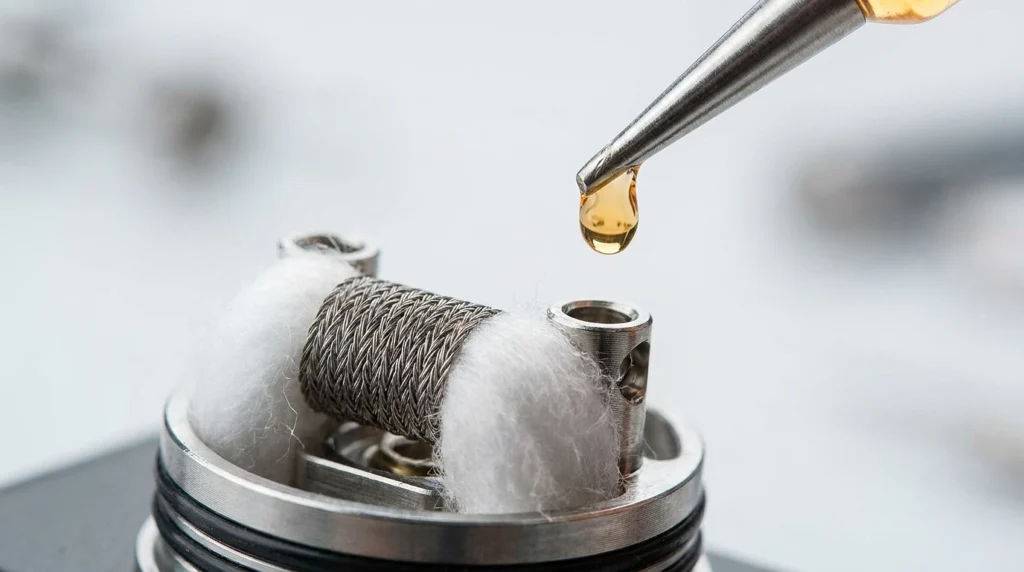
The classic, the one that got me on day four. Every coil or pod has a wick inside, usually cotton, and that cotton arrives bone dry. Fill the tank, fire the button immediately, and you’re vaporizing liquid, you’re igniting dry cotton pressed against a heating element. The result is the burnt hit, a taste somewhere between charred toast and regret, and here’s the part beginners don’t know: one good scorching permanently ruins the coil. There’s no recovering a burnt wick.
The fix is called priming, and it costs only patience. Fill the tank, then wait five to ten minutes so the cotton fully saturates before the first fire. On refillable coils, most people also drip a couple of drops of liquid directly onto the visible cotton ports before installing. What the mistake costs you: a replacement coil or pod, typically somewhere in the $3 to $7 range each, plus the worst first impression a hobby can make. I burned two before anyone told me. Fourteen dollars of tuition for a rule that fits in one sentence.
2: Chain Vaping Until You’re Green
Week one has a rhythm problem. A new device is novel, hits are easy, and unlike anything with an ember, nothing burns down to tell you a session is over. So beginners chain, puff after puff for twenty minutes, and then discover what the community calls getting nic sick: dizziness, nausea, a cold sweat, a headache with opinions. That’s nicotine overconsumption, your body sending a clear message, and it’s the most common miserable afternoon in all of beginner vaping.
The fix is boring and works: put the device down between sessions, treat it like something with a natural end point rather than a fidget toy, and pay attention to the early signals, because lightheadedness arrives well before nausea does. What it costs you: nothing in dollars, an entire afternoon in wellbeing, and for some people it’s unpleasant enough that they conclude the whole device is broken. The device is fine. The pacing was the problem.
3: Guessing on Nicotine Strength
Liquids come in strengths that vary enormously, and week-one buyers routinely grab a number at random. Too high for your tolerance and every session ends in throat burn and the mistake above. And the trap runs the other direction too: a strength so low it satisfies nothing tends to produce constant, compensatory puffing, which is its own road to overdoing it.
The honest guidance: start lower than you think you need, since you can always take another puff but you can’t un-take one, and buy small bottles or single pods until a strength proves itself. If you’re using the device instead of cigarettes, the harm-reduction consensus is to use whatever strength actually keeps you off them, and for many people the long game is stepping the number down over time, not up. What guessing costs: a wasted $15 to $25 bottle that’s wrong for you, and a week of either wincing or chain puffing while you pretend it isn’t.
4: Treating the Battery Like a Phone
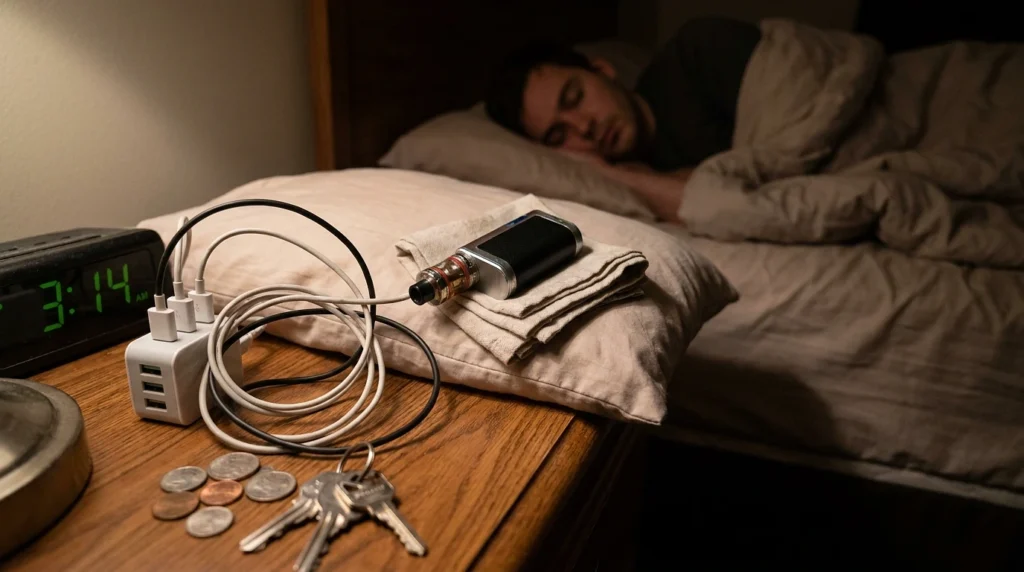
Here’s the mistake with genuinely serious stakes, and week-one users make it casually charging the device overnight on a pillow-adjacent nightstand, using whatever random high-wattage brick is nearby, or tossing a spare loose battery into a pocket with keys and coins.
Vape devices carry lithium cells, and lithium cells fail dramatically when abused. The safety rules are few and absolute:
- Use the cable and charging spec the manufacturer intended, not the fastest brick in the house
- Never charge unattended overnight or on bedding, and unplug at full
- Never pocket a loose spare battery with metal objects; coins across the terminals is how pockets catch fire
- Retire anything with a swollen battery or damaged wrap immediately, no exceptions, no duct tape
What the mistake costs: usually nothing, until it costs you the device, the nightstand, or considerably more. Battery fires are rare and almost always trace back to exactly these behaviors. This is the one section of this article to actually memorize.
5: Buying Mystery Products to Save Five Dollars
The flea-market cart, the gas-station clone of a name-brand pod, the miraculous marketplace deal from a seller with eleven reviews. Week-one buyers, still learning what things should cost, are the counterfeit market’s favorite customers.
This one deserves its stakes stated plainly. The 2019 outbreak of severe vaping-related lung injury in the US was tied by health care authorities primarily to illicit-market THC cartridges cut with vitamin E acetate, an additive found in street products, not in regulated nicotine liquids from licensed retailers. Counterfeit coils and clone pods, meanwhile, are a smaller but real problem, with off-spec materials and no quality control. The lesson generalizes: in this product category, provenance is a safety feature, not a luxury. Buy devices, pods, and liquids from licensed, established retailers, and treat any deal that’s dramatically below market as the warning it is. What the mistake costs: five dollars saved against downside risks that include the only genuinely scary outcomes this hobby has produced.
6: Ignoring What’s Actually in the Bottle
Two letters, PG and VG, sit on every liquid label, and beginners skip them at the cost of comfort. Propylene glycol carries flavor and throat feel; vegetable glycerin carries smoothness and vapor. A high-PG liquid in a device meant for high-VG, or vice versa, gives you harshness, weak flavor, or a coil that gunks up in days, especially with heavily sweetened dessert flavors, which coat coils like caramel coats a pan. What it costs: coils dying in half their normal lifespan, a few dollars at a time, and a week of blaming the device for the liquid’s behavior. Match the liquid to what your device’s manual recommends, and go easy on the ultra-sweet stuff until you know what your coils can tolerate.
7: Running It Dry and Cooking It in the Car
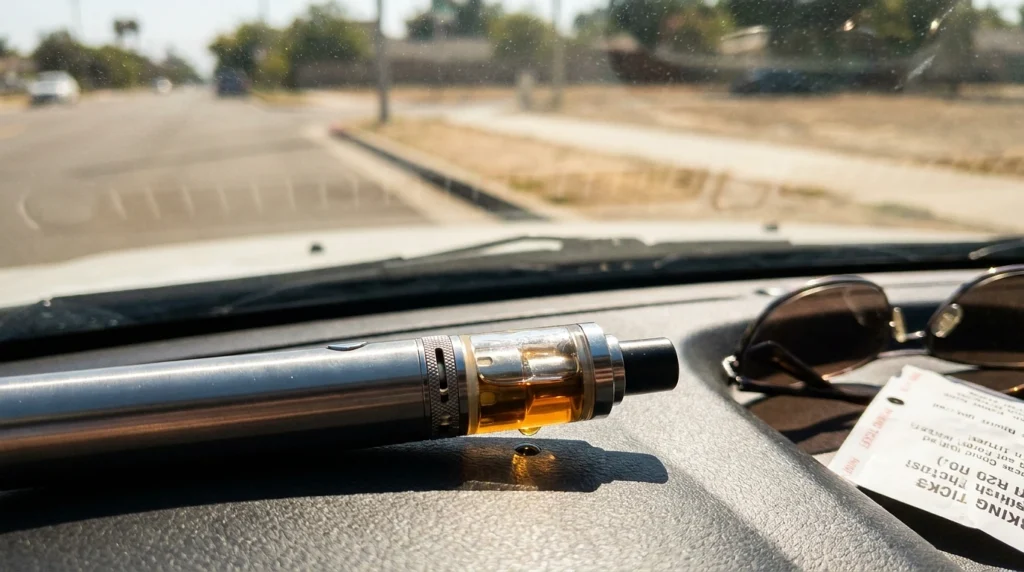
The last two micro-mistakes travel together because both are about neglect. Firing a nearly empty tank scorches the wick exactly like Mistake 1, so refill before empty, not after. And a device left in a hot car does everything bad at once: thin liquid leaks through the airflow, seals warp, flavor degrades, and the battery sits in exactly the heat lithium hates. What it costs a leaked pocket, a ruined pod, occasionally a dead device, all for the price of taking it with you or keeping the tank topped.
Add up the whole list and week one’s mistakes run maybe $40 to $60 in coils, wrong bottles, and replaced pods, plus one green-faced afternoon, which is roughly what mine cost, and I got off easy on the battery front out of pure luck. The cheaper path is the one you’re on right now: knowing the seven in advance. Prime the coil, pace yourself, start low, respect the battery, buy legitimate, read the bottle, and don’t cook the thing in a parked car. And that quiet note from the top of the article stands at the bottom too: the only version of this that costs nothing is the one where you never needed the device at all. If week one is also the week you’re rethinking that, quit-support lines and your doctor are better resources than any article about coils.

