


As remote work, flexible workspaces, and sustainable building practices grow in popularity, New Zealand businesses and individuals are turning to innovative solutions to meet their evolving office needs. One such solution is the container office, a portable, cost-effective, and eco-conscious alternative to traditional office spaces. Whether you’re a business owner looking to add extra workstations or a freelancer dreaming of a backyard studio, container offices offer a modern approach that’s both practical and versatile.
Why Container Offices Are Gaining Popularity
Container offices, also known as modular offices, are repurposed shipping containers that have been converted into functional workspaces. They’re an excellent example of adaptive reuse and fall under the broader category of shipping container architecture.
Here are a few reasons why they’re making waves in New Zealand:
- Affordability: Compared to building or leasing traditional office space, a container office is more cost-effective.
- Portability: Easily moved from one location to another, perfect for construction sites, events, or temporary business operations.
- Sustainability: Reusing shipping containers supports environmentally friendly building practices.
- Customization: From insulation and lighting to air conditioning and Wi-Fi, container offices can be tailored to suit a wide range of professional needs.
The Cost of a Container Office
Costs can vary depending on whether you buy new or used, how much customisation is required, and whether you’re renting or purchasing outright. Here’s a general breakdown of what to expect:
| Item | Estimated Cost (NZD) |
| 20ft Used Shipping Container | $3,000 – $6,000 |
| 40ft Used Shipping Container | $4,500 – $8,000 |
| Insulation and Internal Fit-out | $5,000 – $10,000+ |
| Electrical/Plumbing Installation | $2,000 – $5,000 |
| Air Conditioning and Heating | $1,500 – $3,000 |
| Permits and Site Preparation | $1,000 – $3,000 |
Overall, a fully fitted-out container office in New Zealand might cost anywhere between $12,000 and $30,000, depending on size, finish, and additional features.
Tip: Many companies offer turn-key solutions or container office packages that streamline the process and can even save you money.
Step-by-Step Guide to Setting Up Your Container Office
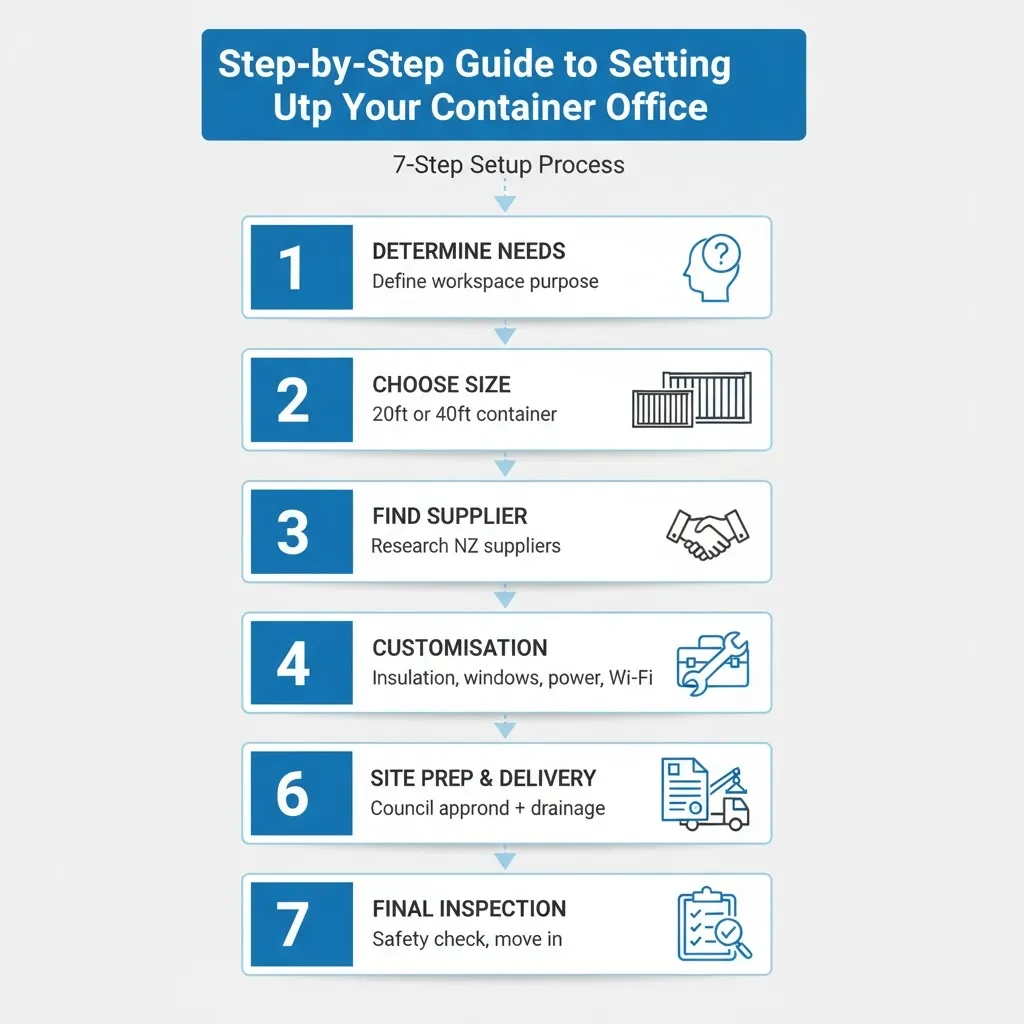
According to NZBOX setting up a container office is a straightforward process, especially when you work with a reputable supplier. Here’s a step-by-step guide:
1. Determine Your Needs:
Are you using it as a single-person office, a team workspace, or a pop-up retail location? Your intended use will shape everything from size to interior layout.
2. Choose the Right Size:
The most common sizes are 20ft and 40ft containers. A 20ft container is ideal for solo use or a backyard studio, while a 40ft unit can accommodate multiple desks, meeting space, and storage.
3. Find a Supplier:
Look for a trusted a company that offers both new and used container sales or rentals. Check reviews, certifications, and customisation options.
4. Customization and Fit-Out:
Depending on your needs, you might install:
- Insulation and wall linings.
- Windows and doors.
- Power outlets and lighting.
- Wi-Fi and air conditioning.
- Built-in desks or shelving.
5. Secure Necessary Permits:
Depending on where you plan to place your container office, you may need building consents or planning permission. Check with your local council or consult New Zealand’s Building Performance website for guidance.
6. Site Preparation and Delivery:
Make sure the ground is level and has proper drainage. Some suppliers can handle delivery and craning into position for you.
7. Final Inspection and Use:
Once installed, conduct a final inspection to ensure everything works properly and complies with safety regulations. Then, you’re ready to move in!
Key Benefits of a Container Office
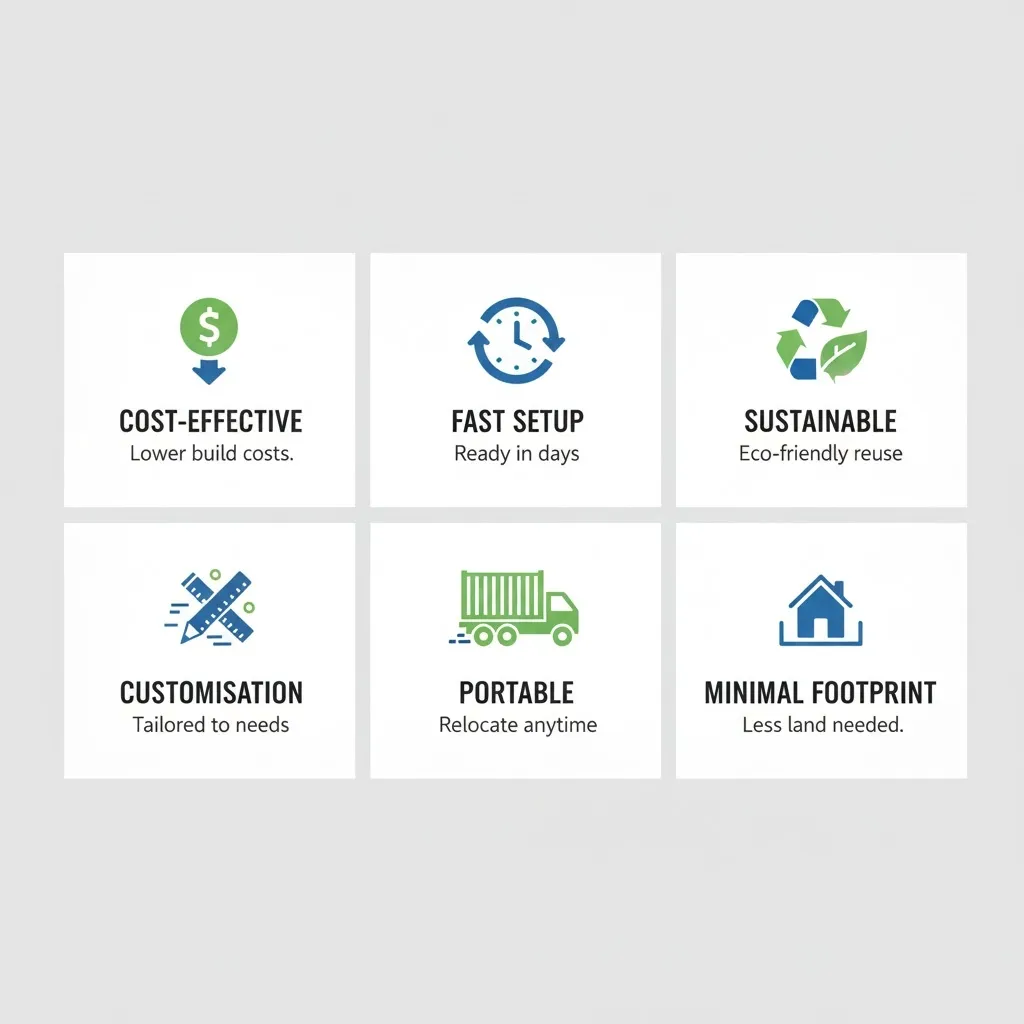
Whether it’s for your backyard, a construction site, or a business hub, container offices offer a range of benefits:
Cost-Effective:
Container offices are significantly cheaper than building a traditional structure, with fewer ongoing maintenance costs.
Fast Setup:
Once the container is modified, delivery and setup can take just a few days, ideal for urgent space requirements.
Sustainable and Eco-Friendly:
By reusing shipping containers, you’re helping reduce waste and carbon emissions. Many owners also install solar panels for added sustainability.
Customizable:
You can design your space exactly how you want it – from open-plan offices to fully enclosed private studios with toilets and kitchens.
Portable:
If you relocate, your office can move with you – no need to build again from scratch.
Minimal Footprint:
Container offices are compact and require less land, making them perfect for urban or limited-space environments.

