


Key takeaways:
- Fat grafting moves your own fat from somewhere like the abdomen or thighs to the breast. No implant, no synthetic material.
- Only about half the transferred fat survives long-term. Large reviews put the average volume retention around 54%, with a wide real-world range depending on technique.
- Because so much fat is reabsorbed, more than one session is common to reach and keep a target size. That’s the “two surgeries” reality glossy write-ups skip.
- It’s suited to modest increases, roughly under a cup size per session, not a dramatic jump.
- Your real, lasting result is visible at about six months, once the surviving fat stabilizes.
- It can create lumps and calcifications that show up on mammograms, so tell your screening team, and discuss everything with a board-certified plastic surgeon.
Fat grafting gets sold as the gentle, natural alternative to implants, and in fairness a lot of that reputation is earned. It uses your own tissue, there’s nothing synthetic going in, and the results can look and feel more natural than an implant. But nearly every article about it skips the one number that actually determines whether you’ll be happy with it, and skips the reason people often end up in the operating room more than once. So let me give you the honest version, the math included.
What It Actually Is, Briefly
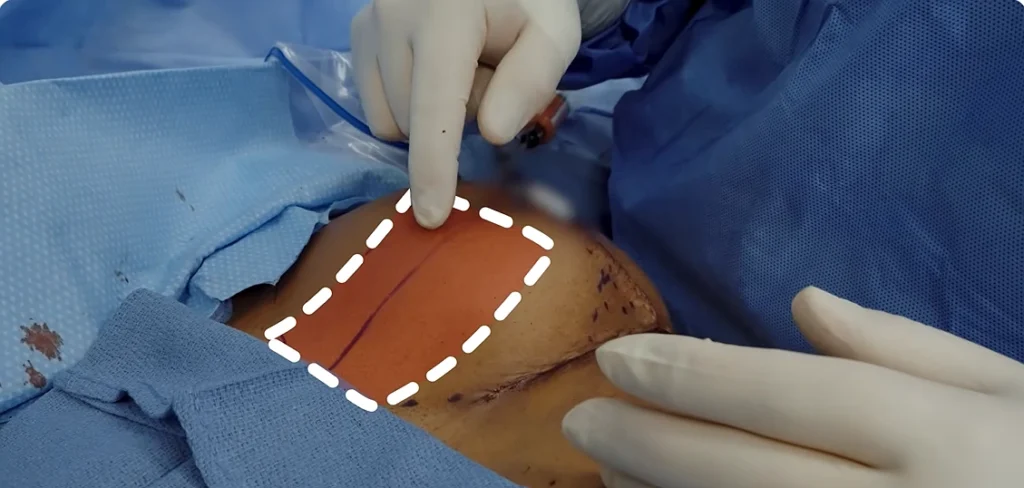
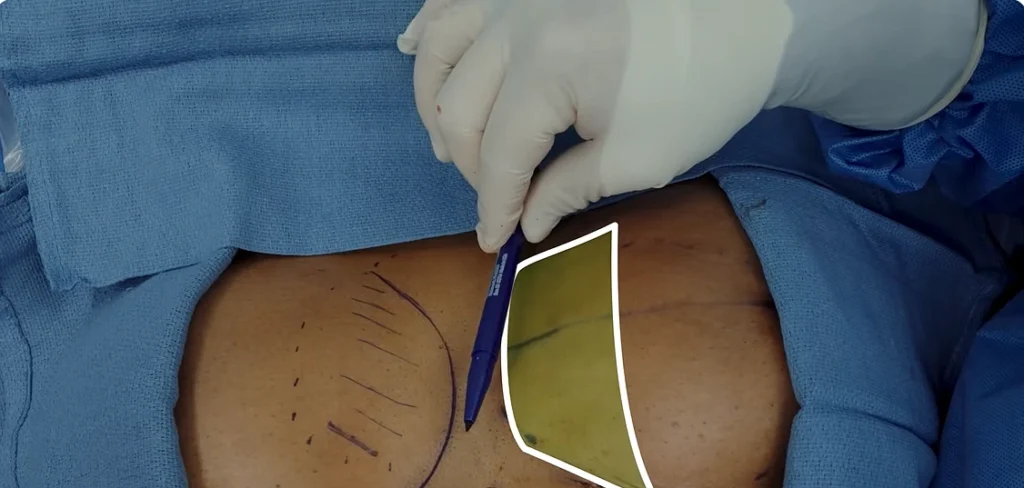
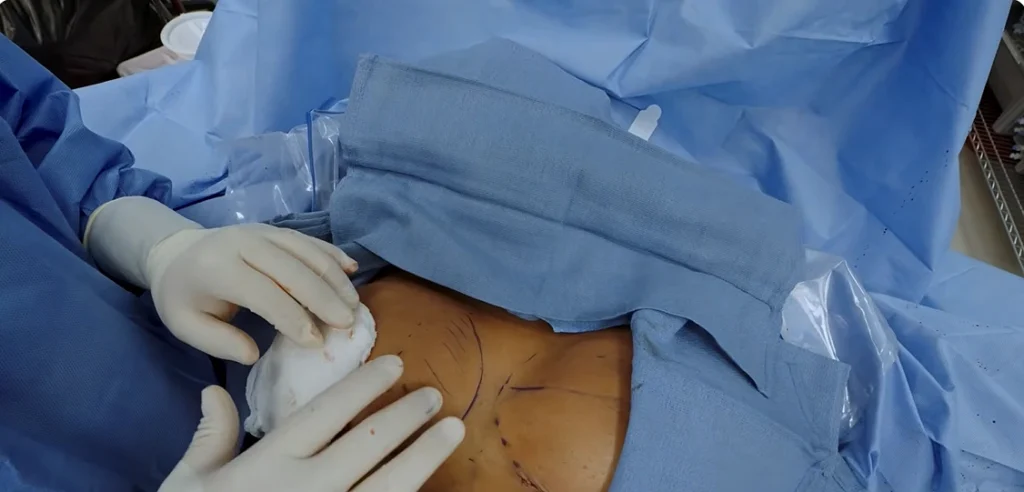
Fat grafting, also called fat transfer or lipofilling, is a two-part operation happening in one sitting. First, a surgeon uses liposuction to remove fat from a donor area, usually the abdomen, thighs, or flanks. That fat is then processed and purified, and reinjected into the breast in small, carefully distributed amounts to build shape and volume.
So it does two cosmetic jobs at once: it takes fat from a place you’d rather have less of, and adds it where you want more. That dual benefit is real and part of the appeal. It’s a genuinely different procedure from implant surgery, not just a variation on it, because everything going in is your own living tissue.
The Number Nobody Puts In The Brochure: About Half Of It Disappears

Here’s the fact that should anchor your whole decision, and the reason the title promises honest math. Transferred fat does not all survive. A large chunk of it gets reabsorbed by your body in the months after surgery.
The best evidence we have puts real numbers on this. A systematic review and meta-analysis of 25 studies found the pooled volume retention rate was about 54%, meaning a bit more than half the injected fat was still there at final follow-up. And that’s an average hiding a huge spread: across the broader literature, retention ranges anywhere from roughly 15% to 83%, depending on the surgeon’s technique, how the fat is prepared, and your own biology. Another large review landed on an average retention of 58%. However you slice it, the honest planning assumption is that roughly half of what goes in, stays.
This is not a complication or a sign something went wrong. It’s how the procedure inherently works. Freshly transferred fat has no blood supply of its own at first, and it survives only if it reconnects with your blood vessels fast enough. The fat that doesn’t reconnect is reabsorbed. Which leads directly to the part the source articles bury.
Why “One Procedure” Often Means Two Or More Surgeries
If only half the fat survives, the arithmetic writes itself. To reach a meaningful size increase and keep it, a surgeon often can’t get there in a single session, because they can only safely inject so much fat at once. Overpack a breast with fat and you starve the middle of it of blood supply, which causes the fat to die, and dead fat is its own problem (more on that below). So the safer path is conservative amounts across multiple sessions, letting each round establish its blood supply before adding more.
That’s the reframe in the title. Fat grafting is described as one procedure, but for anything beyond a subtle change, the realistic plan is two or more surgeries spaced months apart, each with its own liposuction, its own recovery, and its own cost. Going in expecting a one-and-done and then learning you need a second and maybe third round is a common source of disappointment that a frank conversation up front prevents entirely.
It also sets honest size expectations. Fat grafting is genuinely good for mild to moderate enhancement, on the order of under a cup size per session, and for improving shape, symmetry, and contour. It is not the tool for a dramatic increase. Someone wanting to go up several cup sizes is usually an implant candidate, and a good surgeon will say so.
When You’ll Know Your Real Result: About Six Months
One genuinely reassuring piece of the math. The reabsorption isn’t endless, and it doesn’t leave you guessing for years. The surviving fat stabilizes, with studies showing graft volume settling by around six months and then holding steady, one study found no meaningful further loss between six and twelve months.
The practical meaning: the fat that’s still there at roughly six months is, for the most part, permanently yours. It behaves like any other fat in your body from then on, which includes one quirk worth knowing, it can grow and shrink if your weight changes significantly. Big weight swings after fat grafting can alter your result.
The Risks The Soft Version Glosses, Especially The Mammogram One

The draft this is based on mentioned “swelling and bruising,” which is true and trivial. Here’s the fuller, honest risk picture.
- Fat necrosis is the standout complication. When transferred fat doesn’t survive, it can form firm lumps, oil cysts, or areas of calcification. In one large review of nearly 3,800 women, the overall complication rate was about 28%, and fat necrosis made up the largest share of it. These lumps are usually harmless, but they’re not nothing.
- The calcifications and lumps can complicate breast cancer screening. This is the risk the cosmetic write-ups almost never mention and the one that matters most for your long-term health. Fat necrosis and calcification can show up on a mammogram and look concerning, potentially requiring extra imaging or even a biopsy to confirm they’re benign and not cancer. You must tell your radiologist and screening team that you’ve had fat grafting, so they can read your mammograms in that context. Modern imaging can usually distinguish graft-related changes from cancer treatment, but only if the people reading it know to look.
- Uneven absorption can change your contour over time, since the fat doesn’t always survive symmetrically, which is another reason touch-up sessions are common.
- The donor site has its own recovery, since this is liposuction too, with its own bruising and contour considerations.
None of this makes fat grafting a bad choice. It makes it a real surgery with real tradeoffs, which is exactly how it should be weighed rather than as the risk-free “natural” option the marketing implies.
Who It Genuinely Suits
Pulling the honest picture together, fat grafting tends to be a good fit for someone who:
- Wants a modest, natural-looking enhancement or better symmetry, not a dramatic size jump.
- Has enough donor fat to harvest, which is a real requirement, very lean patients may not have enough to transfer.
- Is comfortable with the possibility of more than one session and the retention math that drives it.
- Wants to avoid implants and synthetic material specifically, or is combining it with reconstruction after mastectomy or lumpectomy, where it’s genuinely valuable for restoring a natural feel.
And it’s a poor fit for someone expecting a large increase, a single guaranteed procedure, or a precisely predictable final volume, because the one thing this technique can’t offer is precision about how much will stay.