


Two things get repeated in every piece of marketing TRG Datacenters puts out, and they are the two worth examining because they are unusual rather than because they are loud. A 100% uptime SLA, and cross connects that carry no monthly charge, ever. Most colocation providers offer neither.
Worth being upfront about the nature of this assessment. What follows is an analysis of the offering and its published terms rather than a report from a site visit, so treat the engineering claims as TRG’s own until you have stood in the building yourself.
Reading The Uptime Guarantee Properly
Every SLA in this industry is a refund schedule wearing the language of a promise. The question is never whether a provider guarantees uptime, since they all do in some form. The question is what happens when they miss.
Typical colocation SLAs sit at 99.99% or thereabouts and pay out in service credits calculated per hour of outage, usually with a cap somewhere around a portion of that month’s bill. TRG’s published terms go further. Their stated SLA is 100% uptime with 100% of your month free for the portion of services affected by any downtime, which is a more generous remedy than the industry norm and, more usefully, a simpler one to calculate when you are arguing about it.
Here is where the honesty part comes in though. A service credit compensates you for the colocation, not for the outage. If a four hour failure costs your business a hundred thousand dollars in lost transactions, the credit returns your monthly rack fee. That gap is not specific to TRG, it is how every colocation contract in the market is written, and any provider offering consequential damages would price accordingly. So the SLA tells you two genuine things, that the operator is confident enough to write a strong remedy, and that you still need your own redundancy for anything where downtime carries real cost.
The number that matters more than the guarantee is the track record behind it. TRG reports 100% uptime since the Houston facility opened in 2018, including through maintenance operations and severe weather, which for a Gulf Coast site is a meaningful qualifier given what has passed through the region since then. Seven or so years is a real record. It is also shorter than the operating history of the larger incumbents, so weigh it as evidence rather than as proof.
Where The Free Cross Connects Actually Show Up
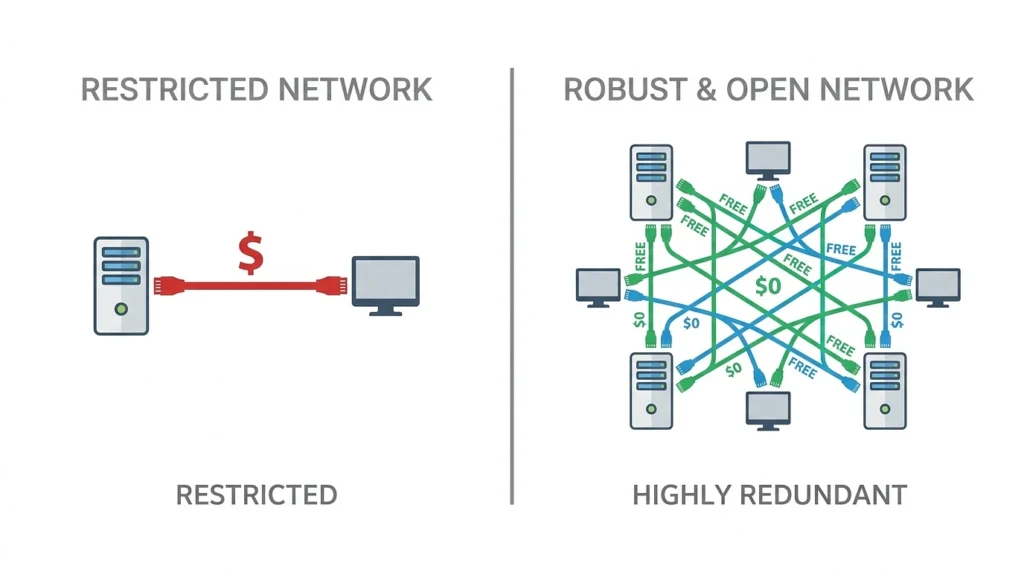
This is the bigger financial item of the two, and it is the one people underestimate because it sounds like a small perk.
At the large carrier hotels, cross connects are a recurring revenue line rather than a cost recovery. Monthly fees per connection commonly run into the low hundreds of dollars, they renew forever, and they scale with every carrier, partner and redundant path you add. A tenant running ten cross connects at a major interconnection facility can be paying tens of thousands a year purely for the privilege of having cables run between cages.
TRG charges nothing for them, describes it as no monthly recurring charges for cross connects, ever, and provisions them through a support ticket rather than a contract amendment.
The second order effect is the one worth thinking about. When each connection carries a fee and a paperwork cycle, engineering teams ration them, and the redundant path that would have been sensible gets skipped because it needs budget approval. Remove the charge and the architecture you design is the architecture you actually wanted. That is a real operational difference rather than a line item saving.
Free remote hands for non emergency work sits alongside this and follows similar logic, since most data centre incidents trace back to human error and charging by the hour for routine tasks encourages customers to defer them.
Carrier Count is The Thing to Check Before You Get Excited
Free connections are worth exactly as much as the ecosystem you can reach with them, which is where the comparison against a major carrier hotel gets less flattering.
TRG’s Houston campus lists 16 on-site carriers along with the Megaport interconnection hub, which is solid regional density and enough for most enterprise deployments to build diverse transit and reach the main cloud on ramps. It is not the several hundred network ecosystem of a top tier interconnection facility, and the reason those facilities can charge heavily for cross connects is precisely that network effect.
So the calculation splits along a fairly clean line. If your requirement is redundant transit, cloud connectivity and reaching a handful of specific partners, the free model is straightforwardly cheaper and you lose nothing. If your business depends on peering with a long tail of specific networks that only congregate at the big hubs, the cheaper cross connects do not compensate for the carriers not being there.
The Houston Specific Engineering, Which is Not Marketing Fluff
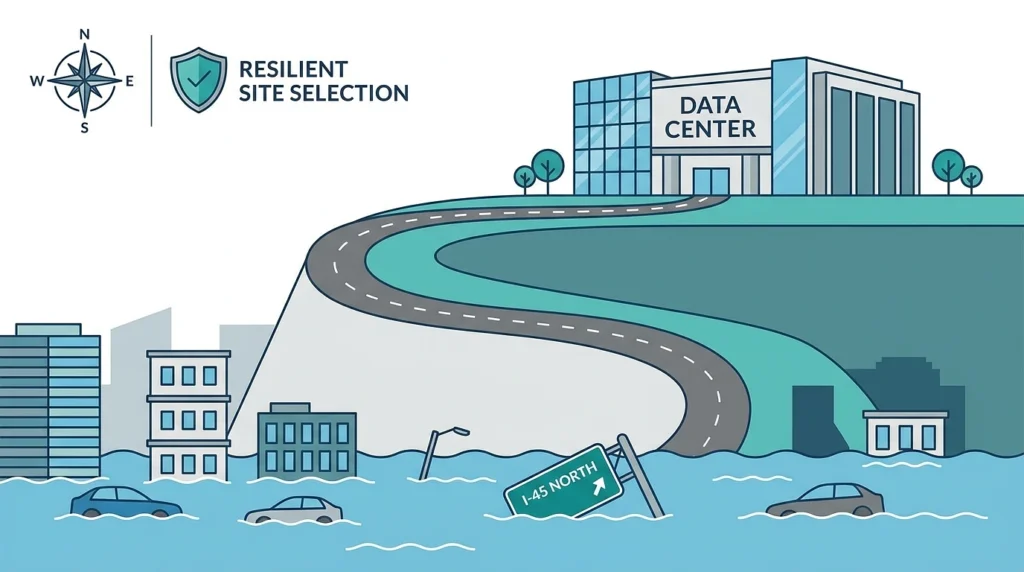
A few things in the facility spec are genuinely unusual and they matter more in this market than they would in Virginia or Phoenix.
- Indoor generators. TRG claims to be the only Houston facility with generators housed inside, using multiple 1.5 MVA Rolls Royce MTU units behind hurricane resistant louvres. Outdoor generator yards are exactly what fails when a hurricane arrives, so this is a real design decision rather than a spec sheet flourish.
- Waterless cooling. No water distribution inside the white space removes an entire category of leak risk, and it changes the resilience picture during a municipal water disruption.
- Site selection. The building sits outside the 500 year floodplain, near I-45, with the stated intention that it stays accessible during regional flooding. In Houston that is not a small consideration.
- Fuel autonomy. Independent reserves lasting four or more days, with a bi-fuel natural gas option extending runtime beyond twelve days.
- Power sourcing. Four substations in the area with critical load designation from the local utility.
The certification list covers the compliance ground most regulated tenants need, including HIPAA, PCI DSS, ISO 27001 and SOC 1 and SOC 2 at Type 2.
About the Tier IV Wording
Something worth reading carefully in their materials. TRG describes the facility as designed by an Accredited Tier Designer from the Uptime Institute and says it most closely matches the Tier IV standard.
That phrasing is accurate and it is doing careful work. Designed to match a standard is a different statement from certified against it, since Uptime Institute certification is a separate process covering design documents, the constructed facility and in some cases operational sustainability. Plenty of well built facilities never pursue formal certification because the process is expensive and the market often accepts the design pedigree instead.
None of that suggests the engineering is weaker than described. It does mean that if your procurement process requires a certified Tier level on paper, you should ask directly which certifications exist as documents rather than inferring from the design language.

