


Somebody invented this phrase and then about fifteen websites wrote articles explaining what it means, which is how I ended up reading nine different definitions of importantcool momfood in one afternoon. One said it was a philosophy of balance. One said it was about making food visually appealing. One had clearly been run through a translator and came out saying that cool pertains to something sleazy, which I enjoyed more than I should have. None of them contained a single cooking instruction you could follow tonight.
So the phrase is empty, but the thing underneath it is not. Mothers and grandmothers across every food culture on earth have worked out techniques that fix specific problems, and almost none of those techniques appear in the recipes we read online, because recipes tell you what to add rather than what to do. Here are ten of them, sorted by the problem they solve.
When The Meat Keeps Coming Out Tough
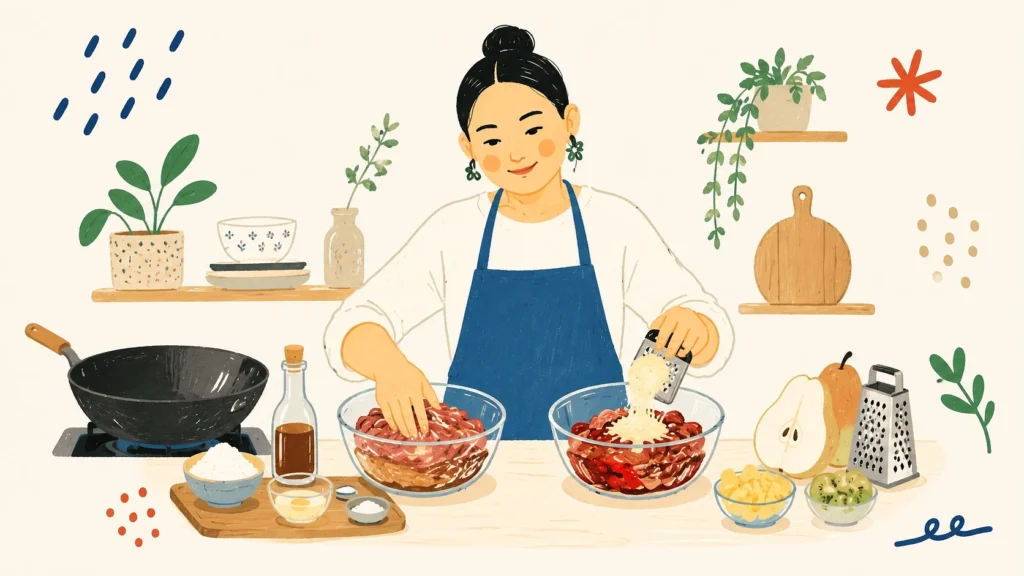
This is the complaint I hear most from people who cook a lot and still feel like something is missing. Two cuisines solved it in completely different ways.
Chinese Velveting
Restaurant stir fried beef is silky and yours is chewy, and the difference is not the wok. It is a fifteen minute step called velveting that home cooks in China treat as normal prep.
You toss sliced meat with cornstarch and egg white before it ever touches heat. The coating holds moisture inside the protein and shields it from the direct blast of the pan. For beef specifically, a small pinch of baking soda in the marinade raises the surface pH so the muscle fibres do not seize up and squeeze out their water.
- Roughly one teaspoon of cornstarch and one egg white per half pound of sliced meat.
- Add a splash of rice wine or soy for flavour, and no more than a quarter teaspoon of baking soda for beef.
- Rest it twenty minutes, then rinse the baking soda off before cooking or you will taste it.
- Blanch briefly in oil or simmering water before the actual stir fry.
The whole trick is that the meat is protected before it meets the heat, which is the opposite of how most of us cook, where we throw raw meat into a hot pan and hope.
Korean Fruit in The Marinade
Korean cooks tenderize bulgogi with grated Asian pear, and it is not for sweetness. Pear carries enzymes that break down protein, and so do pineapple, papaya and kiwi.
Kiwi is the strongest and it will punish you. Twenty minutes is plenty, and an hour turns good steak into something with the texture of pate. Pear is gentle enough to leave overnight, which is why it became the traditional choice rather than the aggressive fruits.
Everything Tastes Flat And You Cannot Work Out Why
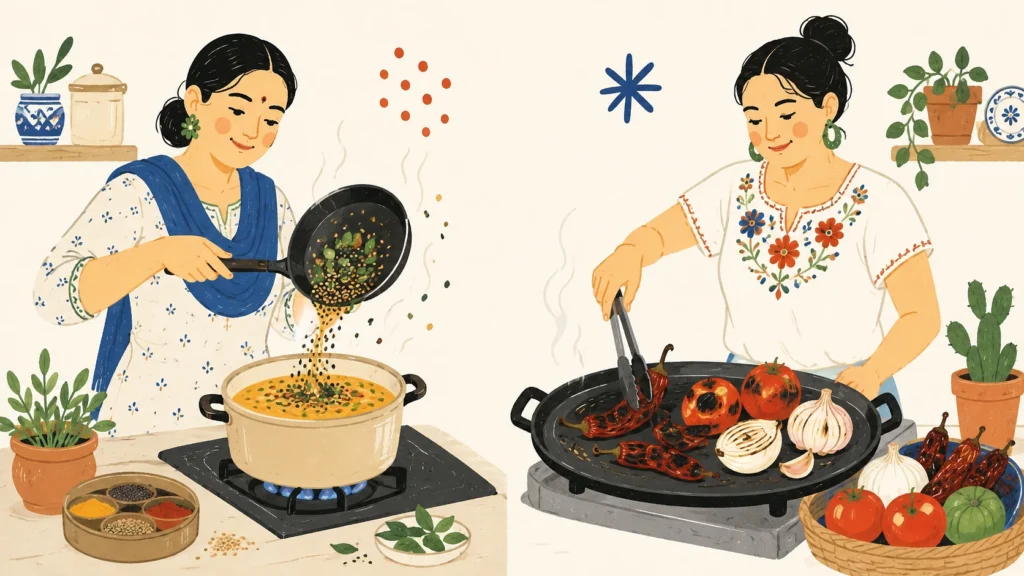
Flat food is usually a technique problem rather than a seasoning problem, and four cuisines attack it from different angles.
Indian Tadka
Ground spice stirred into a simmering pot tastes dusty. The same spice bloomed in hot fat tastes like a restaurant, because most of what we register as spice flavour lives in oil soluble compounds that water simply cannot pull out.
Tadka means heating ghee or oil and dropping whole spices in, then pouring the whole sizzling lot over the finished dish. Order matters quite a bit, though.
- Mustard seeds first, and wait for them to pop.
- Cumin seeds next, about thirty seconds, until they darken slightly and smell nutty.
- Curry leaves after that, standing back because they spit.
- Anything ground, including chilli powder and asafoetida, goes in last with the heat off, since ground spice burns in seconds and burnt spice is bitter all the way through.
Mexican Dry Toasting
Before a single chile goes into a salsa, it goes onto a dry pan. Fifteen to thirty seconds a side, until it smells sweet and smoky and turns slightly pliable.
Watch it properly because there is a line here. Toasted is fragrant. One breath past that and the chile turns bitter, and no amount of anything fixes a bitter salsa. The same pan then gets your tomatoes, onion and unpeeled garlic, charred until blistered and black in patches, which is where that deep smoky flavour in a good taqueria salsa comes from. Nothing exotic is happening. The vegetables were just cooked before they were blended.
Thai Pounding And The Final Taste
A blender chops. A mortar and pestle crushes, and crushing ruptures the cell walls in lemongrass, garlic and chillies so the aromatic oils actually come out. Thai cooks who own perfectly good food processors still reach for the granite, and this is why.
The second half of the Thai approach is the one worth stealing even if you never buy a mortar. Nothing is finished until it has been tasted and corrected across four axes, salty, sour, sweet and hot, with the heat off. Fish sauce, lime, palm sugar, chilli. A dish that tastes flat is nearly always missing acid or salt, and the fix takes ten seconds at the end rather than a rewrite of the recipe.
Japanese Seasoning Order
Japanese home cooking teaches a sequence with a mnemonic, sa shi su se so, standing for sugar, salt, vinegar, soy sauce and miso, added in that order.
The logic is physical. Sugar molecules are larger and travel into food more slowly, so sugar goes early to give it time. Salt penetrates faster and also draws moisture, so it follows. Vinegar, soy and miso carry aromatic compounds that cook off with prolonged heat, so they arrive near the end where their smell survives. Most of us dump everything in at once and then wonder why the braise tastes muddled.
Sauces That Break, Split or Slide Off The Food
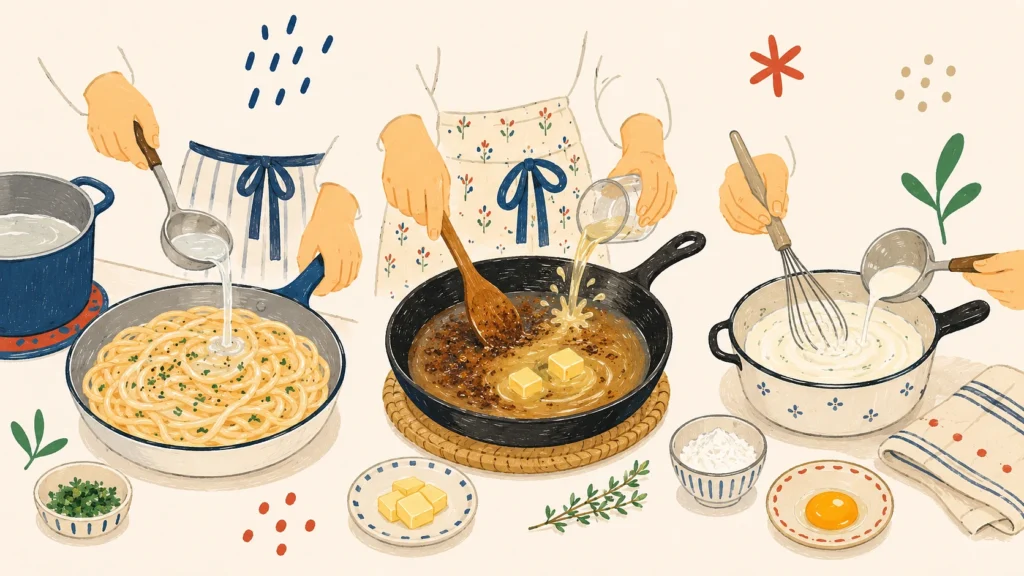
Three fixes here, and they are the ones that make home cooking look professional faster than anything else on this list.
Italian Pasta Water
The single most valuable thing in an Italian kitchen tools gets poured down the sink in most others. Pasta water is full of starch, and starch is what lets fat and water hold together instead of separating.
Pull the pasta out roughly a minute or two before the box says, move it into the pan with your sauce, add a ladle of the cooking water, and toss it hard over heat. The sauce thickens, turns glossy and grips the pasta. Sauce poured over drained pasta on a plate is a different dish from pasta finished in the pan, and the second one takes no extra time.
French Deglazing and Finishing With Butter
Those browned bits stuck to the pan after you sear something are called fond and they are concentrated flavour, not mess. Pour in wine or stock while the pan is hot, scrape everything loose, and you have the beginning of a sauce.
Then the finishing move, monter au beurre. Take the pan off the heat, drop in cold butter a cube at a time and swirl until it melts without boiling. The butter emulsifies into the liquid and gives it shine and body. It has to be cold and the pan has to be off the heat, otherwise the butter splits and you get a greasy layer instead.
Stabilizing Yogurt So It Does Not Curdle
Turkish, Levantine and Greek cooks put yogurt into hot dishes constantly and it comes out smooth, while ours splits into grainy clumps the moment it hits the pot.
The fix is two things. Use full fat yogurt, since the proteins in low fat versions have far less to protect them. Then stabilize before heating by whisking in an egg yolk or a spoonful of cornstarch, temper the mixture by adding hot liquid to the yogurt a ladle at a time rather than the reverse, and never let it reach a hard boil after that.
The Doneness Cue West African Cooks Watch For
Nigerian and Ghanaian stew bases start with blended peppers, tomatoes, onions and scotch bonnet, and they get fried far longer than most of us have patience for. The signal to stop is not a clock. It is the oil separating and rising to the surface in a visible layer.
That separation means the water has cooked out and the raw edge is gone, and it is the difference between a jollof or stew that tastes deep and one that tastes like tomato paste. It can take thirty to forty five minutes of frying, and there is no shortcut, though the base freezes beautifully so most people make a lot at once.
| Problem | Cuisine | The move |
|---|---|---|
| Stir fried meat turns chewy | Chinese | Cornstarch and egg white coating before cooking |
| Marinades do not tenderize | Korean | Grated pear, or kiwi for twenty minutes maximum |
| Spices taste dusty | Indian | Bloom whole spices in hot fat, ground spice off heat |
| Salsa tastes thin | Mexican | Dry toast chiles, char the vegetables first |
| Curry paste lacks punch | Thai | Pound rather than blend, correct the balance at the end |
| Braises taste muddled | Japanese | Sugar, salt, vinegar, soy, miso in that order |
| Sauce slides off pasta | Italian | Finish pasta in the pan with starchy cooking water |
| Pan sauce is thin | French | Deglaze the fond, whisk in cold butter off the heat |
| Yogurt curdles when heated | Levantine | Full fat, stabilized with yolk or cornstarch, tempered |
| Stew tastes raw | West African | Fry the base until the oil separates and rises |
Where To Start If You Only Try One
Pasta water, probably. It costs nothing, it works the first time, and once you have seen a sauce turn glossy and cling to the noodles you will never drain pasta the same way again.
After that I would go to blooming spices, because it changes every curry, soup and rice dish you make afterward, and most people have the spices sitting in the cupboard already. Velveting is the one that impresses people most, though it takes a bit of setup.
None of this came from a food philosophy or a wellness concept. It came from people cooking the same dishes several thousand times and noticing what worked.

