


Every e-cigarette brand in 2012 was chasing the same trick. Make it white, give it a fake orange filter, stick a little glowing tip on the end so it looks like a proper cigarette from three feet away. Electric Zebra looked at all that and did the opposite. Their device came wrapped in black-and-white zebra stripes, loud enough to spot across a crowded pub, and that print was the whole business plan.
The Print Was There To Win Arguments Before They Started
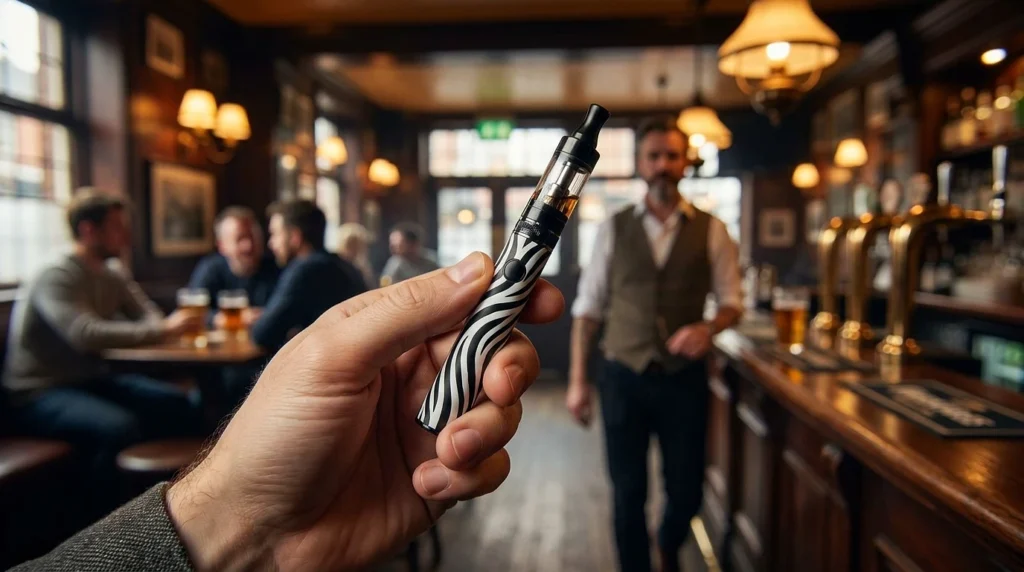
England banned smoking indoors in 2007. Five years on, early vapers kept hitting the same wall. The vapour off a cartomizer looks a lot like cigarette smoke from a distance, and a realistic-looking e-cig meant a bar manager walking over, ready for a fight, before anyone got a word out.
Zebra’s fix was blunt. Make the thing impossible to mistake. A blogger at Madhouse Family Reviews covered the brand in May 2012 and explained the company’s own logic with that print, nobody could accuse you of lighting up a real cigarette and breaking the law. Anyone close enough to complain was close enough to see the stripes. Argument over.
The rest of the industry thought smokers wanted camouflage. Something that let them keep the old ritual without anyone noticing the swap. Zebra bet on a different itch entirely, which was sitting inside a warm pub in January without getting thrown out or lectured. Turns out plenty of smokers cared more about that than about looking authentic.
What £25.95 Actually Bought You
Strip the print away and the hardware was a standard two-piece cartomizer setup for its era. Nothing exotic. The starter kit held:
- A rechargeable battery forming the long body of the device.
- Screw-on nicotine cartridges with a small heating coil, called an atomiser, built into each one.
- A USB charger for topping the battery up at a desk or in a car.
The device only fired when you pulled on it, so it sat dead in a pocket instead of cooking itself. Simple, and for 2012 fairly reliable, going by owner accounts.
The money worked like razor blades. The premier pack cost £25.95, call it $40 back then, and after that you were buying refills forever.
The Cartridge Maths That Hooked Heavy Smokers
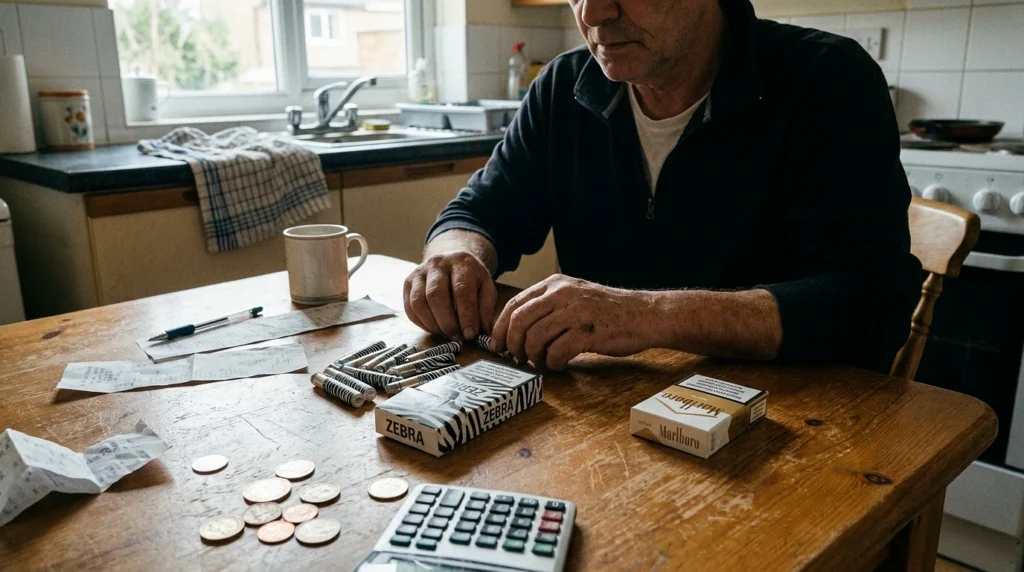
Refills came 14 cartridges to a pack for around £10, and the company claimed each cartridge matched somewhere between 15 and 20 cigarettes. Take those numbers at face value and a pack-a-day smoker was looking at two weeks of nicotine for a tenner, against £7-plus per single packet of cigarettes at 2012 UK prices.
One Trustpilot reviewer that year called it the best value per cartridge they had found in the whole category. The brand knew exactly what it had, and its marketing hammered the tobacco duty angle hard, pitching straight at smokers getting squeezed by every Budget.
A few boring but important restrictions sat underneath all this. Sales were UK only, buyers had to be 18 or over, and the company was careful to sell it as a recreational product for existing smokers rather than a quit-smoking aid. That last part kept it out of medicines regulation, where cessation claims would have buried a small brand in paperwork.
Mike Liked It. Mike Also Hid It.
Here is where the design bet gets tested by an actual human. That same May 2012 Madhouse review was really a household experiment. The blogger did not smoke, so she handed the starter pack to her husband Mike, twenty years a smoker, and watched what happened.
The device itself passed. Vapour was convincing, the nicotine hit landed, the whole thing scored 4 out of 5.
The stripes failed. Mike flat-out refused to use the Zebra anywhere public. He thought it looked like a toy, said it was not manly, and told her he would have preferred a plain black version that still could not pass for a real cigarette but did not shout about it either. So a product engineered for pub visibility ended up living on the arm of a sofa, used strictly indoors, in private.
That one review holds the brand’s entire problem in miniature. Stripes solved the legal question and opened a social one. Build a device nobody can mistake for a cigarette and you have also built a device everybody notices, and a decent slice of smokers wanted the exact opposite of noticed.
Zebras Dancing Through Trafalgar Square
The company never blinked. Its 2012 marketing ran on pure spectacle, including a staged zebra stampede through London and a filmed troupe of costumed performers dancing across Trafalgar Square with the striped devices between their lips. Subtlety was never on the table. The pitch stayed consistent from packaging to publicity: this product is loud on purpose, and loud is what buys you the right to use it anywhere you please.
The Reviews Tell Two Stories At Once
Dig through the brand’s Trustpilot record and two very different companies seem to share one name.
Story one is the product working. A reviewer wrote in 2013 that they smoked their last real cigarette on 16 March 2013 and credited the Zebra with getting them there. A ten-year smoker who had already failed with patches, gum and inhalers reported five months cigarette-free after switching. The menthol cartridges drew repeat praise, and several users asked for vanilla and cherry, an early hint of the flavour arms race the wider vaping market was heading into.
Story two is the warehouse falling over. One customer ordered a starter kit on 22 August 2012 and did not receive it until 7 September, after phone calls nobody answered. Another opened a premium pack around Easter 2013 to find the refills and the cigarette case present but no e-cig, no batteries, no charger. Someone at the company was at least reading the complaints, because a PR staffer stepped into one documented case, sorted the delayed order and threw in a free cartridge pack as an apology.
Good product, shaky operation. A very common combination for small hardware brands of that period.
Nobody Can Say Exactly How It Ended
The original Electric Zebra’s paper trail goes quiet after 2014, and the honest answer about its ending is that no reliable record confirms one. What can be said is that the ground moved under it. Refillable tank systems ate the cartomizer market the brand was built on, and the EU Tobacco Products Directive loaded nicotine cartridge products with expensive compliance duties from May 2016 onward. Any claim more specific than that about why the brand vanished is guesswork dressed up as fact.
The domain itself had a strange afterlife. By the late 2010s, reviews attached to describe a totally different outfit selling hookahs and dry herb vaporizers through Groupon to American customers, complete with one-star complaints about dead phone lines and wrong items in the box. Whether the brand was sold, the domain changed hands, or some unrelated company simply traded on the name has never been established anywhere worth citing.
The design idea aged better than the company did. Walk past any corner shop counter in 2026 and the disposable vapes stacked behind the till come in colours no tobacco product would ever dare wear. Nobody mistakes them for cigarettes, and nobody is supposed to. Electric Zebra got there first, almost fifteen years early, wearing stripes.

