


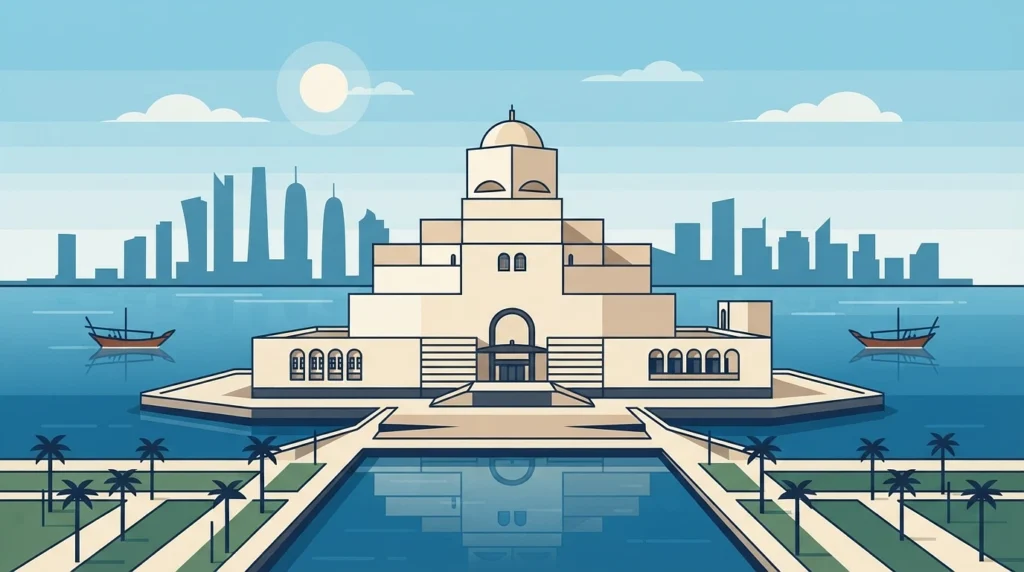
The Museum of Islamic Art, located on the Corniche of Doha, was the first to begin the spree. Opened in 2008, the building’s designer, I.M. Pei, the same who designed the glass pyramid at the Louvre, came out of retirement in his nineties and toured the Islamic world to inspire his design.
It was no humble debut. As the inaugural museum project of Qatar Museums, MIA announced itself to the world as a home for one of the most significant collections of Islamic art in the world, spanning fourteen centuries and three continents. They built the museum on its own artificial island, so that no more development would obstruct the view of the water. That’s a lot of intent for a country that, at the time, didn’t have a metro, light rail, nothing. If you wanted to get there in 2008 you had to drive or get a taxi, there was no other way to get there. The art came first, and the infrastructure came about ten years after.
Mathaf Had Opened In 2010 But The Metro Had Not Opened For Passenger Services.
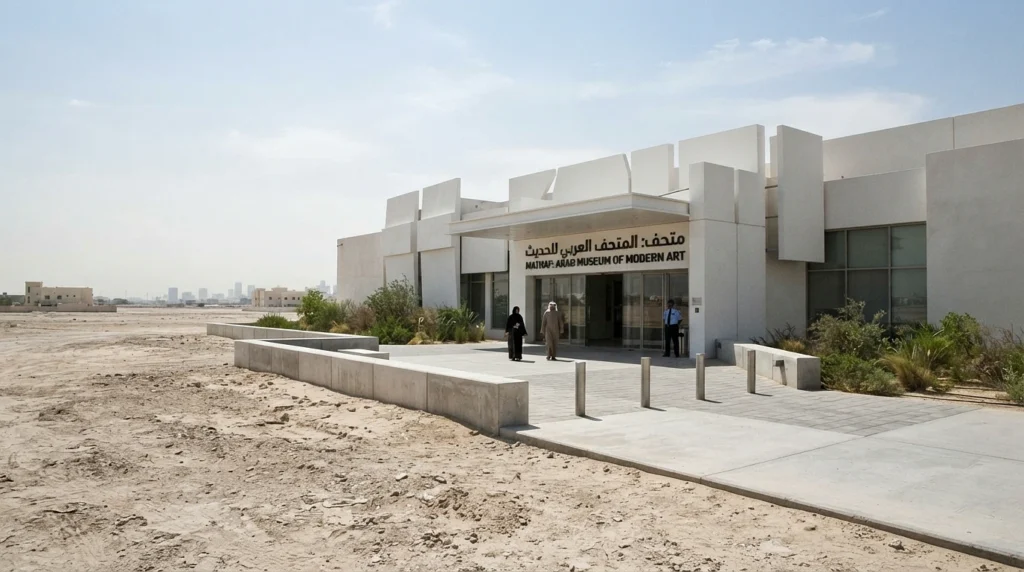
Two years later came the second. Mathaf, the Arab Museum of Modern Art, opened in 2010 and brought the country’s attention forward from the long history of Islamic art to modern and contemporary art of Qatar, the Middle East and the Arab diaspora.
By 2010, Doha had two large public museums and still no passenger railway. Think about the everyday reality of that for a second. This meant that a resident could visit in the afternoon some of the best modern Arab art in the region and then walk back to where they lived, without any means of public transit. The city was at the time entirely car-dependent and the art institution was not waiting for a transport network to justify its existence. They were being treated as the priority in their own right, the thing worth building first, and the roads-and-rails question was left to catch up later.
Both The National Museum And The Metro Opened In 2019.
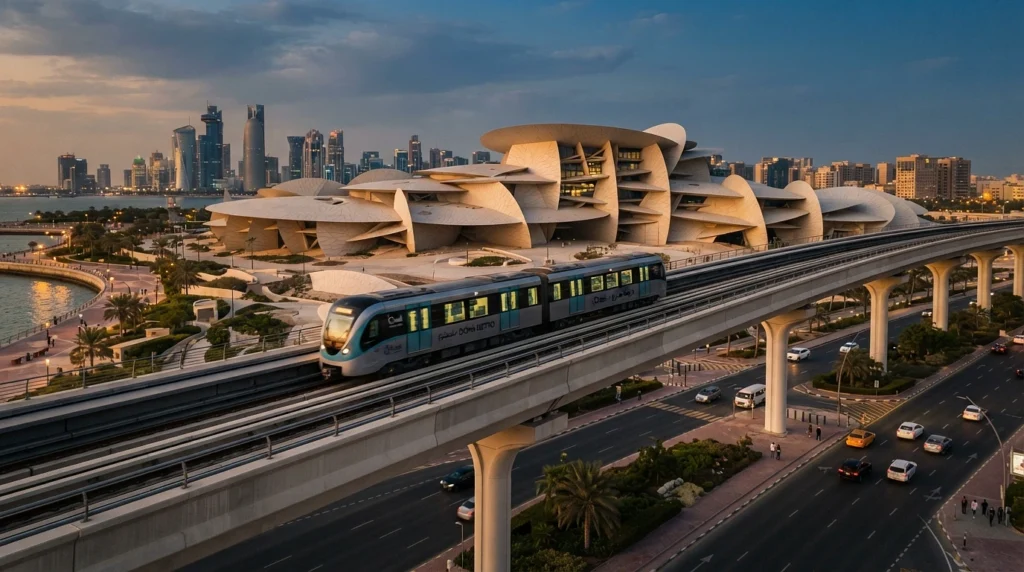
This is when the timelines align, although in reality the Doha Metro didn’t actually start operations until 2019, and then the stunning National Museum of Qatar (the one that’s designed to look like the interlocking discs of a desert rose) only opened in March 2019.
Sit with what that means. Qatar opened its first metro line eleven years after opening the first of its grandest museums. MIA in 2008, Mathaf in 2010. And by then the country was entirely car dependent and the trains only came in the same breath as that third headline museum. It took that long for infrastructure and the National Museum to cross the line together, more than a decade after the countdown to culture commenced. Most countries would consider that sequence upside down, but Qatar built it in that order intentionally.
Qatar Was Able To Build Galleries Ahead Of Infrastructure.
As it turned out, none of this was improvised, and this is the part worth understanding, because there was a particular design to it.
For a tiny, rich natural gas country, Qatar’s leadership believed it could not run on hydrocarbons forever, so Qatar needed to be known for something other than what was under the ground. For Qatar, that something is culture, and at the center of this drive is Sheikha Al Mayassa bint Hamad bin Khalifa Al Thani, chairwoman of Qatar Museums. Over the past few years she has speeded up Qatar’s transformation into a serious cultural hub, buying art, commissioning landmark buildings, making her one of the most influential people in world art every year. The museums weren’t civic decoration to make the place seem decent. They were the practical need, in the sense that they were building the country’s future identity and its soft power abroad, and you can see that logic sitting right there in the timeline.
There’s a friendly competition between all the Gulf states to become something other than just oil, where some go with the tallest towers, others with the flashiest skyline. Qatar made its stand on heritage and the arts, getting there early enough that the MIA was already drawing international visitors as the rest of the practical city was being built around it.
What The Ordering Actually Tells You About Visiting
If you’re the sort of traveler who doesn’t just want to shop in a mall or lay by a hotel pool, the sequence Qatar chose really is good news because it means the culture came first and it’s the real backbone of the place, not an afterthought bolted on for tourists.
The thing built last now makes the thing built first easy. The metro that took until 2019 to arrive connects to museums that have been waiting years for it to open. A visitor can now take a train with no driver to museums that until then you had to drive to, and spend your days in I.M. Pei’s museum on its island, or cross the city to visit the desert-rose National Museum. In them, you can see two very different chapters of the same deliberate decision, the choice to build the culture first, and trust that everything else, including the trains, would come to meet it. Which, eventually, it did.

