

Here is the thing that no style guide for daytime tennis will tell you, and it took me an embarrassing number of hot afternoons to accept.
By two in the afternoon, when the sun has come around and you have been standing on pavers for three hours holding a warm drink, the man in the four-hundred-dollar linen jacket and the man in the sixty-dollar one look exactly the same. Both are creased. Both have a damp patch between the shoulder blades. Neither jacket is doing anything except being carried comfort style, because they both took it off an hour ago.
The expensive outfit’s advantages are real, but they are almost entirely invisible at an outdoor event in the heat. And a few of them actively work against you. That’s the case I want to make, and then I’ll concede the two places where the money genuinely earns its keep, because pretending otherwise would be dishonest.
Linen Wrinkles The Same At Every Price
Start with fabric, because it’s where most of the money goes and the least of the benefit lands.
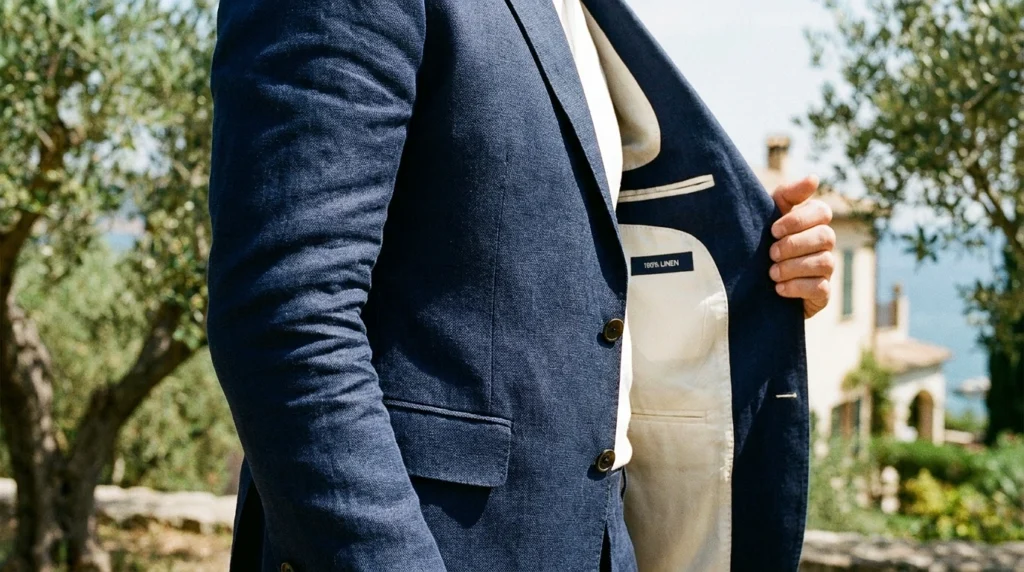
Linen is linen. It creases because the fibers are stiff and inelastic, and a fine Italian linen creases exactly as enthusiastically as a cheap one. The luxury version has a nicer hand and drapes better on the rack. Forty-five minutes into a hot afternoon, both are rumpled, and the rumpling is arguably the point, since a crisp linen jacket looks like it’s trying too hard anyway.
Where the cheap end genuinely loses is in blends. A linen-poly blend wrinkles less, which is why it exists, and it traps heat, which is why you’ll regret it. So the actual rule has nothing to do with price:
- Buy full linen or a linen-cotton blend, at any price point. It’ll crease. Let it.
- Avoid anything with meaningful polyester content, no matter how good the drape looks indoors under store lighting.
- Unlined or half-lined only. A full canvas lining is the single biggest thing standing between you and comfort, and plenty of expensive jackets have one.
That last point is worth sitting on. A cheap deconstructed jacket, with no lining and no shoulder padding, is more comfortable in ninety-degree heat than an expensive fully-canvassed one built for a London autumn. You can pay more to be hotter. Many people do.
Chinos, And The Great Open-Shirt Equalizer
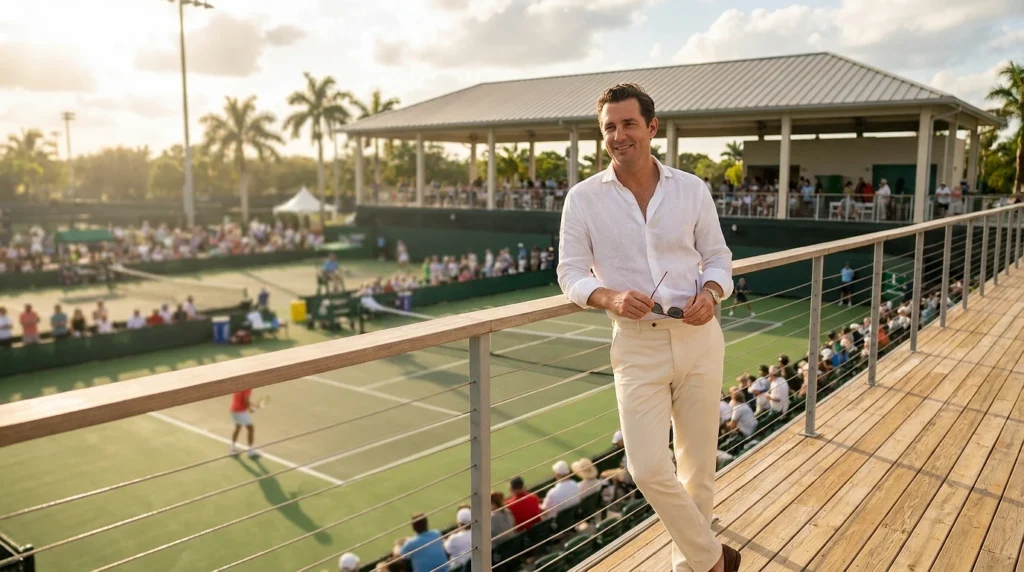
Nobody at a tennis event is examining the stitch density of your trousers. Cream or white chinos in a light cotton twill cost thirty dollars or two hundred and photograph identically from more than four feet away, which is every distance anyone will ever see you from.
The open shirt is the same story. The draft advice to lose the tie is correct, and once the tie is gone you have removed the one garment where quality is genuinely visible at a glance. An open collar is an open collar. The expensive shirt has a nicer collar roll. Nobody has ever noticed a collar roll from across a viewing deck.
What actually reads at a distance is fit, contrast, and whether you look comfortable. A well-fitting cheap outfit beats a badly fitting expensive one every single time, and tailoring a thirty-dollar pair of chinos costs twenty dollars and buys you more than three hundred dollars of brand does. If you’re building a warm-weather event wardrobe on a budget, that’s the whole trick, spend on the alteration, not the label.
Sunglasses Are Where The Pricing Gets Genuinely Strange
Now the item that made me stop trusting price as a signal at all.
Ray-Ban is owned by EssilorLuxottica, the same conglomerate that manufactures eyewear under license for a long list of fashion houses. So a pair of designer sunglasses and a pair of Ray-Bans can come out of related manufacturing, with the difference in price sitting mostly in the name on the temple. That’s not a conspiracy theory, it’s the structure of the industry.
Meanwhile a smaller independent like Garrett Leight is charging a few hundred dollars for something with genuinely better acetate and hand-finishing, which is a real thing you are buying, though whether you can perceive it while squinting at a tiebreak is your call.
Here’s what the money should be buying: lens quality, polarization, and actual UV protection. Those are physical properties, they are cheap to manufacture correctly, and a well-made thirty-dollar pair of polarized tortoiseshell frames protects your eyes exactly as well as a four-hundred-dollar pair. What you pay extra for is the frame material, the finishing, and the name. All legitimate things to want. None of them help you see the ball.
Where The Money Is Actually Worth Spending
I said I’d concede, and here it is, because a value argument that admits nothing is just contrarianism.
Shoes, And It Isn’t Close
This is the one. A pair of Edward Green loafers is a four-figure proposition and it is, unlike everything above, buying you something structural. Goodyear-welted construction means the shoe can be resoled, repeatedly, for decades. The leather is better and it ages rather than degrades. The last is shaped by people who understand feet.
Contrast that with a white sneaker. Common Projects are lovely and cost several hundred dollars, and here is the uncomfortable truth about them at an outdoor summer event: white leather sneakers scuff, crease across the toe box, and yellow, and they do this at every price. A sixty-dollar white sneaker and a four-hundred-dollar one both look destroyed after two seasons of real wear. The expensive one just makes you sadder about it.
So if you’re allocating one splurge in this outfit, put it in leather-soled shoes you’ll wear for fifteen years, not in sneakers that are a consumable.
Fit, Which Isn’t A Purchase At All
The other real investment is a tailor, and it costs almost nothing relative to what it returns. Sleeve length. Trouser break. A jacket that actually sits on your shoulder. These are the things the eye registers instantly and the things no amount of spending fixes on its own.
What I’d Actually Wear
Sixty dollars of unlined linen-cotton jacket, tailored. Thirty dollars of white chinos, hemmed properly. An open shirt in whatever cotton doesn’t cling. Polarized tortoiseshell frames from anywhere reputable. And one genuinely good pair of loafers that outlives all of it.
The no-socks thing, which every summer style guide insists on, I’ll admit I have never fully made peace with. It looks right in photographs and feels wrong by hour four, and I have no solution to offer beyond loafer socks and a certain amount of quiet suffering.
None of this is really about money. It’s that outdoor events in the heat punish exactly the qualities expensive tailoring is built to deliver, structure, lining, crispness, and reward the ones cheap clothes accidentally have, which is lightness and the freedom not to care what happens to them. The man who spent three hundred dollars is protecting an investment all afternoon. The man who spent sixty is watching the tennis.

