


Picture the kitchen at the end of a long day. You ask your kid to go grab their shoes, and you get nothing back, a blank look, a slow blink, maybe a “huh?” So you ask again, louder, and now it’s an argument, and somewhere in your head the familiar thought lands this child does not listen. I’ve watched enough of these standoffs, and been inside plenty of them, to tell you the thought is almost always wrong, or at least aimed at the wrong person.
Because there’s a small, unglamorous piece of research from the 1970s that reframes the whole thing, and once you know it you can’t unsee it. The problem in that kitchen usually isn’t the child’s ears. It’s the gap, or the lack of one, between when you stop talking and when you expect them to perform. The fix is close to free and it takes about three seconds. Let me walk you through where that number comes from and why it changes what “teaching listening” even means.
The Number That Started It: Less Than One Second
In 1972 an education researcher named Mary Budd Rowe sat with recordings of classrooms and timed something nobody had bothered to measure. How long does a teacher actually wait, after asking a question, before jumping in, rephrasing, or calling on someone else? The answer was startling in how small it was. On average, under one second. Less than a second of silence, and then the adult fills it.
Rowe was studying elementary science teachers, and I want to be upfront that this was classroom research, not a study of parents at home. But the mechanism she uncovered is about how young brains handle a question, and that doesn’t clock out when the kid leaves school. What she found when she got teachers to simply wait longer, to hold the silence to at least three seconds, was not a small polite improvement. It was a different child talking.
What Three Seconds Of Silence Actually Did To Kids
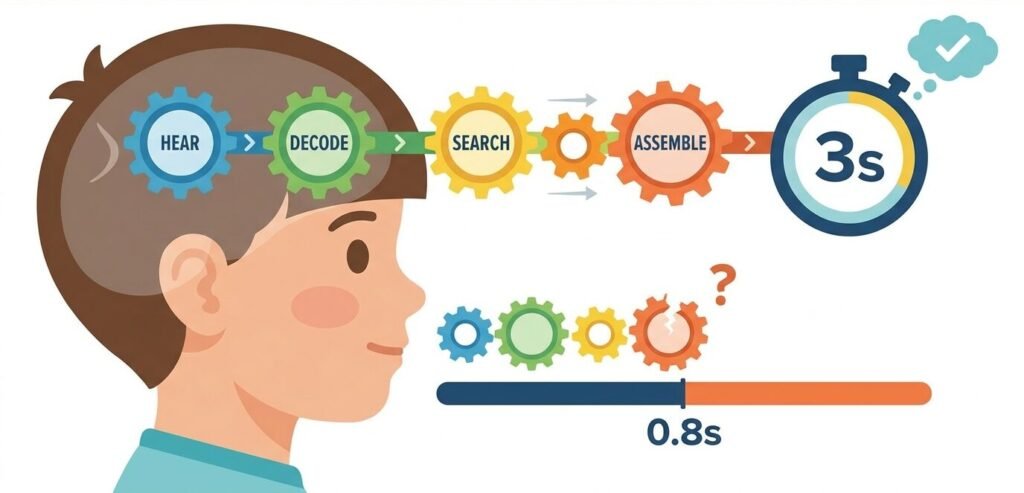
Here’s the part that made me sit up, because the effect sizes are not subtle. When the wait stretched to three seconds or more, children’s answers got longer by somewhere between 300 and 700 percent. Not thirty percent. Three to seven times more language coming out of the same kid, in response to the same question, with the only change being the adult shutting up for a couple extra beats.
And length was the least of it. The answers got better, not just bigger. Kids offered more reasoning, more “I think this because,” more guesses they were willing to float out loud. The number of times a child just said “I don’t know” or gave nothing back dropped. Children who barely spoke started volunteering answers nobody asked them for. Rowe even found a threshold hiding in the data the good stuff really kicked in once the wait crossed about 2.7 seconds, and shorter pauses gave you much smaller gains. There’s something close to a physical minimum here, a floor below which the brain simply hasn’t finished the work.
Think about what that silence is actually for. You ask a question. The child has to hear it, decode what you meant, search for an answer, and assemble it into words. That’s four jobs, and a young brain runs them slower than yours. When you refill the silence after eight-tenths of a second, you don’t get a faster answer. You interrupt the assembly line, and what looks like “not listening” is really a kid who got cut off mid-thought, every single time, until they stopped bothering to start.
There Are Two Pauses, And Parents Blow Right Past The Second One
Most people who hear about wait-time only hear about half of it. Rowe actually named two separate pauses, and the one everybody forgets is the one that matters most at home.
The first pause is the obvious one: the gap after you ask, before they answer. The second pause is the gap after your child finishes talking, before you jump back in. Rowe found adults were just as guilty here, reacting or firing the next question within about nine-tenths of a second of the kid going quiet. And that second pause is where a child decides whether it’s safe to keep going, to add the thought they hadn’t quite finished, to say the slightly braver thing. Slam the silence shut the instant they pause for breath and you teach them that talking to you is a race. Leave it open and they’ll often keep going on their own and tell you the thing that actually mattered, which was usually coming three seconds later.
I’d argue this second pause is the whole ballgame for the parent who feels like their kid never opens up. It’s not that the child has nothing to say. It’s that you keep, with love and impatience, closing the door a second before they walk through it.
Why “Make Eye Contact And Say Their Name” Isn’t Wrong
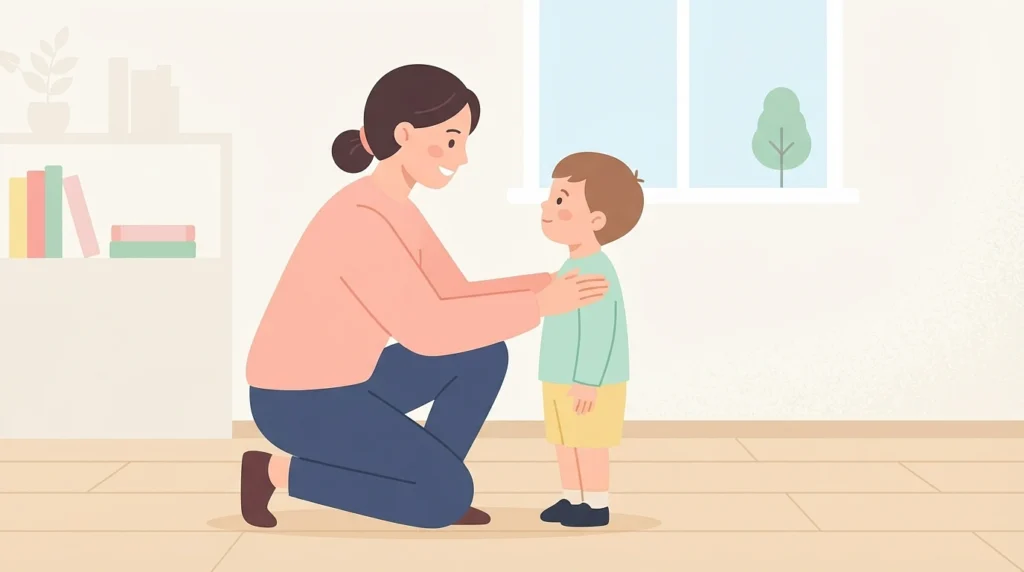
The advice you usually get about kids and listening is a checklist, and the original version of this article had a perfectly decent one: model good listening, stop what you’re doing, make eye contact, use their name, get them seated, check what they heard, praise the effort. None of that is bad. Modeling especially is real, kids do learn listening by watching you do it, and getting down to their eye level genuinely helps a small child tune in.
But notice that almost all of it is about getting the child ready to receive, and almost none of it is about what you do with silence once you’ve asked something. That’s the missing gear. You can make flawless eye contact, say the name, get the kid seated, and then still torpedo the whole thing by expecting an answer in under a second and treating the pause as defiance. The checklist prepares the runway. Wait-time is whether you actually let the plane take off.
There’s a nice piece of overlap worth naming, too. When you hold that three-second silence, you are modeling exactly the patience you want back from them. A kid who is given time to think grows up to give time to think, and good listening habits turn out to be mostly a matter of not rushing, on both ends of the conversation.
What To Actually Try Tonight
If you want to test this, and I’d genuinely encourage it because the payoff shows up fast, keep it simple. This isn’t a program, it’s a habit, and the habit is mostly about your mouth staying closed a little longer.
- Ask your question, then count three slow seconds in your head before you say anything else. It’ll feel absurdly long the first few times. That feeling is the whole problem, made visible.
- When your child stops talking, wait again before you respond. Let the silence sit. Nine times out of ten they’ll fill it themselves with the better thought.
- Resist the reflex to rephrase. Repeating the question a different way just restarts their clock and cuts off the answer already forming.
- If they truly didn’t process it, then repeat it, calmly, once, and wait again. Slower, not louder.
The thing I keep coming back to is how badly we’ve labeled this. We call it a listening problem and pin it on the kid, when a big share of the time it’s a waiting problem and it belongs to the adult. Rowe’s own phrase for what she found was that slowing down was a way of speeding up, and that’s about the least intuitive, most useful thing I know about talking to children. The three seconds you think you don’t have are the three seconds that get you the answer you were rushing toward the whole time.

