


A spilled drum at the receiving doors puts a business on a clock before anyone has picked up a mop. The state wants to hear about 10 gallons or more of oil within two hours, so somebody ends up on the phone to MassDEP while the forklifts are still parked and trailers are backing up in the yard.
Ten Gallons Of Oil Gives A Massachusetts Site Two Hours To Report
The figure comes from the state’s Oil and Hazardous Material List, which sets a reportable quantity for each substance. The two hours start once the person in charge knows about the release. Oil running into a storm drain counts too.
MassDEP does follow up on late reports. It fined two companies over a gasoline release at a Northampton convenience store, roughly 30 gallons, because the notice came in after the deadline.
Whether a given spill crosses the line is honestly hard to judge by eye, a 55-gallon drum on its side might lose five gallons or forty, which is one reason sites bring in outside help early.
Forklifts Stay Parked OSHA Wants The Hazard Fix Before Anyone Uses The Floor
Federal rules cover the floor itself. OSHA’s walking-working surfaces standard lists leaks and spills among the hazards an employer has to keep off it, and once a surface is hazardous it has to be corrected before an employee uses it again. So a supervisor who cones off the bay is following the standard, whatever the dispatcher thinks about it.
A Split Drum Or Anything With Fumes Goes To An Outside Crew
OSHA has no gallon number for when staff should stop and hand over. Its letter on incidental releases puts it in terms of hazard: if the people working right there can soak it up safely, it’s incidental, but if help has to come from outside the area or the building has to clear out, you’re into emergency response and a different set of training requirements.
In practice a drip under a pallet jack gets the spill kit. Bigger than that, or unlabeled, or smelly, and most supervisors would rather pay for a crew than guess. People who’ve sat through proper safety and risk training seem more willing to stop work, probably because someone has told them out loud it’s allowed.
The Crew Blocks The Drains First And Keeps The Other Doors Loading
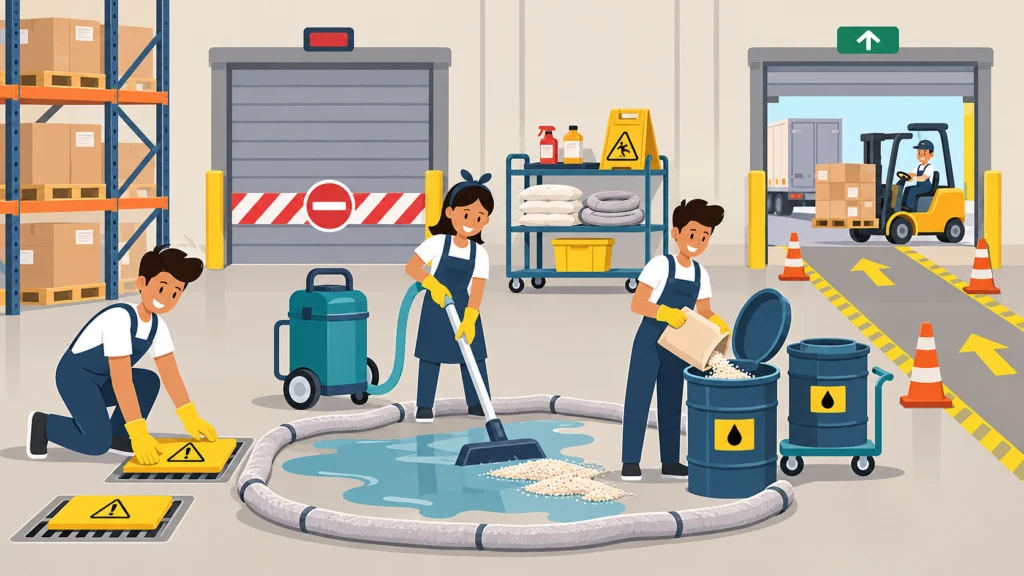
Cleaning comes second. A crew arriving at a live spill usually starts with:
- Drain covers or dams on the nearest floor and storm drains.
- Absorbent socks around the edge of the liquid.
- A marked forklift route so the unaffected bays keep moving freight.
- A vacuum unit or loose absorbent for the bulk of it, with the waste going into drums.
The forklift route is the piece operations people care about, because losing one door for an afternoon is survivable but oil carried down the main aisle on tires turns into detention charges and overtime, which is the sort of margin leak project accounting exists to catch.
High-Pressure Water Gets Out The Oil Film Absorbent Leaves In The Concrete
Concrete soaks things up. After an hour or so some of the oil is below the surface, so pads and granules clear what’s pooled and you’re left with a dark patch, a bit shiny, which a loaded forklift will slide on. Sites often go at it with degreaser and a floor scrubber. It sort of works, but now there’s chemical rinse water to deal with as well.
The cleaner method is water at very high pressure, hydroblasting, and it’s the stage where a specialist crew is worth the money. The jet lifts residue out of the pores with no chemicals and no abrasive dust, and the operator can drop the pressure so the slab isn’t chewed up. New Hampshire is better off with one of the hydroblasting companies already saved in the emergency contacts, a crew that picks up at 2 a.m. and brings its own vacuum recovery.
Epoxy-coated floors are a separate question, by the way. The same equipment at full pressure is used to strip coatings, so it’s worth asking the crew what pressure they plan to run.
Recovery is the bit people forget. Oily blast water can’t go out the door or down a drain, because then the cleanup is the release and the two-hour rule applies to it. The water is vacuumed up and hauled away as waste.
Reopening Takes A Dry Floor, A Test Pass And A Short Written Record
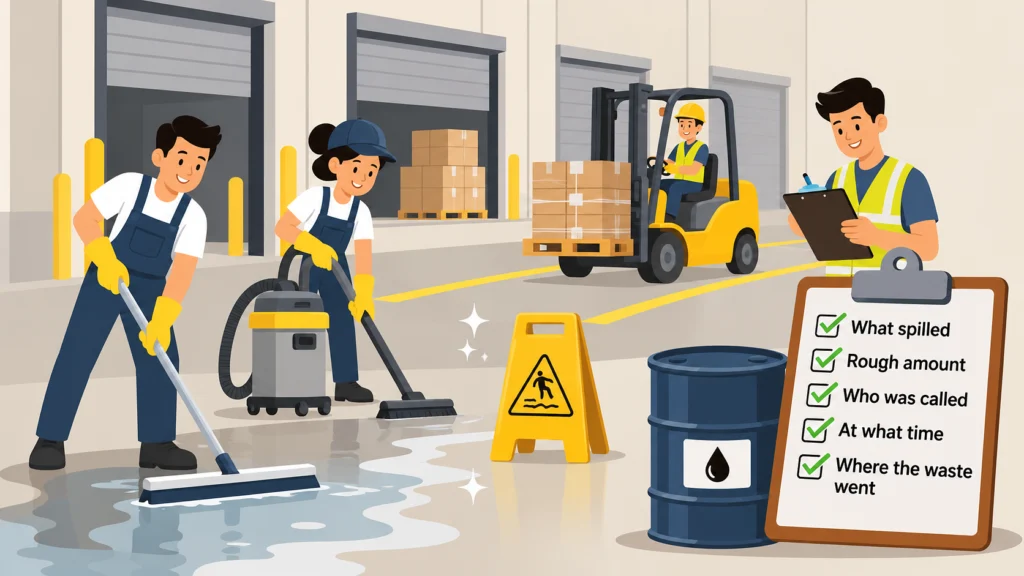
Wet concrete is slippery too, so the approach gets squeegeed and vacuumed and left to dry before the cones come up. A supervisor walks it. A forklift does a slow pass with a load.
Then the paperwork, which is short and gets skipped a lot: what spilled, roughly how much, who was called and at what time, where the waste went. MassDEP may ask and the insurer will. It also belongs with the rest of the building’s routine upkeep, since a spill record tends to point at something fixable like a cracked pallet or a drain with no cover.
Finding a contractor while oil is still moving across the floor is a bad way to shop. Probably the cheapest preparation a site can do is choose one in a quiet week and tape the number up by the dock office.

