


Almost nothing in surgery lets you test-drive it first. You can’t trial a knee replacement. You can’t take a spinal fusion home for the weekend and return it Monday if it disappoints. Spinal cord stimulation is the strange exception, a treatment with a built-in audition, and that one detail changes the entire way you should think about it.
The device itself is a small implanted generator, cousin to a pacemaker, feeding thin electrode leads placed in the epidural space along the spinal cord. Mild electrical pulses interfere with chronic pain signals traveling up to the brain, either replacing pain with a tingling sensation in older systems or, in newer high-frequency systems, dampening the signal with no sensation at all. It’s aimed at nerve pain that has outlasted everything else, most commonly the leg and back pain that persists after spine surgery, complex regional pain syndrome, and more recently painful diabetic neuropathy. For people in that situation, often years deep into failed treatments, the pitch sounds miraculous. Which is exactly why the honest version of this article has to include a study that landed like a grenade in 2022. We’ll get there. Trial week first, because everything runs through it.
The Audition: Temporary Leads, Your Real Life, One To Two Weeks
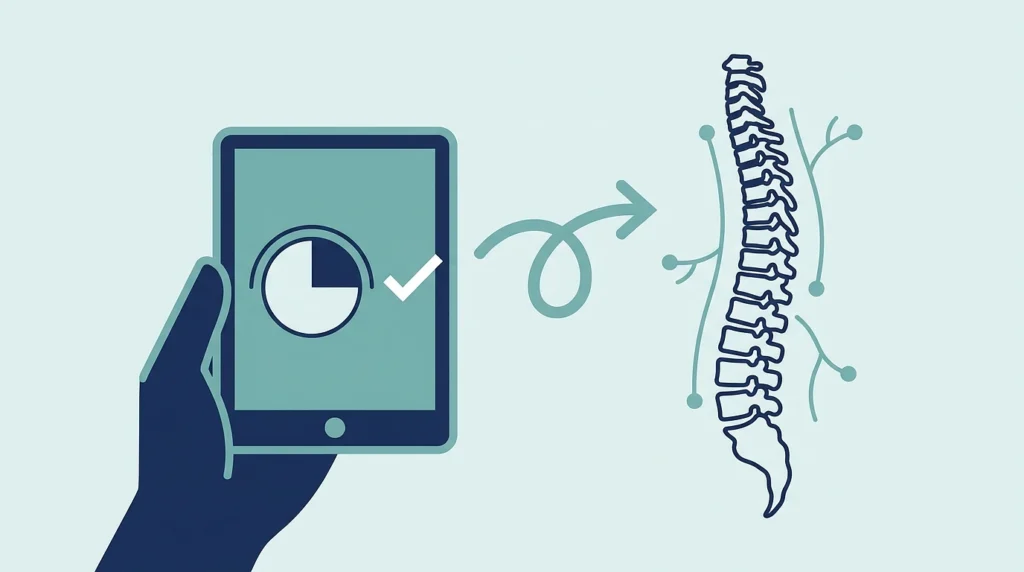
Before anyone implants anything permanent, a pain specialist threads temporary leads through a needle into the epidural space, tapes the wires to your back, and hands you an external stimulator about the size of a phone. No generator implanted, no incisions beyond the needle sites. Then you go live your actual life for roughly five to ten days. Sleep in your bed. Sit through your commute. Do the dishes. The whole point is testing the device against your pain in your world, not in a clinic hallway.
The scorecard is blunt and standardized: the trial counts as a success if your pain drops by at least 50%. That’s the threshold the field uses, it’s the responder definition in the major trials, and it’s what insurers generally require before paying for the permanent implant. Keep a simple pain diary during the week, because “I think it helped some” is not a number, and this decision deserves a number.
Here’s my strong opinion, and it cuts against the sales-y framing you’ll meet in some device brochures: a so-so trial is a no. The trial week is the best this therapy will ever be presented to you, you’re attentive, hopeful, and the leads are freshly placed. If that week produces 30% relief and a shrug, the permanent implant will not outperform it. The gift of the audition is permission to walk away cheaply, and people squander that gift by rounding a maybe up to a yes. In the largest randomized trial in the field’s history, 171 of 198 randomized patients passed the temporary trial and went on to implant, which tells you trials pass more often than not, and tells you the real filtering has to happen in how honestly you and your doctor read your own diary.
The Relief Numbers, Best Case And Fine Print Together
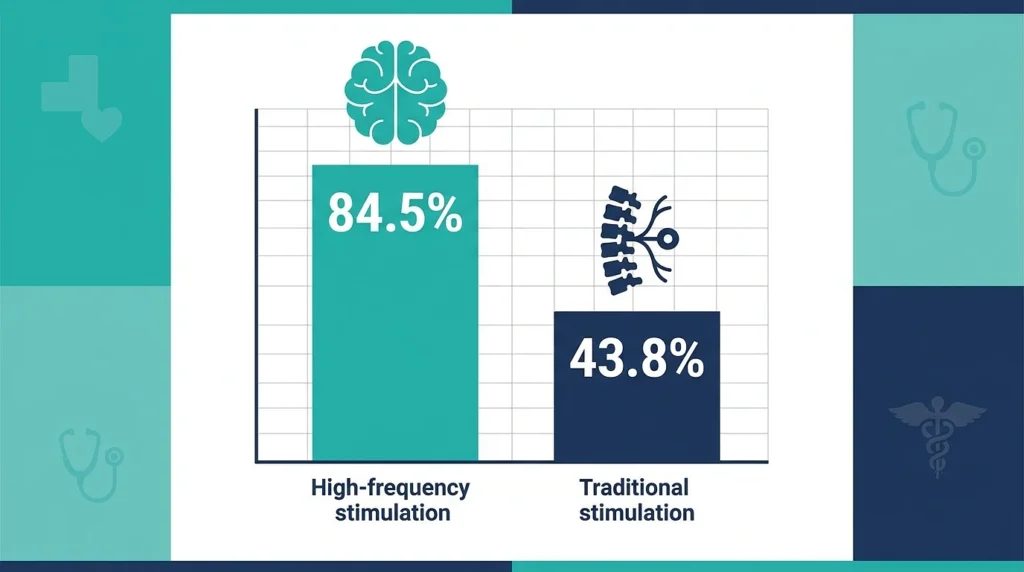
The headline trial is SENZA-RCT, published in Anesthesiology in 2015, which randomized 198 patients with chronic back and leg pain between high-frequency 10 kHz stimulation and traditional stimulation. At three months, 84.5% of the implanted high-frequency patients were responders for back pain, meaning at least half their pain gone, versus 43.8% with the traditional system, and the advantage held through two years of follow-up. Those are genuinely striking numbers for a population that had already failed years of treatment.
Now the fine print, and I’d want it read to me before anyone touched my spine. SENZA was funded by Nevro, the company that makes the high-frequency device, with a disclosure section listing company fees to a long roster of the study’s own physicians. That doesn’t make the data false. It makes it data with a rooting interest, and a broader review of the field found responder rates across studies ranging anywhere from 14% to 80%, which is the statistical way of saying results vary enormously by patient, device, and study quality. Even the field’s own journal has acknowledged the awkward truth that the SCS evidence base is largely industry-supported and open-label, meaning patients knew they were being treated, which inflates results for anything measured by self-report. And pain is measured by self-report.
Then 2022 happened. Norwegian researchers ran the kind of study the field had mostly avoided, a rigorously blinded crossover trial where implanted patients received periods of burst stimulation and periods of placebo stimulation without knowing which was which. Published in JAMA, it found no meaningful difference in disability between real and sham stimulation in patients with chronic radicular pain after spine surgery. The pain-medicine establishment responded with a volley of angry letters raising fair methodological objections, the trial used burst mode, selected patients unusually, and measured disability rather than pain as its primary outcome. The objections have merit. So does the study. A blinded trial failing where unblinded trials succeed is a pattern that shows up when part of a treatment’s benefit is expectation, and anyone considering a spinal implant deserves to know that fight is happening, not just the 84.5% from the brochure.
What do you do with contradictory evidence like this, practically? You lean even harder on the one experiment nobody can argue with: your own trial week. Whatever the journals are fighting about, a 60% drop in your pain diary during your audition is yours.
Who It’s Actually For, And The Exclusions That Get Skipped In The Ads
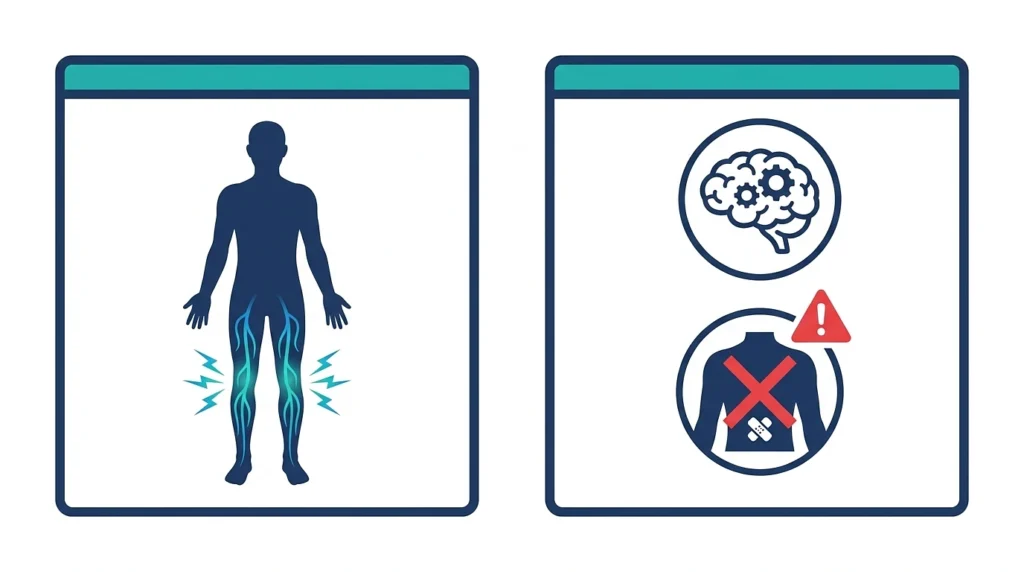
The honest candidate profile is narrow. This is a therapy for:
- Nerve-type pain, burning, shooting, electric, especially persistent leg pain after spine surgery. Mechanical “my disc is crushing a nerve right now” pain needs a surgeon, not a stimulator.
- People who’ve genuinely exhausted conservative care, medications, therapy, injections, over at least six months, usually longer.
- Painful diabetic neuropathy and complex regional pain syndrome, both FDA-recognized indications with their own trial data.
- People cleared by a psychological evaluation, which insurers require not as an insult but because untreated depression and catastrophizing measurably predict poor implant outcomes.
Who it isn’t for gets less airtime. Active infection, certain need for future MRIs depending on device compatibility, untreated bleeding disorders, and, softest but most important, people whose pain is primarily driven by unaddressed depression, active substance use disorder, or an unresolved surgical problem. A decent pain physician screens for all of this, which is why the right specialist matters more than the right brand of device, and why the whole decision, trial included, is a partnership with that physician rather than a purchase.
Two last realities for the ledger. This is still surgery, with surgery’s risks, lead migration, infection, hardware pain over the generator pocket, and a revision or removal procedure in a meaningful minority of patients over the years, so “reversible” is true but not free. And relief tends to soften over time for some patients, which is why the realistic goal is a manageable life with less medication, not a cure.
If I had the kind of pain that puts spinal cord stimulation on the table, here’s exactly what I’d do with everything above. Take the trial. Keep the diary like a fanatic. Set the bar at 50% before the leads go in, tell the doctor the bar out loud so nobody negotiates it downward afterward, and treat anything under it as the device answering the question for me. The audition is the one piece of this therapy with no controversy attached. Use it ruthlessly.

