


A bathroom basin is the bowl you wash your hands and face in, with a tap above it and a drain below it. In the US the same thing is called a bathroom sink. In the UK, Australia and New Zealand it is a basin, and the trade in most countries calls it a basin too, so the word is worth knowing before you start shopping, because the catalogs and the plumber will both use it.
That is the definition. What makes it harder is that there are about 7 kinds, they are sold by how they fix to the wall or the furniture rather than by how they look, and in a small bathroom the kind you pick decides whether the door still opens and whether anyone can stand at the toilet.
This post goes through the kinds, the 3 measurements to take before looking at any of them, and the mistakes that are common in small bathrooms, in particular the bowl on top of the counter that puts the rim at chest height. Sizes are in millimeters because that is how basins are sold everywhere outside the US, with inches given where it helps.
The Kinds Of Basin, Sorted By How They Mount
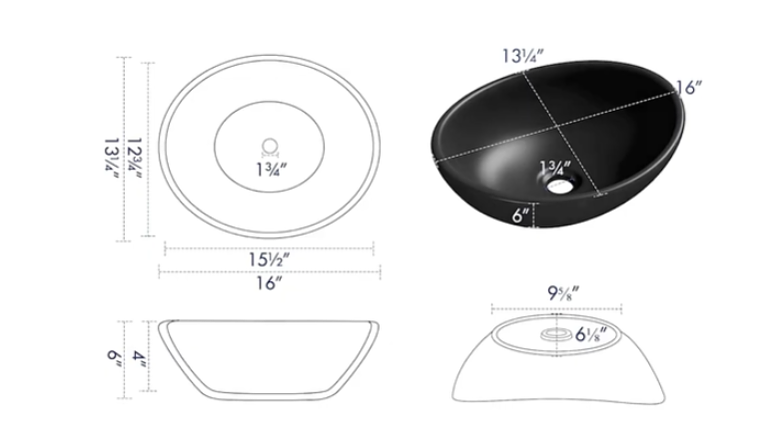
Bathroom suppliers do not sort basins by style. They sort them by how the basin is fixed, and once you know that, a catalog page makes sense. A supplier’s bathroom basin range, for example, is split into wall basins, vessel basins, semi recessed, inset, undermount, freestanding and vanity basins, and nearly every maker uses the same 7 words or close to them.
- A wall hung basin is bolted straight to the wall, with nothing underneath it except the trap and the pipe. The smallest ones are called cloakroom basins and run 360 to 500 mm wide.
- A pedestal basin is a wall hung basin with a ceramic column under it that hides the pipework. The column takes floor space and you cannot put anything under it.
- A semi recessed basin sits in a shallow cabinet with the front of the bowl sticking out past the cabinet door by 100 to 200 mm. It is made for cabinets that are only 380 to 450 mm deep.
- An inset basin drops into a hole cut in a countertop, with a rim sitting on the top. It is also called a drop in.
- An undermount basin is fixed under the countertop so the stone or solid surface runs over the edge of the bowl. It needs a top that can take a cut edge, so not laminate.
- A vessel basin is a whole bowl sitting on top of the counter like a dish. It is also sold as a countertop basin or an above counter basin.
- A freestanding basin is a one piece pedestal and bowl standing on the floor on its own, usually in stone or solid surface, and usually the dearest option.
There is also the corner basin, which is a wall hung basin shaped to fit into the join of two walls, and it only really exists for the smallest rooms.
The 3 Measurements To Take Before Looking At Any Basin
Measure first, then shop. Most basin returns happen because the basin was picked from a picture and then did not fit, and in a small bathroom the margins are tight enough that 50 mm matters.
First, the wall width. Measure the stretch of wall the basin can go on, from the corner or the edge of the toilet cistern to the door frame or whatever else is in the way. That number is the widest basin you can have, and in practice you want the basin 50 to 100 mm narrower than it so there is room to clean beside it.
Second, the projection. Stand at the wall and measure out to the nearest thing in front of it, which is usually the toilet pan, the shower screen or the swing of the door. The basin’s projection, meaning how far it comes out from the wall, has to be less than that number with enough left over to stand in. For a small bathroom the projection is the number that matters most, more than the width, because a basin that is too wide looks big and a basin that comes out too far stops the door. Cloakroom basins are built around this and most of them project 250 to 310 mm. A standard basin is 450 to 550 mm.
Third, the waste. Measure from the floor to the center of the waste pipe coming out of the wall or the floor, and note whether it is in the wall or in the floor. A wall hung basin needs the pipe at roughly the right height or the plumber will have to move it, and moving a waste pipe can cost more than the basin.
Write the 3 numbers on your phone before going anywhere near a showroom, and take a photo of the wall with the tape in it, because the salesperson will ask.
Which Kinds Fit A Small Bathroom
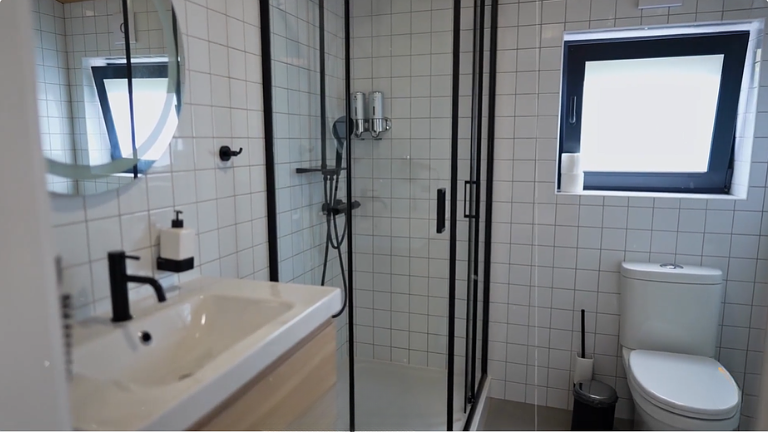
With the 3 numbers in hand, most of the 7 kinds rule themselves out.
Wall Hung Is The Usual Answer
For a bathroom under about 3 square meters, or a separate toilet, the wall hung cloakroom basin is what most plumbers will suggest, and they are right. It is the smallest footprint there is, there is floor showing under it, which makes the room look bigger than it is, and the floor can be mopped right to the wall. A 400 mm wide one with a 300 mm projection is the common size. The pipework is on show underneath, so you buy a bottle trap in chrome or black instead of the plain plastic one, and that is about $30 to $50 extra.
Semi Recessed If Storage Is Needed
If there has to be a cupboard, because the toilet paper and the cleaning things have to live somewhere, the semi recessed basin on a shallow cabinet is the way to get one. A normal vanity is 500 to 550 mm deep. A semi recessed basin goes on a cabinet 380 to 450 mm deep and the bowl pokes out the front, so you keep a full size bowl and lose 100 mm or so of floor space to the cabinet. In a narrow room that 100 mm is the difference between the door clearing the vanity and not.
Corner Basin For The Rooms With No Wall
Some downstairs toilets have no stretch of wall long enough for anything. The corner basin sits in the join of two walls, is usually 300 to 350 mm along each wall, and is enough to wash hands in and not much else. It is a last resort, and it does the job.
The Ones That Do Not Fit
A pedestal basin takes the same floor as a small cabinet and gives no storage back, so it loses to both wall hung and semi recessed in a small room. A freestanding basin needs air around it to look like anything, and a small bathroom has none. Inset and undermount basins need a counter, and a counter needs a cabinet of normal depth, which brings you back to the projection problem. They are all fine basins for a bathroom with the room for them.
Tap Holes, The Overflow And The Trap
A basin is sold without a tap, without a waste and without a trap. That surprises people the first time. The basin is the bowl only, and the 3 other things are bought separately, which is why the price on the box is lower than the price of a working basin.
Tap holes come 3 ways. One hole takes a mixer, which is one tap body with hot and cold in it, and that is what nearly every small basin has. Two holes take a pair of pillar taps, one hot and one cold, which is the traditional look. No hole means the tap comes out of the wall above the basin, which looks clean and gives more room on the rim, but the plumbing has to be in the wall before the tiling goes on, so it is a renovation decision, not a replacement decision.
Check the tap hole count on the basin before buying the tap, because a 2 hole basin cannot take a mixer and a 1 hole basin cannot take pillar taps, and neither mistake can be fixed.
The overflow is the small hole near the top of the bowl at the back. It lets water out before it goes over the rim if the tap is left running with the plug in. Most basins have one. Some vessel basins do not, and a basin with no overflow needs a waste with no overflow slot or it will leak at the join, so the two have to match.
The trap is the bend of pipe under the basin that holds water and stops smells coming up from the drain. Under a cabinet it is hidden and the cheap plastic one is fine. Under a wall hung basin it is on show, and a bottle trap, which is a short straight cylinder, looks better than the plastic U bend and costs $30 to $50 in chrome. Basins outside the US take a 32 mm or 40 mm waste, and the trap has to match that too.
What Basins Are Made Of
Nearly all of them are vitreous china, which is clay fired with a glass glaze over it. It is the white glossy material every bathroom has had for 100 years, and the reason it is still used is that it does not stain, does not scratch in normal use and wipes clean with anything. For a small bathroom that gets used by the whole house, china is the sensible answer and it is also the cheapest.
The other materials are solid surface, which is a resin and mineral mix that can be made in a matte white and feels a little warmer to the touch, natural stone, which is heavy and needs sealing, and concrete and metal, which are showroom materials more than small bathroom materials. Suppliers list all of them, and the stone and concrete ones are mostly in the freestanding and vessel ranges, which are the two kinds that do not fit a small room anyway.
One thing on glaze. A cheap china basin and a dear china basin look the same in the box. The difference shows in a year, when the cheap glaze starts to hold a tide mark around the waste that will not scrub off. If the budget has to go somewhere, it goes on the basin and not on the tap, because the tap can be changed in an afternoon and the basin cannot.
Rim Height, And The Vessel Basin Mistake
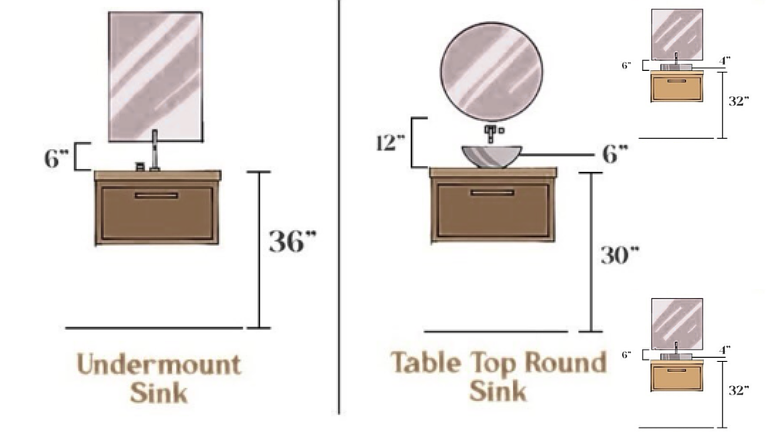
The rim of a basin should sit at about 800 to 850 mm off the floor, which is 32 to 34 inches, and a bit higher if everyone in the house is tall. That is where a wall hung basin gets fixed and it is the height a standard vanity puts an inset basin at.
The vessel basin is where this goes wrong in small bathrooms, and it goes wrong often enough to be worth its own section. A vessel basin sits on top of the counter, so it adds its own height, usually 120 to 180 mm, to the counter height. Put a vessel on a standard 850 mm vanity and the rim is at 970 to 1,030 mm, which is chest height for a lot of adults and out of reach for a child. A vessel basin needs a vanity that is 120 to 180 mm lower than normal, around 700 mm, and most off the shelf small vanities are not made that low. That is the real reason the vessel basin is a poor fit in a small bathroom, more than the look. It also needs a tall tap or a wall tap to clear the bowl, which is another cost.
If the vessel look is the one you want, the answer is a semi recessed basin with a raised front edge, which gives something of the same shape at normal height, or a low vanity made to measure. Either way, the rim height is measured before the basin is ordered, not after.
What To Order With The Basin
So the order for a small bathroom basin is the basin itself, usually a wall hung or semi recessed one in china, plus 4 other things that do not come in the box.
- The tap, matched to the number of holes in the basin.
- The waste, with or without an overflow slot to match the basin.
- The trap, a bottle trap if it will be seen, the plain plastic one if it will not.
- The fixing kit for a wall hung basin, which is 2 bolts and 2 wall plugs, and heavier duty ones for a plasterboard wall.
Most suppliers will put all of that in one order if asked, and it is easier than finding out on the Saturday the plumber comes that the waste is the wrong kind.
The same measure first habit carries over to the rest of a small house, and the kitchen is where it matters next. There is a post on this site on the layout rules for a small kitchen that works the same way, clearances first, then the fittings. For the bathroom, the 3 numbers, the wall width, the projection and the waste height, decide the basin, so take them before opening a catalog.

