


Buying cabinets directly from a manufacturer gives homeowners and builders more control over design, materials, and pricing. This direct approach removes retail markups and allows a closer connection to the production process. It offers an opportunity to get custom-quality cabinets at a fair price while maintaining oversight of each stage, from design to delivery.
Understanding what to expect before starting helps prevent delays and quality issues. The process often includes detailed specifications, contract discussions, quality checks, and coordination for shipping. With the right preparation, this method can balance savings and craftsmanship in a practical way.
Detailed specifications and shop drawings are required to guarantee the manufacturer meets your design needs
Clear and accurate cabinet specifications help avoid delays and misunderstandings during production. Buyers should expect manufacturers of wholesale kitchen cabinets to request detailed information about measurements, finishes, and materials before work begins. These details guide how each piece is built and assembled.
- Shop drawings act as a visual confirmation of these details.
- They show exact dimensions, layouts, and hardware placement so both the buyer and the manufacturer can confirm the design before fabrication.
- This step helps detect issues early and reduces the risk of costly changes during installation.
Precise drawings also help align the manufacturer’s capabilities with the buyer’s expectations. Contractors and designers rely on them to verify that cabinets will fit correctly within the planned space. As a result, proper specifications and approved shop drawings support a smoother project and consistent product quality.
Why buying cabinets is an important choice
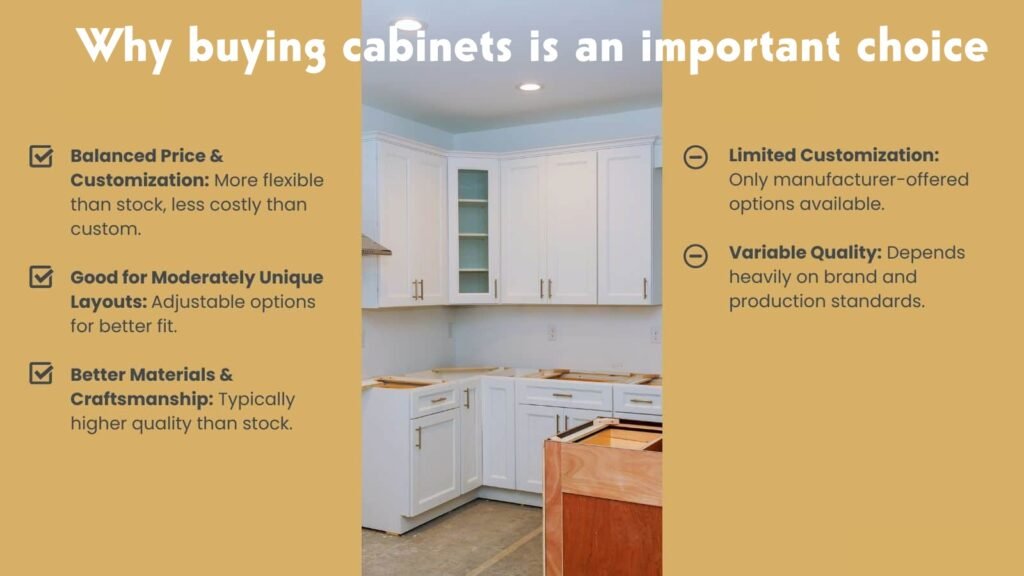
Buying cabinets isn’t just fun choices of color or style.
It’s about construction, material, layout, and what kind of experience you want during installation and beyond.
This matters now because:
- Renovation costs are high.
- Lead times fluctuate.
- And not all cabinet options are equal in durability or service.
If you want to avoid delays, regrets, or overspending, you need to go into the process informed.
This guide walks you through what to expect when you buy cabinets and how to make smart decisions without second-guessing yourself.
Expect to negotiate production contracts, including pricing, minimum order quantities, and lead times
Buyers who work directly with a cabinet manufacturer should prepare to discuss pricing. Manufacturers often base costs on material choice, design complexity, and order volume. A clear understanding of these factors helps the buyer request fair terms and compare quotes accurately.
Minimum order quantities, often called MOQs, form another part of the negotiation. Factories usually set MOQs to manage production costs efficiently. However, a buyer may ask for a lower MOQ by showing a plan for future orders or adjusting product features that reduce setup costs.
Types of Kitchen Cabinets
Framed vs. Frameless Cabinets
Framed cabinets have a front frame for added stability and a traditional look. Frameless cabinets, offering a modern design, lack the frame, allowing more storage space but requiring precise installation.
Flat-Pack Cabinets
Ready-to-assemble (RTA) flat-pack cabinets are pre-cut and easy to ship, making them affordable and DIY-friendly. However, assembly quality can vary based on the installer’s skill.
Custom Cabinets
Custom cabinets are made to fit your kitchen’s exact dimensions, offering high personalization. While pricier, they are perfect for unique designs or challenging layouts.
Inset vs. Overlay Cabinets
Inset cabinets have doors inside the frame for a flush look, while overlay cabinets have doors that rest on top of the frame, offering different aesthetics and functional benefits based on your style and kitchen layout.
Quality control involves arranging inspections during manufacturing to maintain standards
Manufacturers use quality control to confirm that each cabinet meets set specifications. They schedule inspections at key points in production to catch defects early. This approach helps maintain consistent workmanship and product accuracy.
Inspectors check materials, assembly steps, and final finishes. Each stage must meet guidelines for size, fit, and appearance. If an issue appears, the team can correct it before the item moves forward in production.
Direct factory pricing offers significant cost savings compared to retail or middleman prices
Buying cabinets straight from a manufacturer often means paying closer to the actual production cost. Retailers and distributors usually add markup at every step before the product reaches the customer. Each added layer raises the final price without increasing the product’s quality.
Logistics coordination for delivery and shipping must be managed to avoid delays
A cabinet manufacturer must plan shipping schedules and transportation methods carefully to keep deliveries on time. Proper logistics coordination helps match production progress with shipment readiness so cabinets reach their destination as expected. Poor timing or unclear communication between departments can easily cause unnecessary delays.
- Each stage, from warehouse loading to final delivery, needs close tracking.
- Teams should confirm inventory counts, truck availability, and route efficiency before items leave the facility.
- Clear communication among suppliers, drivers, and customers helps prevent confusion and missed deadlines.
Technology can support these steps by giving managers real-time updates about shipments and delivery status. This visibility allows quick adjustments if a delay or shortage appears. By staying attentive and organized, a manufacturer can keep distribution smooth and maintain customer trust.
Comparison of Materials and Quality
Selecting the right material for your cabinets will impact both their longevity and style. Here’s a comparison of the most popular materials:
| Material | Durability | Cost | Maintenance | Best For |
| Solid Wood | High | $$$$$ | Requires regular care | High-end, traditional kitchens |
| MDF | Medium | $$ | Low maintenance | Budget-conscious buyers |
| Laminate | High | $$$ | Easy to maintain | Modern, sleek kitchen styles |
| Melamine | Medium | $$ | Needs regular cleaning | Affordable, minimal designs |
Conclusion
Buying cabinets directly from a manufacturer gives buyers more say over design, materials, and cost. It often leads to better value because prices exclude retail markups. The process also helps maintain consistency in craftsmanship since orders come straight from the production source.
This approach benefits homeowners, builders, and designers who want affordability and control. By understanding factory processes and maintaining open contact with the supplier, they can achieve high-quality results with fewer surprises along the way.

