


My favorite sunglasses of all time lasted eleven minutes on an actual trail. They were $15, they looked fantastic, and at the first scramble, the first real hands-on-rock moment of the day, they slid off my sweating nose in one smooth motion and clattered thirty feet down a talus slope, where they remain, presumably still looking fantastic. The pair that replaced them was ugly and outdoorsy and I resented every mile I wore it.
It took me years and several more casualties to learn that this is a false choice, and that the trail isn’t actually asking your sunglasses to be ugly. It’s asking three specific technical questions, about light, grip, and impact, and any pair that answers them can look however it wants. So here’s what the trail actually demands, the lens facts that matter more than any logo, and how to find eyewear that passes both tests, the mirror’s and the mountain’s.
What the Trail Actually Does to Sunglasses
City sunglasses live a gentle life worn on flat sidewalks, in moderate light, by a dry face. The trail changes every variable at once. Your face sweats, and sweat is a lubricant, so frames that grip a dry nose ski straight off a wet one, usually at the exact moment you’re looking down over something steep. The light gets harsher and comes from more directions, off water, off rock, off snow, and it intensifies with altitude, since UV exposure climbs roughly 10 percent with every thousand meters you gain, which means the light on a high ridge is meaningfully more punishing than the light at the trailhead. And things hit your face: branches at speed, grit on wind, the occasional fall. A lens that shatters into your eye is worse than no lens at all.
That’s the whole exam. Grip when wet, honest light protection, and a lens that survives impact. Everything else, including how they look, is unrestricted electives.
The Lens Facts That Matter More Than the Logo
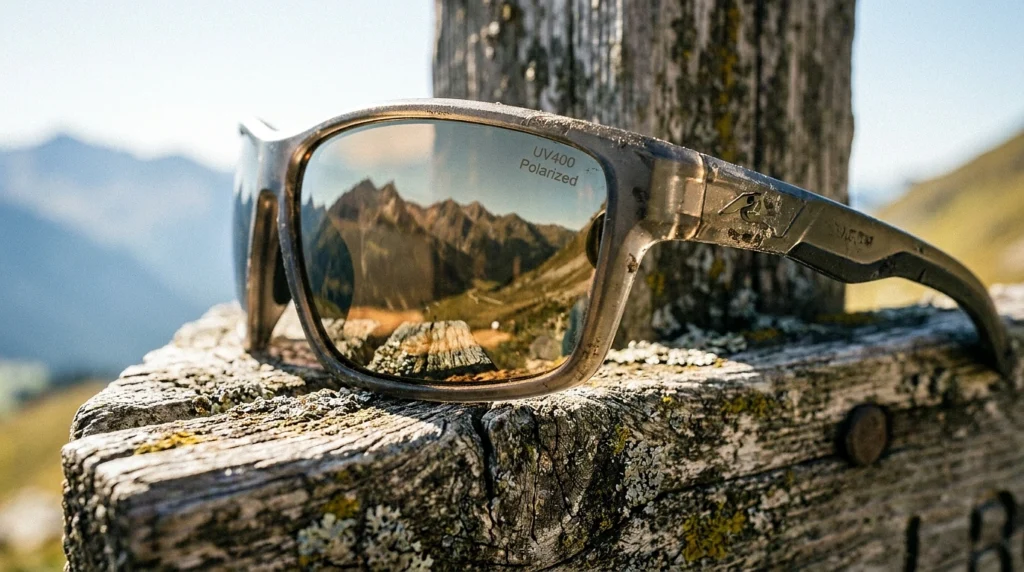
UV Protection Is the Non-Negotiable, and Darkness Isn’t It
The single most important spec is also the least visible: 100 percent UVA and UVB protection, usually labeled UV400. Here’s the counterintuitive part that makes cheap dark glasses actively dangerous outdoors: a dark tint without real UV filtering is worse than wearing nothing, because the darkness makes your pupils dilate, opening the door wider for the UV the lens isn’t blocking. Tint is comfort. UV protection is the actual job, and the two have nothing to do with each other. Any legitimate pair states UV400 or 100 percent UV plainly; treat its absence as a verdict.
The Polarization Truth
Polarization is the most misunderstood word in eyewear, so here’s the honest version. Polarized lenses cut reflected glare, the blinding sheen off lakes, wet rock, and snowfields, and for most trail use they’re a genuine comfort upgrade that reduces eye fatigue over a long day. Two catches, though. Polarization is not UV protection; a lens can be polarized and still let UV through, so you need both boxes checked separately. And polarization erases some information along with the glare, notably the shine that tells a winter hiker “that patch is ice,” and it makes phone screens go strange at certain angles. For water-adjacent and bright summer trails, polarize happily. For icy terrain, some experienced people deliberately don’t.
Match the Darkness to the Trip
Lens darkness runs on a category scale from 0 to 4, and two numbers cover almost everyone. Category 3 is the standard for sunny outdoor use, the darkness most quality sunglasses ship in. Category 4 exists for glaciers, snowfields, and serious altitude, where the reflected light is genuinely dangerous, and it’s too dark to drive in, which is printed on the box for a reason. If your trips swing between forest shade and open ridgeline, photochromic lenses, the kind that darken with the light, solve the problem elegantly for the price of one good pair instead of two.
The Lens Material Question
Glass scratches least and shatters most, which disqualifies it for anything involving rocks and falling. Polycarbonate or Trivex lenses are the trail answer, dramatically more impact-resistant, lighter on your nose across a ten-hour day, and standard in anything sold as sport eyewear. They scratch more easily than glass, which is what the microfiber pouch is for, and it’s a fair trade against the alternative.
The Frame Mechanics Nobody Mentions in the Product Photos
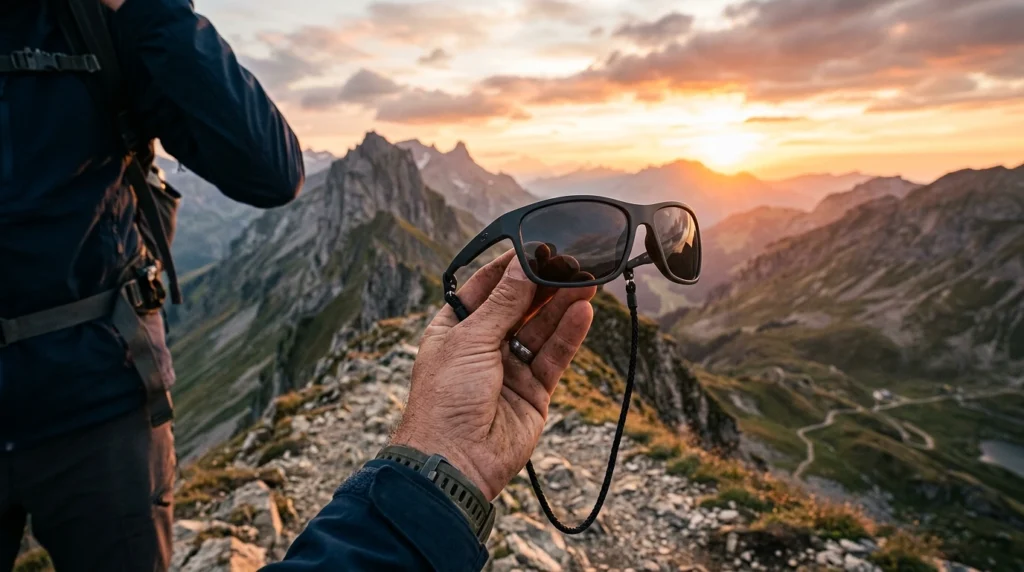
Lenses get all the spec-sheet attention, but my $15 casualties died of frame failure, every one. The features that actually keep glasses on a sweating, moving face:
- Grip that improves when wet. The good sport frames use rubberized nose pads and temple tips made from compounds that get tackier with sweat, the exact opposite of smooth acetate, which turns to soap. This one feature is the difference between glasses and future talus-slope residents.
- Real coverage. Bigger lenses and a gentle wrap block the light sneaking in from the sides and above, which matters more outdoors where the light comes from everywhere. Full glacier-style side shields are overkill below the snowline, but a lens that hugs rather than floats is not.
- Weight you can forget. A pair that’s charming for a two-hour brunch becomes a nose-bruise by hour eight. Under 30 grams is the comfortable zone, and polycarbonate lenses are half of how you get there.
- A leash point. The unfashionable secret of everyone who’s lost good glasses: a low-profile retainer strap for the sketchy sections, removable the moment the terrain relaxes. Fashion is temporary. The ravine is forever.
The Fashion Part, Answered Honestly
So can eyewear actually do both jobs? Genuinely yes, and it’s easier now than it’s ever been, because the industry noticed that people want to look like themselves outdoors. The trick is knowing which style families happen to pass the technical exam. Squared wayfarer-type frames in matte, rubber-lined finishes carry real coverage while reading as classic rather than sporty. The retro-round mountaineering look, the one descended from old glacier glasses, is having a long moment and is functional almost by accident of heritage. Even performance wrap frames have calmed down from their neon-cyborg era into shapes you can wear to lunch afterward.
What you’re looking for, in one sentence a frame you’d wear in town that happens to have UV400 polycarbonate lenses, wet-grip contact points, and honest coverage. That pair exists at most price points now, roughly $40 to $150 buys the full technical package with style to spare, and paying more past that buys brand and finish rather than protection. Mine, the pair that finally ended the casualty streak, gets compliments in coffee shops and has survived four years of trails, which would have sounded like a contradiction to me back when I was watching my favorite sunglasses skitter down a slope, still beautiful, completely useless, and eleven minutes old.

