


Nobody gets fat overnight. I didn’t wake up one morning suddenly heavy, thinking well, that happened fast. It crept. And the whole time it was creeping the signs were right there in front of me, I just had a reason to look past every one of them. Start the diet tomorrow. It’s not that bad yet. One more cake won’t matter. That was the deal I kept making with myself, over and over, for the better part of fifteen years.
Here’s the strange part. I was never a heavy kid. Not as a teenager, not through my twenties or thirties. I was active, outdoors a lot, barely snacked. So this wasn’t some lifelong struggle I was born into. Something changed in my forties, and I know exactly what it was.
Where It Started
I became a website developer. And that meant sitting at a computer up to fourteen hours a day.
I told myself I still moved around. I mean, my hands were busy, weren’t they, typing and scrolling and reaching for the next sandwich. That’s a joke, but it’s also more or less how I actually thought about it at the time. The truth is I’d gone from a life with movement built into it to one where I barely stood up, and I never adjusted the eating to match.
And this is the part I want to explain properly, because it took me years to understand what was going on underneath. It wasn’t only that I was eating too much. It was where the weight went and what it did once it got there. When you pile on fat sitting still through your forties, a lot of it goes deep into the belly, wrapped around your organs, and that kind, the visceral kind, isn’t inert. It’s metabolically active. It leaks fatty acids and inflammatory signals straight into your liver, and the research on this is pretty clear that this is a big part of how weight gain in midlife turns into insulin resistance and a fatty liver. I wasn’t just getting bigger. I was quietly rewiring my metabolism.
I Genuinely Didn’t See How Much I Was Eating
It’s bizarre how invisible food becomes when you’re working. I’d have told you at the time I was having a few cookies and a sandwich. I was not having a few cookies and a sandwich.
In a single day I could get through a whole loaf of bread, an entire fruit cake, chocolate on top of that, and a full plate for breakfast, lunch, and dinner besides. And nearly all of it was high-carb, sugar more or less around the clock. I loved milk too, a litre a day, easy. If I’d entered a triathlon every morning I still couldn’t have burned through that much glucose. One fruit cake on its own, with nothing else, would have been more than my body needed. This was, and I’ll take the pun, a recipe for disaster.
I Blamed My Wife For A While

Not my finest stretch. I decided it was her fault, because she was the one feeding me. If she’d stop putting all this lovely stuff in front of me I wouldn’t be getting fat. She made me like this.
Complete nonsense, obviously. Nobody held me down. I never once said no thank you, I’m full, or maybe I should think about this. She actually thought I was happy, and I was, right up until I got sick. She’d nag me to get away from the desk, go to the gym, and I wouldn’t, because I was busy and the money came first and the desk was my comfort zone. We also worked events back then, and I lost count of the times a client would say the fatal words, Andy, help yourself to the buffet with the team. A free five-star hotel spread. We ate like kings, and I paid for it.
The Wardrobe Kept Score Even When I Wouldn’t
Lucky for me it was fashionable at the time to wear your shirt untucked, which did a heroic job hiding the belly hanging over my jeans. I went from a thirty-inch waist to thirty-six and still had plenty spilling over the top. Baggy everything became the uniform.
Belts on the last hole. Shirts straining. I threw every t-shirt I owned in the bin because there was no chance I was being seen in one again. And still I did nothing, because I was in my forties, married, middle-aged, so who cares, this is just what happens to men my age. I needed new clothes, for all the wrong reasons, and I told myself that was normal. Denial is a comfortable place to live right up until it isn’t.
My face changed most of all. Lost my chin entirely, swapped it for a thick neck, and my whole face bloated up big. My wife used to joke that my fat face was cute. We laughed about it. Neither of us was really laughing.
The Day I Looked At The Statins
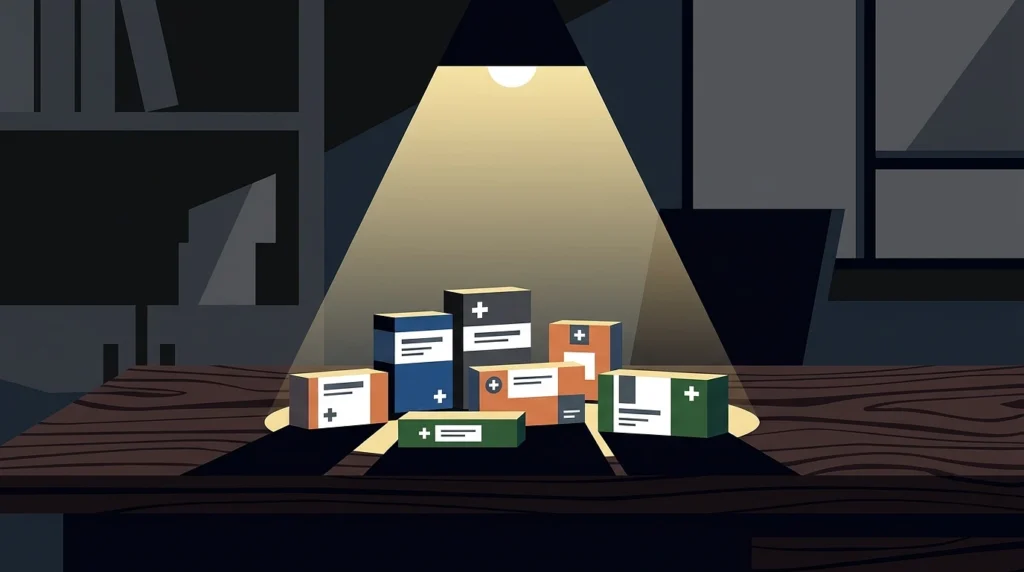
I never once thought about what any of this was doing to me until my late fifties, when I was in and out of hospital with one thing after another. Type 2 diabetes. Fatty liver. IBS. High blood pressure. The whole familiar collection that comes riding in with obesity. I was on medication for the diabetes, and now a doctor was telling me to start statins too.
I remember sitting at my desk with the boxes of medication in front of me, and something just went, enough. I didn’t want to live on tablets. Not a quick fix either, I wasn’t after some crash thing, I wanted the whole way I lived to change.
And here I have to be careful about what I tell you, because this next part is where people can hurt themselves copying me. It is genuinely possible to push type 2 diabetes into remission by losing a lot of weight. The big trial on this, DiRECT, out of the UK, put nearly half its participants into remission at one year on a serious weight-loss programme, and around a third were still there at two years, with some holding it out to five. That’s real, and it’s remarkable, and it’s why I’m not on diabetes medication today.
But read the rest of that trial and it gets honest fast. Staying in remission is hard, plenty of people regain the weight and slip back out of it, and here’s the bit that matters most, in that study the medication was withdrawn under medical supervision, by doctors, as part of the programme. Nobody was sitting alone at a desk deciding to bin their own prescriptions. I made changes and I came off my medication, but I want to be dead clear with you: if you are on tablets for diabetes or blood pressure or anything else, you do not stop them because a bloke on the internet reversed his numbers. You do it with your doctor watching, checking your bloods, or you can do yourself real harm. That is not a disclaimer, it’s the actual difference between what worked and what wrecks people.
What Actually Got Me Back
Today, a few years on from changing everything, I’m back to a thirty-inch waist and down about sixty-five pounds. New wardrobe again, this time for the right reasons. My diabetes went into remission and I never did take those statins.
I can run up a flight of stairs without stopping now. I’m back in the gym. None of it was easy and I won’t pretend otherwise, but it was worth every miserable bit. How’d I do it? I tried a stack of different diets and landed on what worked for me, which was a ketogenic approach with fasting. I’m not going to sell you that as the one true answer, because it isn’t. There’s a line I read once and never shook: all diets work, it’s only you who fail. Bit harsh, but the point holds. The mechanism under almost any of them is the same, you take in less than you burn for long enough that the weight comes off and the visceral fat shrinks, and when it shrinks the liver and the insulin start behaving again.
The real trick was finding the one I could actually live with. So don’t call it a diet. A diet is a thing you’re waiting to finish. Make it the way you eat now, full stop, and you never have to go back.
I quit smoking around forty, and healthy eating eventually became the same kind of settled thing, not a battle I fight daily, just how it is. My latest daft goal is finding out whether a sixty-year-old man can build a six-pack. Probably not. Going to try anyway. Turns out it’s never quite as late as you’ve told yourself it is.

