


Most people who smoke already know the long list of what it does to them. Lung cancer, heart disease, stroke, the cancers of the mouth and throat and bladder, and a dozen conditions besides. Knowing rarely moves anyone, though, because the damage feels far off and abstract, a problem for some older version of yourself to deal with later.
What tends to actually move people is the other direction. Not what smoking does to the body over decades, but what the body does to repair itself the moment the cigarettes stop, and how fast some of it happens. The recovery starts within the hour, and it keeps going for fifteen years. Here is what that looks like, stage by stage, and where the evidence is solid versus where it depends on how long and how hard someone smoked.
Within 20 Minutes, The Heart Already Responds
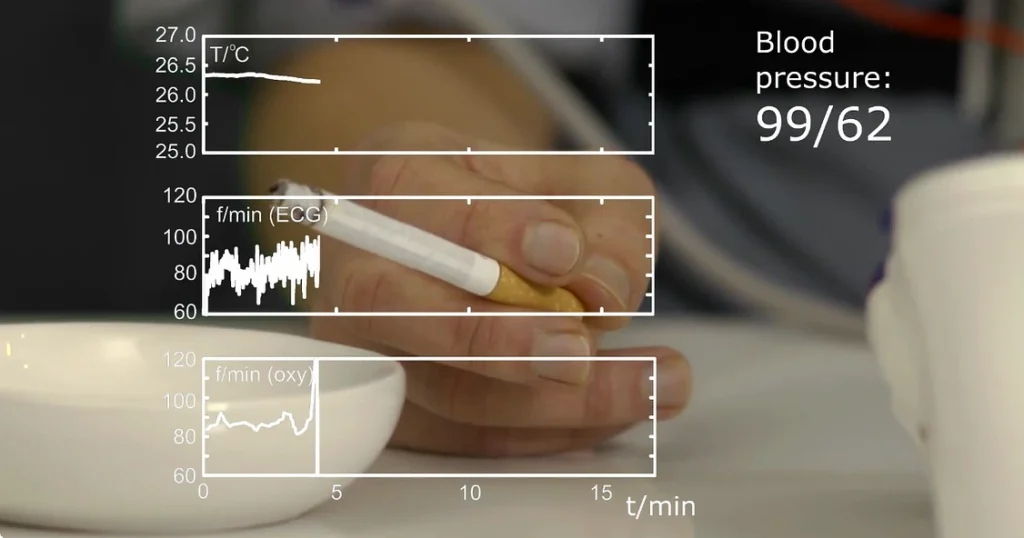
The first change comes fast enough to feel almost unbelievable. Within about twenty minutes of the last cigarette, heart rate and blood pressure begin dropping back toward normal.
Nicotine spikes both. It makes the heart beat faster and forces damaged blood vessels to work harder, so pulling it out of the system lets the pressure ease off almost immediately. It is a small change, and nobody feels it happening, but it is the body starting to unclench within the same hour as that last cigarette.
By 12 Hours, The Carbon Monoxide Clears Out
This is the one the original popular timelines often misplace at 24 hours, when the health bodies actually put it earlier. Within about twelve hours, the carbon monoxide level in the blood drops back to normal.
Carbon monoxide is the quiet villain in cigarette smoke. It binds to red blood cells in place of oxygen, which is a big part of why smokers get winded, the blood is literally carrying less oxygen than it should. Clear the carbon monoxide and oxygen levels climb back up, which is the physiological reason exercise starts feeling less punishing within the first day or two.
Two Days In, Taste And Smell Start Coming Back
Smoking dulls the senses, and smell and taste take the worst of it. Once nicotine has fully left the body, around the two-day mark, the nerve endings involved begin to recover, and food starts tasting like something again.
This is also, unfortunately, the point where it gets hard. With the nicotine gone, withdrawal arrives properly, the irritability, the headaches, the restless itch for something to do with your hands. Cravings tend to hit hardest here, though the useful thing to know is that an individual craving usually passes within five to ten minutes whether or not you smoke. Riding out that short window, over and over, is most of the early battle.
Two Weeks To Three Months, The Lungs And Heart Turn A Corner
Somewhere in the first few weeks to a few months, two big things shift together. Circulation improves and lung function starts climbing, and the added risk of a heart attack begins to drop.
This is the stretch where people first notice they can do things again. Walking up a flight of stairs without stopping halfway. Getting through a bit of exercise without that sick, winded feeling. It is not imagination, the lungs are measurably working better and the blood is moving oxygen more efficiently, so the body genuinely has more to give.
Up To Nine Months, The Lungs Clean Themselves Again
By somewhere in the three-to-nine-month range, lung function can improve by up to around ten percent, and the coughing and wheezing that smokers live with start to fade.
The mechanism here is a strange and specific one worth understanding. The airways are lined with cilia, tiny hair-like structures that sweep mucus, trapped dirt, and microorganisms up and out of the lungs. Smoking flattens and paralyzes them, which is why the gunk just sits there and why smokers cough the way they do. As the cilia regrow and start moving again, they resume clearing the lungs, which cuts the risk of infections like bronchitis and pneumonia. Oddly, this recovery can mean more coughing at first, not less, because the cilia are finally doing their job and hauling out everything that accumulated.
One Year, The Heart Risk Halves
At the one-year mark comes one of the milestones most worth holding onto. The added risk of coronary heart disease has fallen to about half that of someone who kept smoking.
That is a large drop for a single year of doing nothing except not smoking, and it matters because smoking is a direct cause of roughly one in five heart disease deaths, and it raises heart disease and stroke risk by somewhere in the range of two to four times. Cutting the excess risk in half inside twelve months is one of the fastest, cheapest health returns available to anyone.
Five To Fifteen Years, The Risk Keeps Falling Toward A Non-Smoker’s
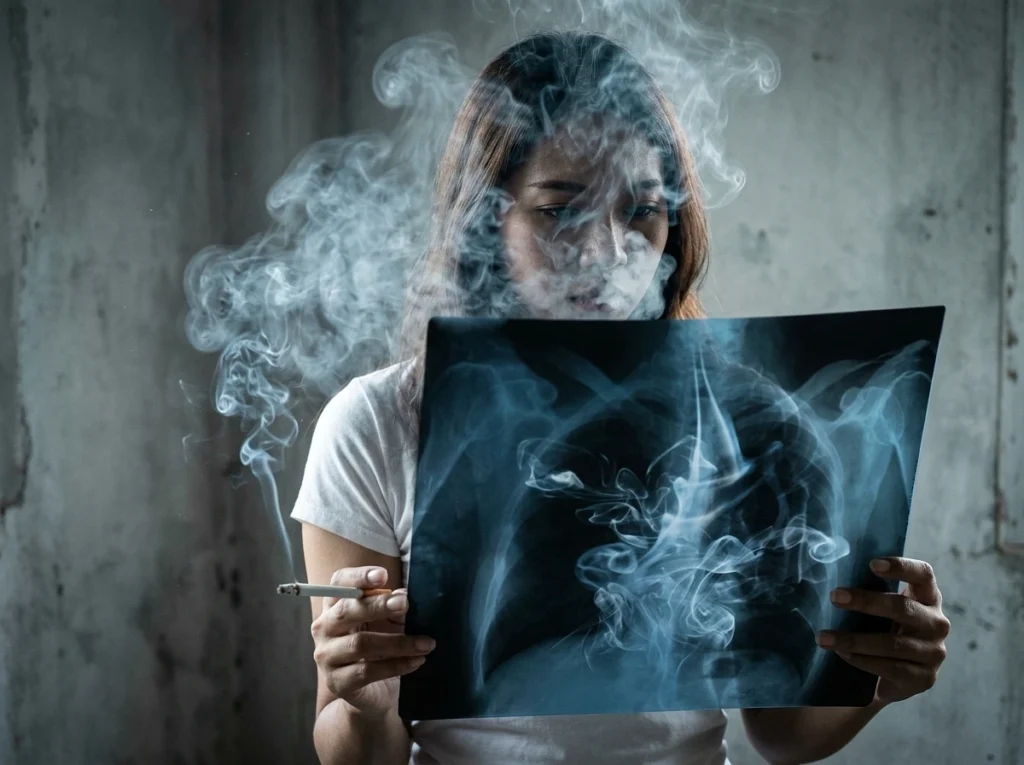
The long tail of recovery runs for years, and the numbers keep improving the whole way.
Within about five to fifteen years after quitting, stroke risk can fall back to that of a non-smoker. By ten years, the risk of dying from lung cancer drops to roughly half that of a continuing smoker, and the risk of several other cancers, mouth, throat, esophagus, bladder, kidney, pancreas, decreases as well. Reach fifteen years and the risk of coronary heart disease is back to that of someone who never smoked at all.
One honest caveat sits over this whole later stretch. Depending on how many years and how heavily a person smoked, some lung-function loss can be permanent, and not every risk resets all the way to zero. Quitting does not rewind the clock completely. What it reliably does is stop the damage getting worse and claw a large amount of it back, which is a different and more truthful promise than a full reset.
Why Cutting Down Slowly Tends To Fail
There is a persistent belief that the gentle way to quit is to taper, a few fewer cigarettes each week until you reach zero. In practice, for a lot of heavy smokers, tapering quietly stalls out and never reaches the finish, because each remaining cigarette keeps the addiction topped up and the habit intact.
The same problem shadows the substitution approach, swapping cigarettes for a pipe, cigars, or endless gum. That said, this is exactly where the evidence and personal folklore part ways, and it is worth being fair about it. Nicotine replacement therapy, patches and gum and lozenges, along with prescription medication and counseling, are genuinely proven to raise the odds of quitting for many people, which is not the same as the willpower-only story some quitters tell. The most effective method is ultimately the one a given person can actually stick with, and for anyone who wants the best-supported route, a doctor or a national quitline can lay out the options that have the real evidence behind them.
The Mind Game That Actually Helps
One low-tech technique holds up well and costs nothing. When the urge hits, or someone offers a cigarette, the wording you use with yourself matters more than it should. “I don’t smoke” works better than “I’m trying to quit” or “I quit,” because the first is an identity and the other two are a temporary state you are fighting to maintain.
It sounds almost too simple, but it lines up with how habits actually break. A behavior tied to who you are is stickier than a behavior you are merely resisting. Framing it as a settled fact rather than an ongoing struggle takes some of the daily negotiation out of it, and the negotiation is what wears people down.
The rest is the stuff nobody markets because there is no product in it. The wasted money adds up fast. The smell clings to hair and clothes in a way no gum or mouthwash covers, something ex-smokers notice on others almost immediately once their own sense of smell returns. And the old idea that a cigarette looked cool has quietly inverted, these days the smokers are the ones standing outside the pub in the cold. The body will do an astonishing amount of repair work on its own. The only thing it needs first is for the smoking to stop.

