


Let me set the scene for you. It’s a 95-degree afternoon, you’re pumping gas, and you walk into the station cooler and grab a cold 20-ounce Coke because obviously you do it’s hot, you’re human, and that bottle is sweating prettier than you are. I’m not here to take that away from you. What I am here to do is get real about which soda scare stories are actual science and which ones are recycled panic, because honestly? The internet has done y’all dirty on this topic. Half the articles are written by people who never opened a single study, and it shows.
Point 1: The 26% Number Is Real, Replicated And Kind Of A Big Deal
Here’s the stat in the title, and here’s why I trust it when I trust almost nothing else in nutrition headlines. A meta-analysis published in Diabetes Care pooled eight prospective cohort studies 310,819 participants, more than 15,000 diabetes cases and found that people drinking one to two sugary beverages a day had a 26% higher risk of developing type 2 diabetes than people drinking basically none.
Now, nutrition science flip-flops on everything. Eggs were villains, then heroes, then villains again. Coffee’s been reincarnated more times than I can count. But this number? A 2023 meta-analysis covering 72 studies came back at 27% for the same question. Fifteen years apart, different teams, hundreds of thousands of different people same answer, one percentage point of daylight between them. In this field, that’s about as close to bulletproof as it gets, and frankly it’s the kind of consistency that gets a data nerd like me a little excited.
And if you already have type 2? Harvard researchers followed nearly 13,000 diabetic patients for an average of 18.5 years and found every additional daily sugary drink came with 8% higher all-cause mortality. Eight percent. Per drink. Per day. That one made me sit back in my chair.
Point 2: The Reason Is Dumber Than You Think Your Body Can’t Count Liquid Calories
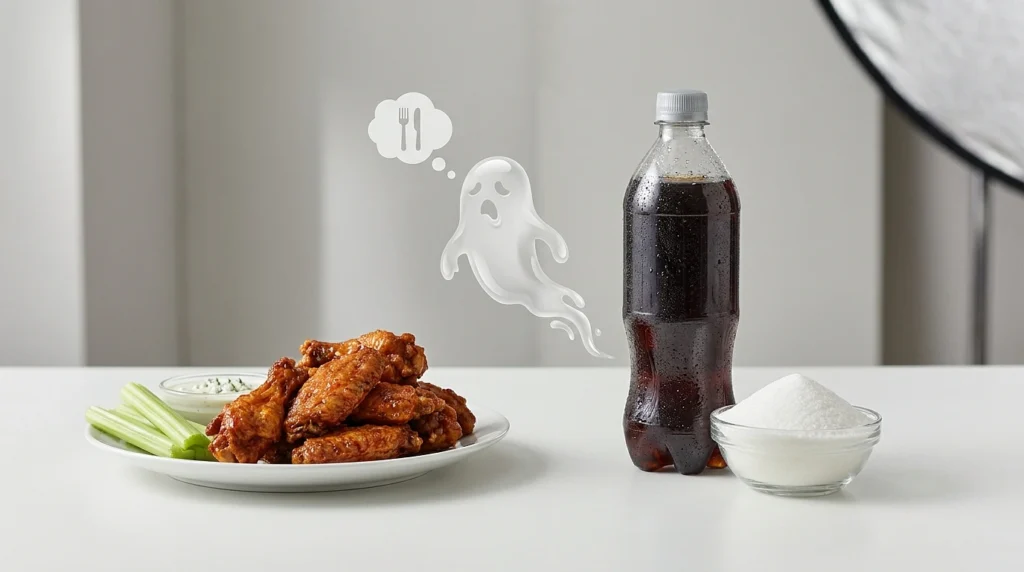
Quick experiment you’ve already run without knowing it. Ever crush a full plate of wings and feel it for hours? Now — ever drink a 20-ounce soda, which is roughly 240 calories, and feel anything at all? Exactly. Nothing. You could drink another one twenty minutes later and your stomach wouldn’t file a complaint.
That’s the whole mechanism, and it’s why soda punches so far above its weight. Eat 240 calories of actual food and your body quietly eats less later to balance the books. Drink those same calories and the accounting department never even gets the memo. A 20-ounce bottle is carrying about 16 teaspoons of sugar sixteen! straight past every appetite signal you own. There’s no other product in the American diet that ghosts your satiety system this completely, and that, more than any single ingredient, is the crime.
Point 3: The Famous “184,000 Deaths” Stat? Yeah, That One Fell Apart
This is the part that genuinely frustrates me, so bear with me while I vent for a second.
In 2015, a study in Circulation estimated that sugary drinks kill 184,000 people a year worldwide, and every outlet in America ran it like gospel. “Suicide by soda.” Great headline. One problem: when statisticians actually got under the hood, they found the model had estimated soda consumption partly from national sugar availability as in, how much sugar existed in a country’s supply chain, not what anybody actually drank stitched together from surveys going back to 1981. The methodological takedown was brutal, and the precise number didn’t survive it.
Does that mean soda’s fine? No. The same Tufts group rebuilt the model with better data and published an update in Nature Medicine in January 2025, now estimating around 330,000 deaths and 2.2 million new diabetes cases tied to sugary drinks in 2020. But hear me clearly: those are models, and models are educated guesses wearing a suit. The 26% cohort number is measured people getting measured diseases. That’s why it’s the stat in my title and the death toll isn’t.
Point 4: Diet Soda Everybody Calm Down, In Both Directions
Two camps yelling at each other here, and both are overplaying their hand.
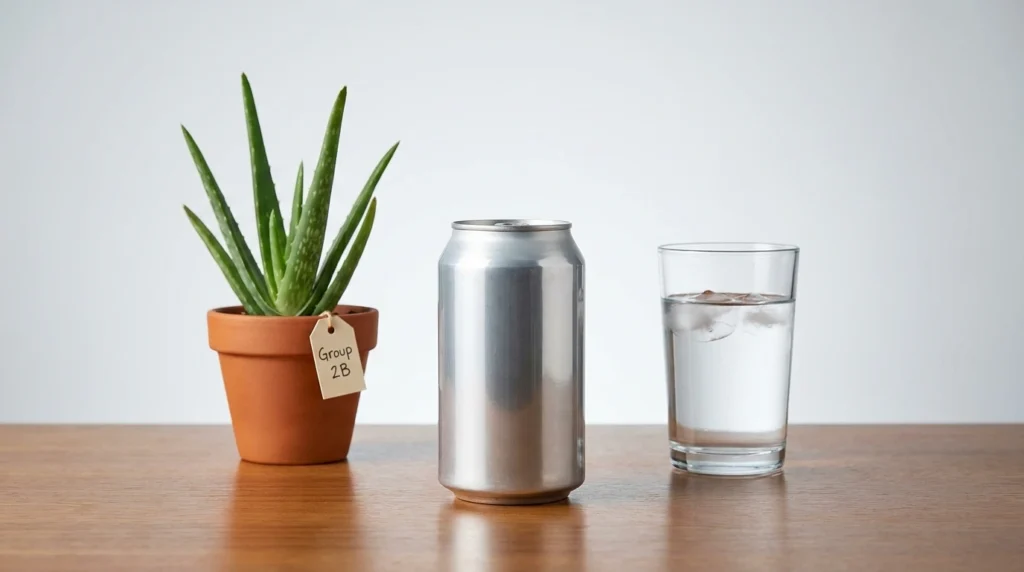
Camp one screams cancer. The reality in 2023, the WHO’s cancer agency classified aspartame as “possibly carcinogenic” Group 2B, based on limited evidence while the WHO’s own food-additive committee looked at the same pile of data and didn’t move the safe intake limit one inch. A 155-pound adult would need to put away somewhere between 9 and 14 cans a day, every day, to even reach that limit. And experts pointed out that Group 2B is the same shelf where aloe vera sits. Aloe vera, folks.
Camp two says diet soda is a free pass. Also no. That same 72-study meta-analysis found artificially sweetened drinks associated with a 32% higher diabetes risk on paper, worse than regular soda. Before you spit out your Diet Coke: the likely explanation is reverse causation. People switch to diet drinks because they’re already gaining weight or heading toward diabetes, so the diet soda ends up statistically handcuffed to problems it didn’t cause. Honest bottom line: diet is almost certainly less harmful than regular, and almost certainly not as innocent as water. Anyone selling you more certainty than that is selling.
Point 5: This Isn’t Really America’s Problem Anymore And That’s The Ugly Part
Here’s the finding from that 2025 study that should’ve been the headline. As soda sales flatten in the U.S. and Europe, the marketing machine packed up and moved. Sugary drinks are now linked to roughly 20% of all new diabetes cases in sub-Saharan Africa and over 27% in South Africa, with Mexico and Colombia carrying some of the heaviest absolute numbers on Earth. We ran the experiment on ourselves for fifty years, got the diabetes bill, and then the industry exported the playbook to countries whose health systems can least afford it. That’s not a science story. That’s a business story wearing a lab coat, and it deserves more anger than it gets.
So Here’s Where I Land
I’m not the food police. A Coke with your Friday pizza is a rounding error over a lifetime the dose-response data is pretty linear, and one soda a week is not one soda a day. But that daily habit? That’s the single easiest health upgrade in the entire nutrition literature, because it’s the only one that asks nothing of you. No meal prep, no gym, no app, no willpower at dinner. You just stop drinking your sugar, let sparkling water handle the cold-and-fizzy part of the ritual, and pocket a 26% swing on a disease that ruins retirements.

