


The lease says no paint, no nails, no adhesive hooks, and possibly no joy. You’ve got white walls, or worse, that particular shade of landlord beige that seems engineered to look dirty from day one, and a security deposit you’d like to see again someday.
So the color has to go somewhere else. Pillows are the cheapest, most reversible thing in the room, they leave no holes, and when you move out they go in a box and come with you. That’s the whole argument, and it’s a good one.
1. Put The Color On The Pillows, Since You Can’t Put It On The Walls
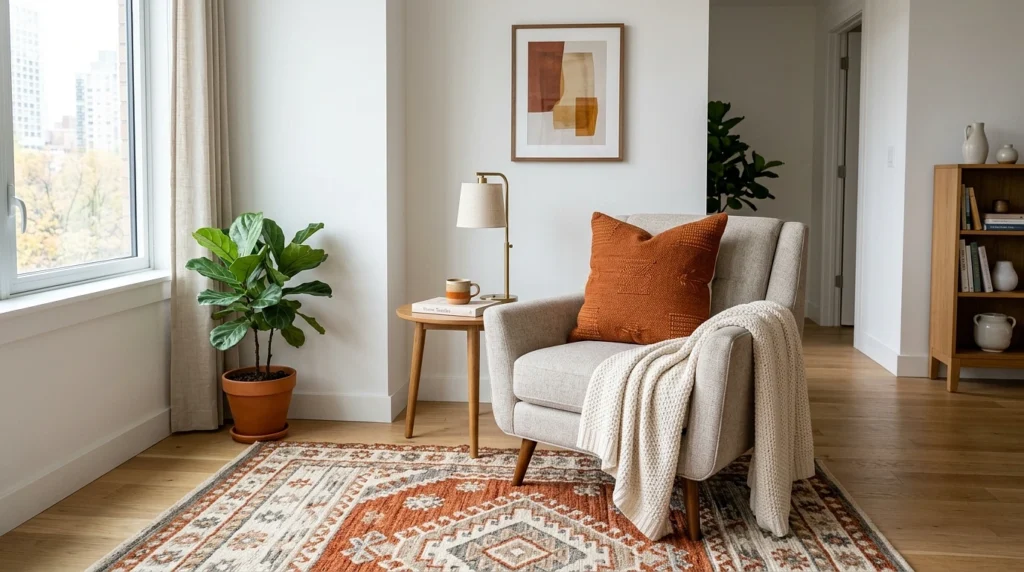
Start here because it reframes everything. In a room where the walls are a fixed variable, textiles carry the entire color story. Your pillows aren’t accents anymore. They’re the paint.
Which means you can be bolder than you’d normally dare. In a room with a strong wall color, a rust-orange pillow would be a lot. Against builder white, it’s the only thing happening, and it can carry the whole corner. Pick two or three colors that repeat between the pillows, a throw, and maybe a rug, and the eye reads it as intentional rather than random.
The move most people miss is repetition. One mustard pillow looks like an accident. Mustard on the sofa, mustard in a stripe on the throw, mustard in a book spine you left face-out on the coffee table, and suddenly it’s a decision. Same amount of stuff, completely different read.
2. Photographs Belong On Fabric When The Wall Is Off-Limits
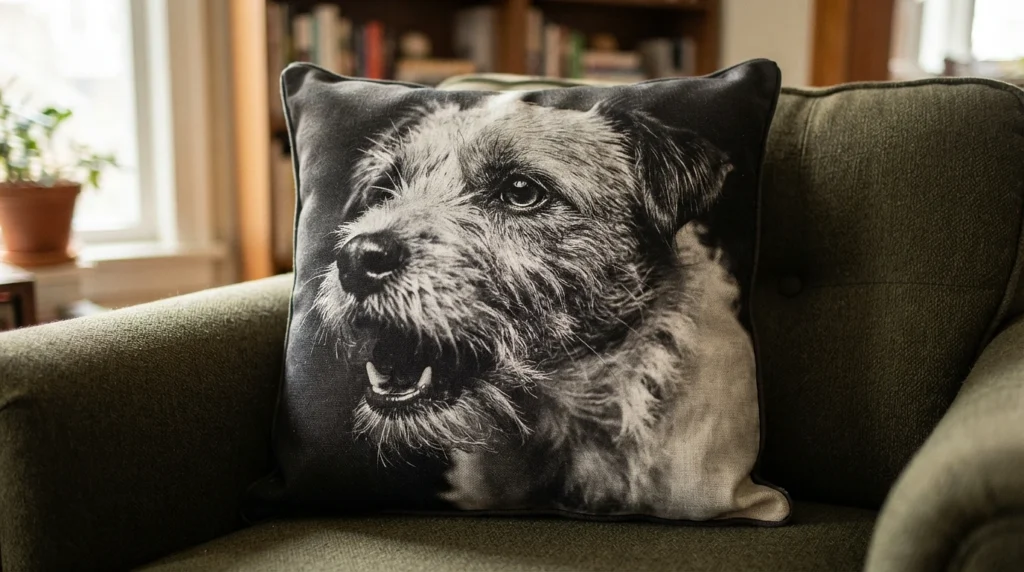
You can’t hang the gallery wall you wanted. Fine. Put the pictures on the pillows.
Custom photo pillows have gotten cheap and genuinely good, and they solve a real renter problem, which is that the things you’d normally frame have nowhere to go. Kids’ faces, one per pillow, so nobody argues about which cushion is theirs. A square photo collage that mimics the grid you’d have hung. A single blown-up image, a coastline or a doorway or a dog, printed big enough that it reads as art from across the room.
A few things I’ve learned the hard way about photo prints on fabric. Go high-contrast, because soft, moody images turn to mud on textile in a way they don’t on paper. Avoid faces printed near the corners, since the corners are where a pillow crushes and creases. And pick matte, not the shiny finishes, which photograph well in the listing and look like a laminated placemat in your living room.
3. Buy The Covers, Skip The Pillows
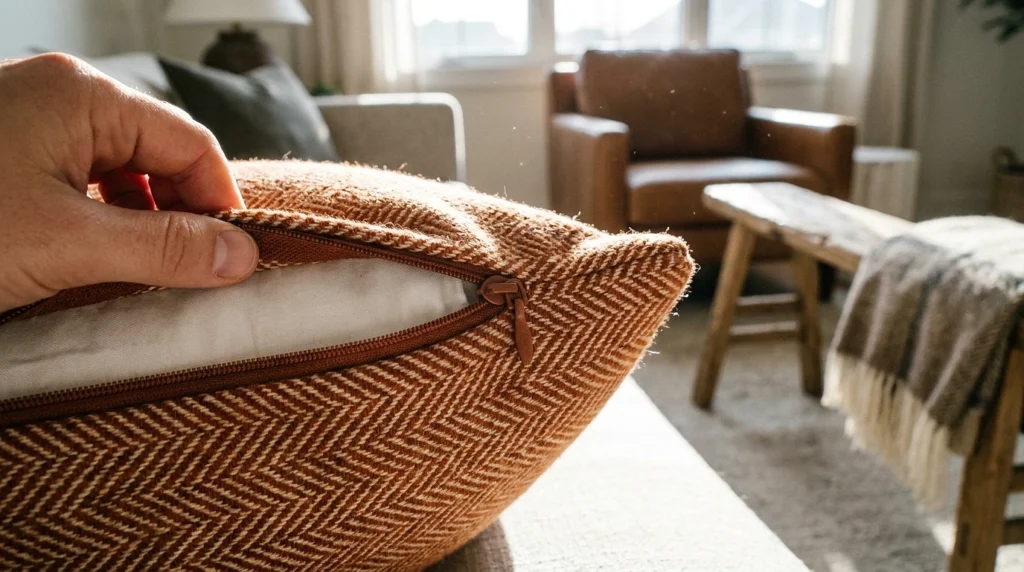
This is the renter’s actual superpower and hardly anyone uses it.
Buy four good inserts once. Then buy covers, which are flat, fold to nothing, and live in a drawer. You can own twelve looks in the space one spare pillow used to take up, and swap the whole room’s mood in about ninety seconds when you’re bored or the season turns or you’ve simply looked at the same corner for too long. It’s one of those small changes that make a rented place feel like yours without a single conversation with your landlord.
Get the ones with a proper zipper. Envelope closures gape, and the flap always ends up facing the room.
4. The Insert Is The Entire Thing, And Almost Everybody Buys The Wrong One
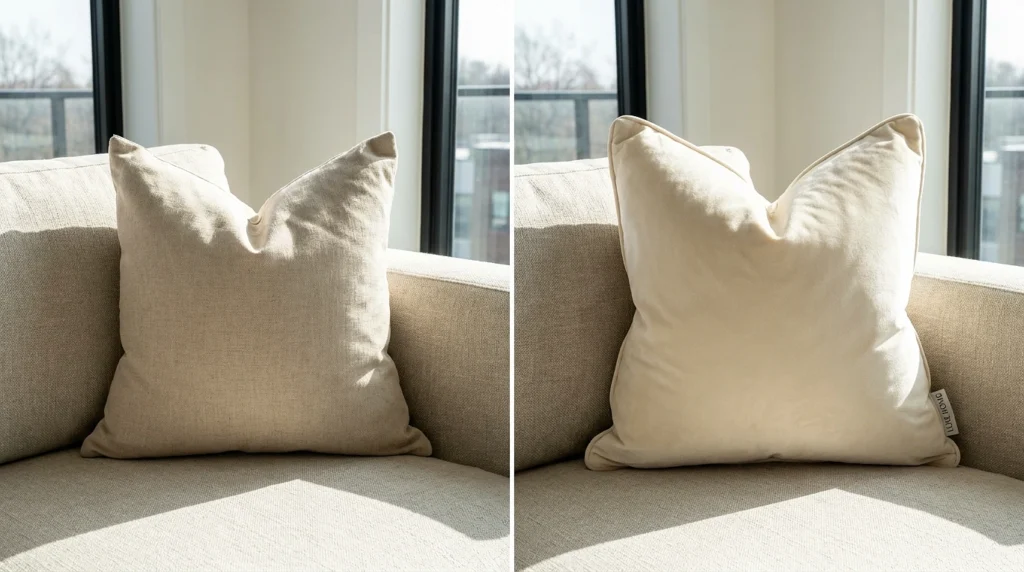
Now the part I care about more than is probably reasonable, and the reason most rooms in most rentals have sad, karate-chopped, half-empty pillows sagging in the corners of the couch.
You have very likely been buying the wrong insert. I did, for years. I bought pillow covers I loved and then bought the insert that matched the number printed on the cover, and every pillow in my apartment looked like it had given up on life. The cover was fine. The filling was the problem, and it’s two separate problems stacked.
Size Up. Always. Two Inches, Minimum.
An eighteen-inch cover needs a twenty-inch insert. Twenty needs twenty-two.
This sounds wrong. It is not wrong. A same-size insert leaves the cover’s corners empty, which is what produces that limp, hollow, hotel-lobby look. Overstuffing fills the corners, gives the pillow a plump middle, and makes a fifteen-dollar cover look like it came from somewhere expensive. There’s no downside except that the first time you stuff it you’ll be convinced you’ve bought the wrong size, right up until it’s in and it looks correct.
Feather-Down Versus Polyester, And My Slightly Unfair Opinion
Feather-down inserts have weight. They compress when you lean on them, hold the shape of a person having sat there, and settle into that soft slump that reads as a room somebody actually lives in. Polyester inserts stay springy and uniform and never really change, which sounds like a virtue and looks, in a room, like a showroom.
I’ll be honest that this is partly taste and I can’t fully defend it. Feather sheds, pokes through the cover occasionally, and it’s a hard no if anyone in the house is allergic. Poly is washable and cheap and blameless. But if you can only splurge on one thing in a rented room, I’d put the money in the inserts and buy the covers on sale, and I’ve never once regretted that order.
Also, please stop karate-chopping the tops. That dent is a symptom of an underfilled pillow, and the internet turned it into a styling technique.
5. In A Small Rented Room, Texture Will Save You Where Pattern Won’t
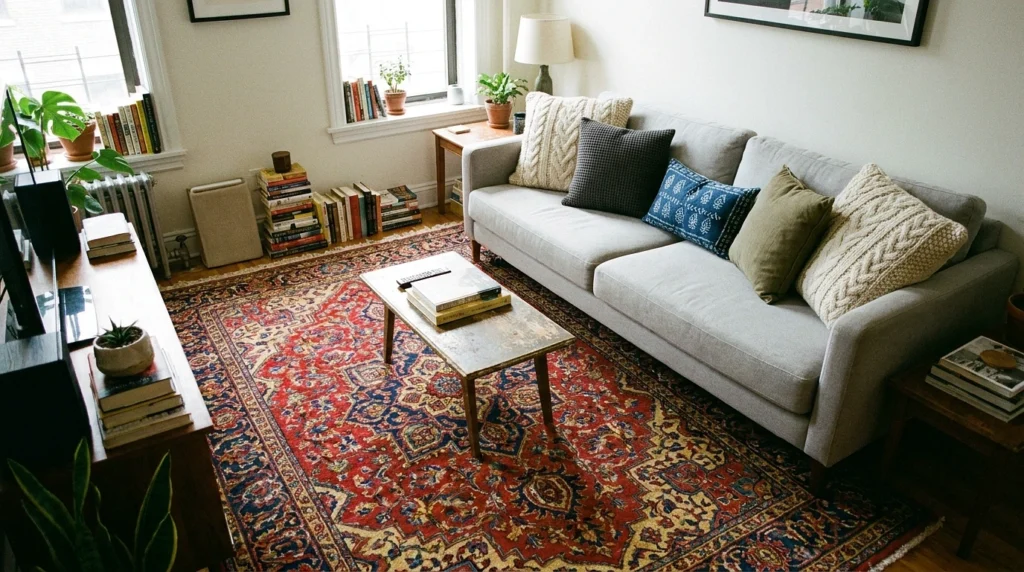
Here’s the constraint nobody mentions: you also can’t change the floor. Or the curtains, sometimes. Or the specific gray of the sofa that came with the place.
Which means every strong pattern you add is entering an argument with things you didn’t choose and can’t remove. In a small space that argument gets loud fast. Texture doesn’t argue. A chunky knit next to a smooth linen next to something with a low pile reads as rich and considered even when everything is the same three colors. It photographs beautifully. It never clashes with a rug you hate.
So if the room already has a busy floor, and rentals often do, go quiet on pattern and let the surfaces do the work. One patterned pillow, maybe, as the exception that proves you meant it.
6. The Hour-Long Projects, For When You Want To Have Made Something
Gold crafting foil and a glue pen turn a plain cover into something that looks costly, and the marbled-foil thing genuinely does look good, though it doesn’t love the washing machine. Hand-lettering a word or a line onto a plain cover with fabric paint takes an evening and a steady hand, and there’s a particular satisfaction in the room containing something you made with your hands rather than something you selected.
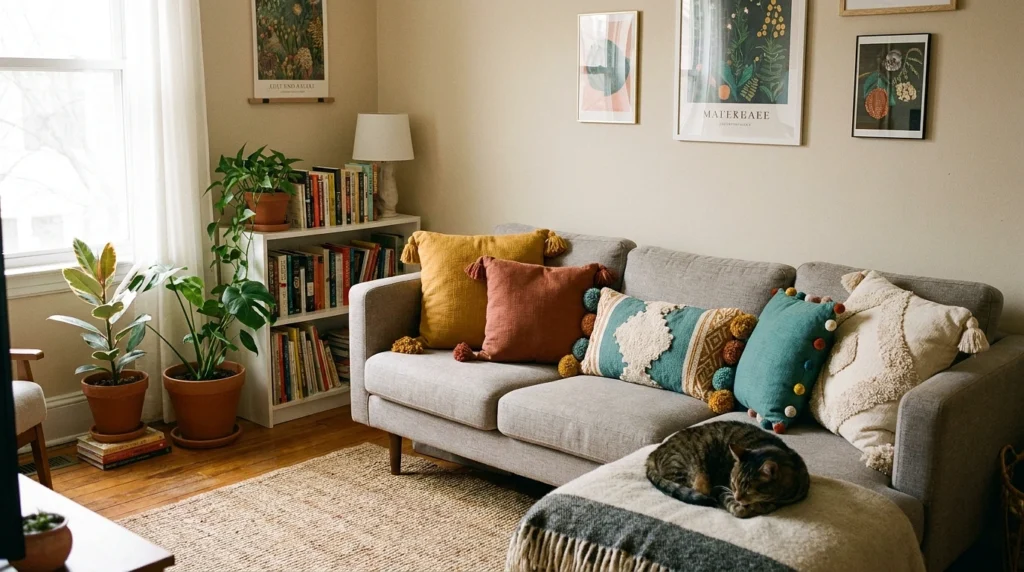
Tassels and pom-poms sewn along the edges are the easiest of these by a mile, one needle, one thread, an hour in front of the television, and there are plenty of no-sew shortcuts if a needle isn’t your thing. My only warning is that pom-poms shed like a small animal for about a month. Mine still turn up in the vacuum.
None of this fixes the beige. That’s the thing about renting, you’re always decorating around a decision somebody else made in 2009, and no amount of styling makes a rented room truly yours in the way a wall of your own color would. What it does do is make the room look like a person lives there, deliberately, with taste, on purpose. Which is most of it, honestly. And the whole lot fits in two boxes when the lease ends.

