


There’s a drawer in my bathroom I privately call the graveyard. In it three beard trimmers, all dead, all bought for somewhere between $13 and $18, all from that same drugstore shelf where the grooming section meets the batteries. Trimmer one lasted nineteen months. Trimmer two lasted a year, then spent six months tugging hairs out instead of cutting them before I admitted what it had become. Trimmer three died in the charger, which felt almost peaceful.
Then, about four years ago, I spent $50 on an adjustable one, mostly out of spite, and it has now outlived the combined careers of all three residents of the graveyard with no signs of slowing down. This article is the autopsy report and the math, because the cheap ones aren’t dying randomly. They’re dying on schedule, from the same three causes, and once you know the causes you can read a product listing like a coroner.
Where Cheap Trimmers Actually Go to Die
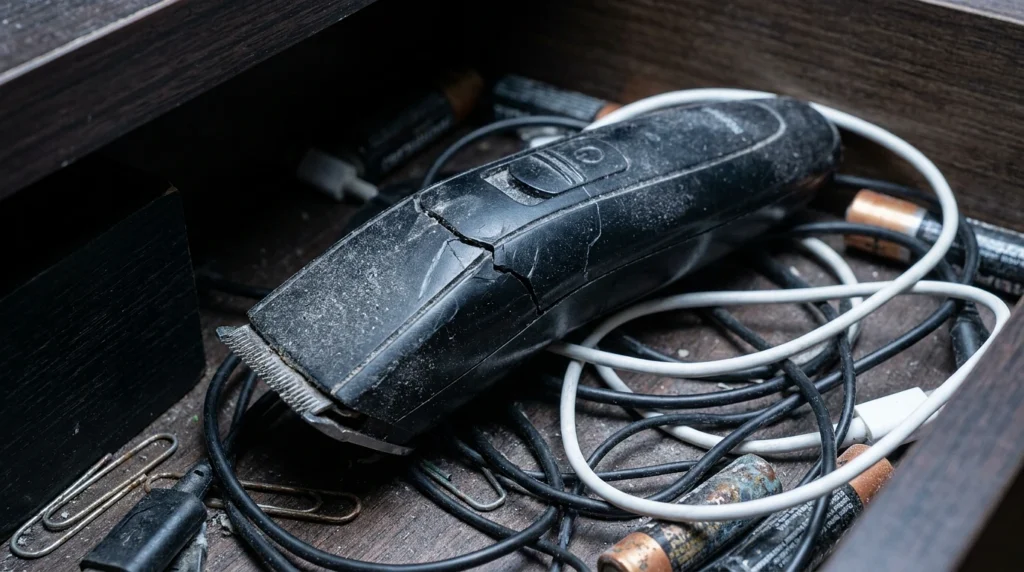
Nobody’s cheap trimmer dies dramatically. It fades, and it fades in a specific order.
The Battery Goes First
Budget trimmers have historically shipped with the cheapest rechargeable cells available, the kind that lose capacity fast and hate being left on the charger, which is exactly where everyone leaves them. Within a year the “sixty minutes of runtime” is fifteen, then it’s a trimmer that only works plugged in, then, if it’s one of the many that can’t run corded at all, it’s landfill with a beard attachment.
And here’s the detail that turns a dying battery into a dead product: the unit is sealed. No screws, or screws hidden under glued panels, no replacement cell sold, no repair intended. The battery isn’t a component of a cheap trimmer. It’s the fuse on the whole purchase.
The Blades Go Second
Budget blades are stamped stainless steel with no self-sharpening arrangement and, crucially, no replacement blades sold separately. So when they dull, and they dull, the trimmer starts pulling instead of cutting. That tugging feeling my second trimmer developed wasn’t a quirk. It was the edge going, permanently, on a part designed never to be swapped. The motor is the third domino, losing torque until it bogs down in a week of growth, but honestly, most cheap trimmers never live long enough for the motor to be the thing that kills them.
Add it up and the $15 trimmer is not a cheaper version of the $50 one. It’s a different object entirely: a sealed consumable with a countdown inside it, wearing the costume of a tool.
What the Extra Thirty-Five Dollars Is Actually Buying
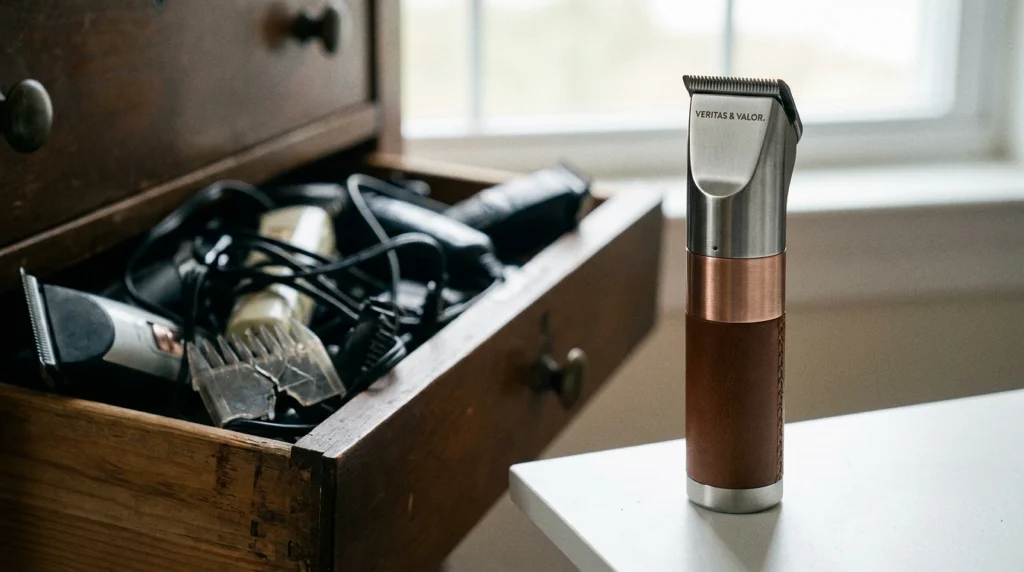
I went into the mid-range purchase expecting to pay for branding and a nicer box. What I actually got, and what the price difference genuinely buys across most of the category, is a short list of boring engineering decisions:
- A lithium battery, which holds its capacity for years rather than months, charges quickly, and doesn’t sulk if you leave it docked
- Blades that either sharpen themselves against each other as they run or can be bought and swapped as a spare part, which converts “the blades dulled” from a death sentence into a ten-dollar errand
- An adjustable dial instead of a rattling bag of snap-on plastic combs, and this matters more than it sounds, because those brittle little combs are the most-lost, most-snapped accessory in all of grooming
- A warranty measured in years rather than in the time it takes to lose the receipt, backed by a company that actually stocks parts
That last point is the quiet tell when you’re comparing products. Search whether replacement blades exist for a trimmer before you buy it. If the manufacturer sells spares, they’ve built something meant to outlast its first blade. If they don’t, they’ve told you the plan, and the plan is the trash can.
There’s a well-worn idea from the novelist Terry Pratchett usually called the boots theory, about how a poor man buys cheap boots over and over while a rich man buys one good pair that outlasts them all, spending less across a decade for the privilege of having money up front. My graveyard drawer is the boots theory with a charging cord. Three trimmers at roughly $15 is $45, spent to receive about four years of mediocre, gradually worsening trims. The $50 one has already covered the same four years, cutting the same on day one thousand as on day one, and by every mechanical indicator it’s barely warmed up.
The Three Shelves, Side by Side
Here’s the whole category laid out the way I wish someone had laid it out for me before the graveyard got its first resident.
| What you’re checking | Cheap ($13 to $20) | Mid-range ($40 to $60) | Premium ($100 and up) |
|---|---|---|---|
| Battery | Bargain cell, fades within a year, often sealed in | Lithium, holds capacity for years | Same lithium class as mid-range |
| Blades | Stamped steel, dulls, no spares sold | Self-sharpening or replaceable | Same blade tech, fancier coatings |
| Length control | Bag of brittle snap-on combs | Adjustable dial or wheel | Dial plus digital readouts |
| Warranty | Short, rarely honored past the receipt | Two years or more, parts stocked | Same as mid-range, shinier box |
| Realistic lifespan | One to two years | Five years and up with basic care | Same as mid-range |
| The honest verdict | A consumable in disguise | The durability sweet spot | Paying for theater |
Read the last two columns twice, because they’re the part nobody selling trimmers will tell you. The durability is a mid-range feature, not a luxury one. The jump from $15 to $50 buys you a different class of machine. The jump from $50 to $120 buys a laser guide, an app for some reason, and a vacuum chamber for clippings that works about as well as you’d expect, wrapped around roughly the same battery and blade hardware as the $50 unit.
The Honest Version of the Math
Now the caveats, because I want this to be an actual buying guide and not a sermon.
The savings aren’t enormous in raw dollars. Over four years I’ve saved, what, the price of a decent dinner? The real difference is everything around the dollars: never once having a trimmer die mid-beard two hours before something important, never making the ritual mourning trip to the drugstore shelf, never trimming with a tugging blade for six months out of denial. You’re not buying thirty-five dollars of savings. You’re buying the removal of a small recurring misery, and small recurring miseries are underpriced.
There are also two honest cases for the cheap trimmer:
- As a travel unit that can be lost, crushed, or confiscated without grief, it’s the right tool for the job
- If your entire routine is buzzing everything to one length every couple of weeks, a cheap unit run gently might serve you a good while, since it’s the daily-use cycle that murders the battery
One last thing, whichever shelf you buy from oil the blade. Two drops of clipper oil on the teeth, run it five seconds, wipe, once every few uses. It’s a ten-second habit that meaningfully extends the life of any trimmer ever made, and almost nobody does it, which is part of why the graveyard drawers of America are as full as they are.
Mine’s still full, incidentally. I never threw out the three bodies, partly laziness, partly because the drawer has become a small monument to the $45 tuition I paid to learn what this article just told you for free. The $50 one lives on the shelf, upright, oiled, smug. Some purchases you make once and think about never again. This one I think about every time I open the wrong drawer.

