


Pretty much every fintech loan app runs your application through a computer model before anybody at the company even knows your name. Same goes for your debit card. Every time you tap it, some model somewhere decides in a fraction of a second if the charge looks like you or like a thief. Most of the time you never notice. You notice when the loan gets turned down or the card gets declined at the worst possible moment, like at a gas pump in a state you’ve never been to.
Both run on one basic idea. Look at what happened with millions of people before you, and guess what’s going to happen with you.
A loan approval is a guess about whether you’ll pay it back, and a fraud flag is a guess that a payment isn’t really you. Both guesses get things wrong sometimes, and you can usually fix the result.
The Loan App Looks At Your Credit Report First, Then Your Bank Account If You Let It
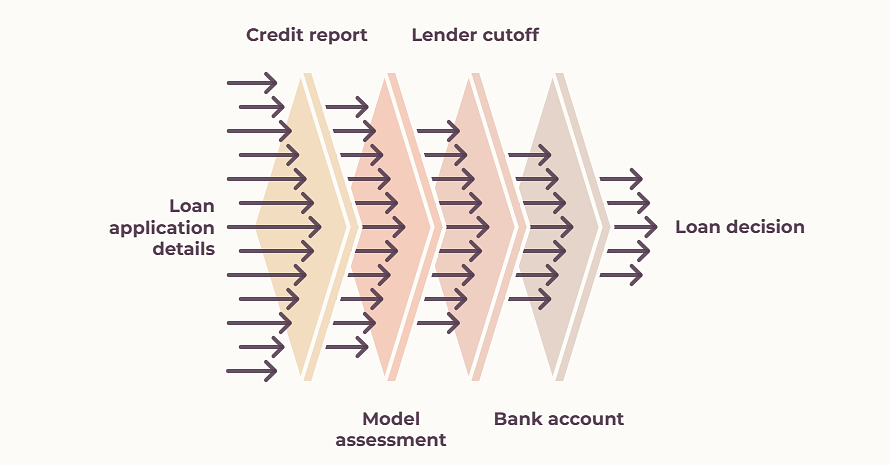
You put in your income, your job and how much you want. The app pulls your credit report, mashes all of it together, and the model figures out how likely you are to stop paying. Under the lender’s cutoff, you get approved. Over it, you get a no. The lower your number comes out, the better your rate usually is.
The stuff it weighs most isn’t some secret. A bank loan officer in 1995 would have checked pretty much this list:
- Late payments, especially recent ones.
- How much of your credit cards you’ve maxed out.
- How long you’ve had credit at all.
- Your monthly debt compared to what you earn.
- How many times you’ve applied for credit lately.
Plenty of these apps also ask you to connect your checking account. Say yes and the model can see your actual paychecks coming in, whether your balance hits zero before payday, and how many overdraft fees you rack up. If you’re young or new to the country and your credit report is pretty much blank, that bank history can do more for you than your score does.
People With Little Or No Credit History Get Helped Most By This
A bigger group than you’d think. Back when the CFPB studied it, 26 million Americans were credit invisible, meaning there was no credit file on them at all, and 19 million more had files too thin or too old to score. A regular bank looking only at credit scores turns most of them down without thinking twice. Apps that read bank data can at least give them a shot.
Lenders Have To Tell You Why They Said No
And “the algorithm said so” doesn’t count. In 2022 the Consumer Financial Protection Bureau told lenders they must be able to give applicants an accurate statement of reasons for a denial, even if the model is so complicated the lender can’t totally explain it. You should get a notice listing the main reasons, things like too much debt, not enough credit history, or a recent late payment.
Don’t bother arguing with the app. Go fix whatever the notice names. If it’s something on your credit report, get your free reports from AnnualCreditReport.com and look for stuff that’s wrong, like a card you never opened or a late payment you didn’t make, and dispute it with the bureau. If it’s debt, pay a card down before you apply again. Applying five more times in a week makes it worse, since every hard inquiry shows up.
Your Card Gets Flagged When A Payment Doesn’t Look Like Your Usual Spending
Fraud models learn your habits. Where you shop, what you usually spend, what time of day, which phone you log in from. Each new charge gets scored on how weird it is compared to all that. Newer systems go further and look at stuff like how fast you type your password and swipe around the app, and they connect accounts, devices and stores to spot organized rings. This rundown of how fintechs use AI against fraud goes through a lot of these methods.
There’s a reason banks are this twitchy about it. People told the FTC they lost more than $12.5 billion to fraud in 2024, which was 25 percent more than the year before, and more of that money went out through bank transfers and crypto than through every other payment type put together. So a big transfer to somebody you’ve never paid before is going to get looked at.
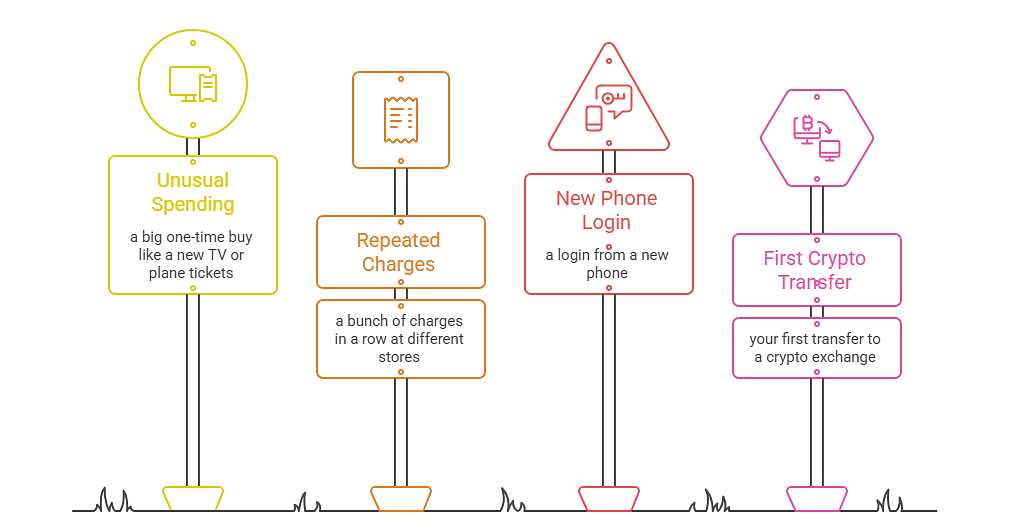
Honest purchases get caught too, which is annoying but makes sense once you see it from the model’s side. Road trips set it off. So do a big one-time buy like a new TV or plane tickets, a bunch of charges in a row at different stores, a login from a new phone, or your first transfer to a crypto exchange.
A flag doesn’t mean you did anything wrong. It means the payment looked different from your normal, and confirming it with your bank usually clears it fast.
How To Get A Flagged Payment Through
Your bank or app will usually text you or send a notification asking if the charge was you. Say yes and try the card again, and most of the time it goes right through. Set a travel notice in the app before a trip if it has that option.
Watch out for fake versions of this, though. Your real bank will ask you to confirm or deny a charge. It won’t call and ask you to read back a code it just texted you, or for your PIN or full card number. If someone does, hang up and call the number on the back of your card yourself.
If you keep getting flagged or turned down, it could be your bank and not you, and it might be time to check whether your bank still fits the way you live and spend. And if you move money in and out of crypto a lot, keep good records of it like this guide to crypto portfolio management suggests, because those are the transfers fraud systems look at hardest.

